


What Is a Combi Boiler? How It Works, Pros, Cons and Suitability
Boilers

Mo Alwadi
, Gas Safe Registered Engineer
Updated:
Updated:
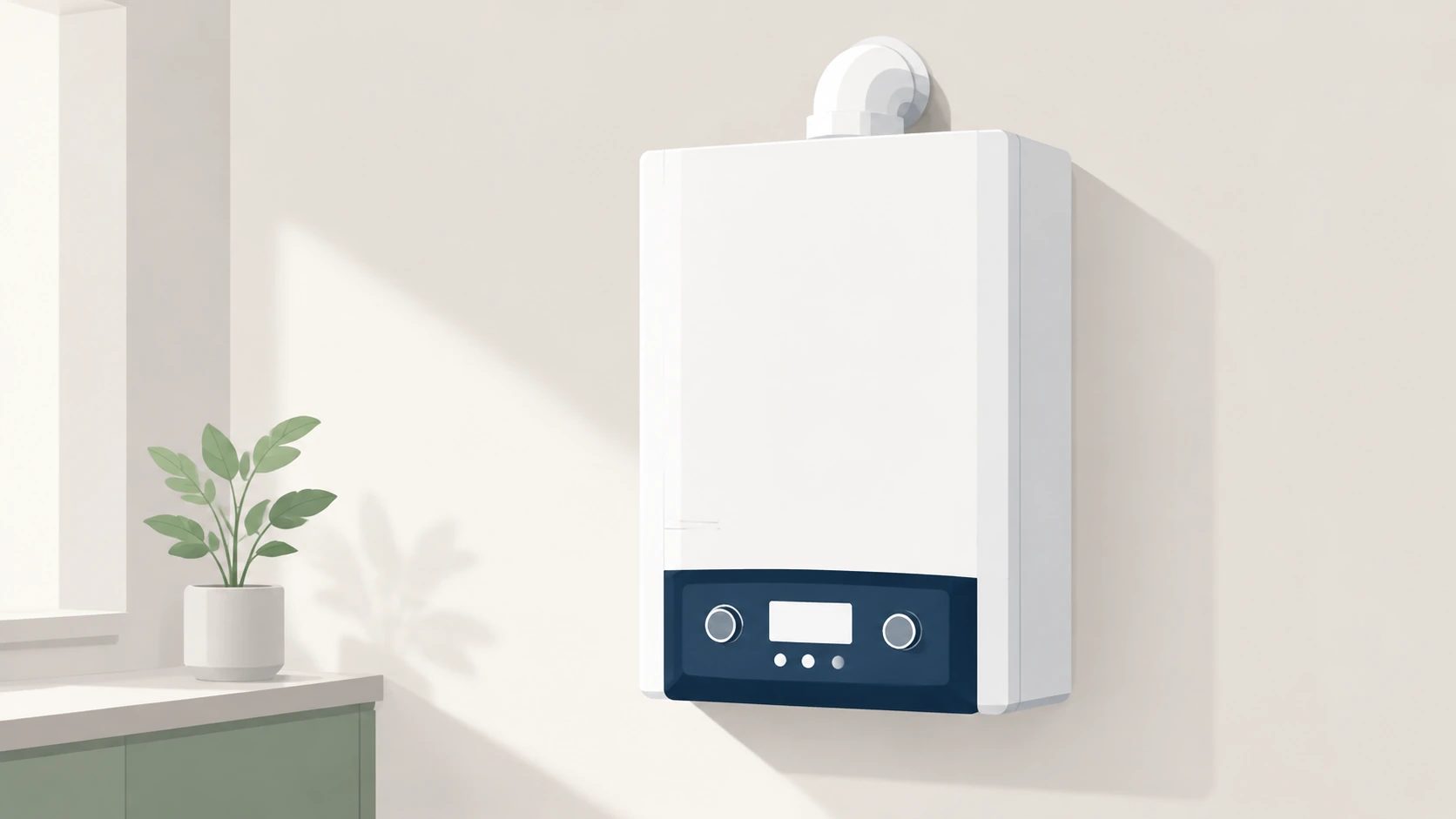
What is a combi boiler? A combi boiler is a single appliance that provides central heating and hot water without needing a separate hot-water cylinder or cold-water storage tank. It heats water directly from the mains when you open a tap or shower, making it a practical option for many flats and smaller or medium-sized homes.
The right choice still depends on your property’s heat loss, incoming water flow, number of bathrooms, available space and hot-water habits. A combi boiler can be convenient, but it is not automatically the best boiler for every household.
Homeowners considering a replacement can explore our new boiler options or compare the best combi boilers and boiler brands.
“Combi” is short for combination boiler. The appliance combines two jobs:
Unlike a system or regular boiler, a standard combi does not normally store hot water in a separate cylinder. This saves space and removes the need to wait for a cylinder to reheat. However, the hot-water performance depends heavily on the property’s incoming mains water pressure and flow.
A combi boiler operates differently depending on whether your home needs central heating or hot water.
Your thermostat or heating control sends a signal to the boiler when the home needs heat. The boiler heats water circulating through the radiators or underfloor heating system. Once the required temperature is reached, the controls reduce or stop the demand.
The boiler detects the water demand and heats incoming mains water as it passes through the appliance. The heated water then travels to the open tap or shower.
Because the water is heated on demand, there is no separate cylinder of stored hot water to use up. However, opening several outlets at once divides the available flow between them.
| Boiler type | Hot-water cylinder | Cold-water tank | Usually best suited to | Main limitation |
|---|---|---|---|---|
| Combi boiler | No | No | Flats and homes with one main bathroom and moderate hot-water demand | Hot-water flow can fall when several outlets are used together |
| System boiler | Yes | No | Homes with higher hot-water demand or more than one bathroom | Requires space for a cylinder and stored water can eventually run out |
| Regular boiler | Yes | Usually yes | Traditional heating systems, larger homes and properties with particular pipework requirements | Uses the most space and has more separate components |
Read our full guide to the different types of boiler systems or compare combi and system boilers in more detail.
A combi boiler is often suitable when the property has one main bathroom, reasonable mains water flow and limited space for additional heating equipment.
It may be a good option for:
A property survey is still important. Two homes with the same number of bedrooms can have very different insulation levels, radiator systems, extensions and hot-water demands. Our boiler buying guide explains the main factors in more detail.
A combi may be less suitable when:
For a larger property, read our guide to the best boiler for a large house. A system boiler and correctly sized cylinder may provide a better experience where several people need hot water at once.
The boiler provides heating and hot water from one appliance. Removing the need for a separate cylinder and cold-water storage tank can free cupboard and loft space.
You do not need to programme a cylinder to heat a stored volume of water. When a hot tap is opened, the boiler begins producing hot water.
A combi can continue producing hot water while the boiler has fuel, power and an adequate mains supply. The practical limit is the rate at which it can heat the incoming water, not the capacity of a cylinder.
Replacing an existing combi with another combi in the same position is often simpler than changing boiler type or moving the appliance. The existing system still needs to be assessed, cleaned where necessary and brought up to current requirements.
A standard combi system does not require a separate hot-water cylinder, cylinder controls or loft tank. This can simplify the overall layout, although a combi boiler itself contains several internal components.
A high-output combi cannot create water flow that the property does not receive. Incoming pressure and flow should be checked before selecting the boiler.
When two showers or taps are opened together, each outlet may receive less water. This is one reason cylinder-based systems are often considered for higher-demand homes.
If the boiler stops working, both central heating and hot water may be affected. A cylinder with an immersion heater can sometimes provide an alternative source of hot water, depending on the system.
Changing from a regular or system boiler to a combi can involve removing tanks and cylinders, altering pipework, upgrading the gas supply, changing the flue and creating a suitable condensate route.
See our guide to replacing a regular boiler with a combi boiler before deciding whether a conversion is worthwhile.
Boiler size is normally expressed in kilowatts, but the largest number is not automatically the best choice. A combi has to meet two different requirements:
The hot-water requirement often drives the headline combi output. The installer should assess the property’s heat loss separately rather than relying only on the number of bedrooms.
| Indicative combi range | Possible starting point | Important checks |
|---|---|---|
| Approximately 24–27kW | Smaller homes or flats with one bathroom and moderate demand | Heat loss, shower requirements and incoming mains flow |
| Approximately 28–32kW | Many medium-sized one-bathroom homes | Bath filling, shower performance and radiator requirement |
| Approximately 35–40kW | Higher hot-water demand where the mains supply can support it | Whether a system boiler and cylinder would be more appropriate |
These figures are broad starting points rather than installation specifications. Boiler selection should follow an assessment of the property and water supply. An oversized appliance can cost more without solving the household’s actual limitation.
Combi manufacturers normally state hot-water performance in litres per minute under defined test conditions. The boiler can only approach that output if the incoming water supply is capable of delivering it.
Choosing a boiler capable of producing a strong hot-water flow will not improve performance if considerably less water enters the property. The installer may check:
This check is particularly important when a homeowner wants a more powerful shower or hopes to supply more than one bathroom from a combi.
Modern gas combi boilers are condensing appliances. A condensing boiler captures more heat from combustion gases before they leave through the flue, reducing the amount of useful energy wasted.
Real-world performance depends on more than the efficiency figure printed on the product label. It is also affected by:
The Energy Saving Trust explains that modern condensing boilers recover heat that older appliances would otherwise lose through the flue. You can read its independent boiler guidance for further background.
The installation process depends on whether the work is a straightforward combi replacement, a boiler relocation or a conversion from another system.
A typical installation assessment may include:
Read our step-by-step boiler installation guide and our main boiler installation guide to understand what normally happens before, during and after the work.
Gas work must be carried out by a suitably qualified Gas Safe registered engineer. Gas Safe Register advises homeowners to check the engineer’s ID card and confirm that they are qualified for the specific work required. Its official Gas Safe Register website can be used to check registration.
There is no reliable single installed price for every combi boiler. The appliance price is only one part of the quotation.
The total can be affected by:
Our guides to new boiler costs and boiler replacement costs explain these factors without pretending that every property costs the same.
Information about payment options is available on our boiler finance page. Finance is subject to status, eligibility and the relevant provider’s terms.
A straightforward combi-to-combi replacement in the same position may be completed more quickly than a relocation or conversion. More complex work can take longer where pipework, tanks, cylinders, controls, flues or the gas supply need to be changed.
Our guide to how long it takes to fit a boiler explains the differences between common installation scenarios.
A modern boiler is a long-term household appliance, but there is no exact lifespan that applies to every installation. Its working life can be influenced by:
Read our detailed guide covering how long a boiler should last.
An annual service can help check safe operation, identify developing issues and maintain manufacturer warranty conditions where servicing is required.
Homeowners should pay attention to:
Use our guide to normal boiler pressure for basic pressure information, and read about common combi boiler faults if the appliance is not working normally.
Do not remove the boiler casing or attempt gas-related repairs. Arrange a boiler service for routine maintenance or visit our boiler repair page when professional fault diagnosis is needed.
A conversion can free space and simplify the heating layout, but it is not always an upgrade. The decision depends on how the household uses hot water and whether the mains supply can meet demand.
A combi conversion may make sense when:
Keeping or upgrading a cylinder-based system may be better when:
The installer should explain both options rather than automatically recommending the system that is easiest to fit.
A combi boiler is one appliance that heats your radiators and produces hot water for taps and showers without using a separate hot-water cylinder.
A standard combi boiler does not normally need a separate hot-water cylinder or cold-water storage tank. It takes water from the mains and heats it when required.
Some higher-output combis may supply more than one outlet, but the available flow is shared. Two simultaneous showers can reduce performance, and a system boiler with stored hot water may be more suitable for regular multi-bathroom use.
It can be, particularly where the property has one bathroom and suitable mains water flow. Bedroom count alone is not enough to select a boiler; heat loss and hot-water demand must also be assessed.
There is no single best size. Smaller outputs may suit modest one-bathroom properties, while higher hot-water outputs may suit stronger demand. The correct selection depends on heat loss, mains flow, showers, baths and simultaneous use.
Not necessarily. A larger boiler can heat more water, but it cannot fix an inadequate incoming mains supply. Water pressure, flow rate and pipe restrictions should be checked first.
Some compact models can be installed in a suitable cupboard, but the manufacturer’s clearance, ventilation, flue, servicing-access and installation requirements must be followed.
Many modern combi boilers are compatible with smart or modulating controls. The best control depends on the boiler, communication protocol and heating system.
Annual servicing is generally recommended. It may also be a condition of the manufacturer’s warranty or guarantee.
No. Gas boiler installation and gas-related work must be completed by a suitably qualified Gas Safe registered engineer.
Neither type is always better. A combi is compact and can work well in one-bathroom homes, while a system boiler with a cylinder may be more suitable for larger households and simultaneous hot-water use.
If you are asking what is a combi boiler and whether it is suitable for your home, the main factors are your incoming water flow, number of bathrooms, hot-water demand, heat loss and available space.
A combi boiler can be an effective choice when your home has suitable mains water flow, moderate hot-water demand and limited space. It provides heating and hot water from one compact appliance without a separate cylinder.
For a home with several bathrooms or frequent simultaneous demand, a system or regular boiler may provide a better result. The final decision should follow a proper assessment of the property rather than relying only on bedroom count or choosing the boiler with the largest output.
Explore our new boiler options to compare suitable next steps for your home.
Mo Alwadi is Renewable Manager at Let’s Heat and a Gas Safe registered engineer (registration no. 977042), with experience in domestic heating and air conditioning. He contributes technical guidance on boiler installation, boiler replacement, heating systems, air conditioning and home energy solutions, helping UK homeowners understand their options and make informed decisions.
View all posts by Mo Alwadi →