


Viessmann Boiler Reviews 2026: 5 Vitodens Models Compared
Boilers

Mo Alwadi
, Gas Safe Registered Engineer
Updated:
Updated:
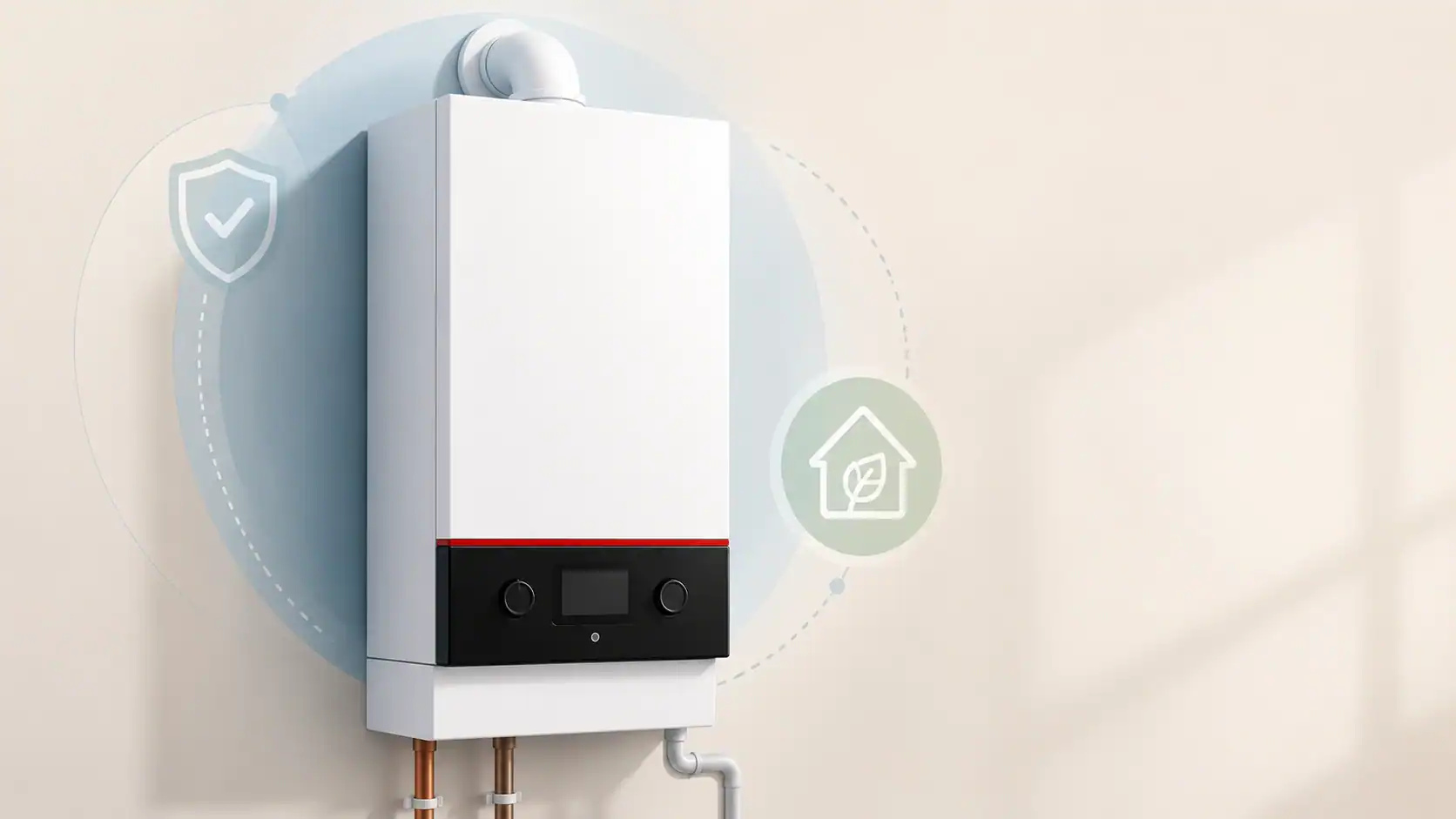
Viessmann boiler reviews should start with the model rather than the badge. The current UK Vitodens range covers compact combi boilers, system boilers, heat-only boilers, storage combis and premium higher-specification options. The best choice depends on your property, hot-water demand, available space, controls and the exact warranty route offered with the installation.
For most homeowners comparing a new gas boiler in 2026, the key models are the Vitodens 050-W, Vitodens 100-W, Vitodens 111-W, Vitodens 100-W Heat Only and Vitodens 200-W. Viessmann publishes different warranty wording across some current product and warranty pages, so we explain that carefully rather than simply repeating the longest headline term.
The Vitodens 050-W is the strongest starting point for many smaller and medium homes where compact dimensions and straightforward combi or system-boiler options matter. The Vitodens 100-W moves up the range with broader functionality, integrated connectivity and combi or system versions. The Vitodens 111-W is the model to compare when you want a storage combi with stronger hot-water capability, while the Vitodens 200-W sits at the premium end of the domestic range.
None of these boilers is automatically the “best” for every property. A correctly sized 050-W can be a better choice than a more expensive model when the home does not need the extra features or output. Equally, a home with two bathrooms may be better served by a storage-combi or cylinder-based system rather than simply choosing the highest-output standard combi.
| Model | Boiler type | Published output | Best considered for | Warranty position |
|---|---|---|---|---|
| Vitodens 050-W | Combi / system | 3.2–35kW across current range | Smaller and medium homes, replacements, compact spaces | Viessmann’s central warranty table lists 7 years when registered within 30 days, with a 10-year upgrade; the current product page also advertises 10 years via the installer portal |
| Vitodens 100-W | Combi / system | 3.2–35kW | Homeowners wanting broader control and connectivity options | Central warranty table lists 7 years with 10/12-year upgrades; the current model page advertises 12 years when registered via VPlus |
| Vitodens 111-W | Storage combi | 3.2–32kW | Higher hot-water demand where a conventional combi may be limiting | Current model page states 5 years standard with extension up to 12 years; central warranty table shows a 7-year registered route with 10/12-year upgrades |
| Vitodens 100-W Heat Only | Heat only | 11, 16, 19, 25 and 32kW | Homes retaining a traditional cylinder/open-vent arrangement | Current product page advertises 10 years standard with up to 12 years extended |
| Vitodens 200-W | Combi / system | 1.9–35kW | Premium installations and homes where wide modulation and advanced controls matter | Current product page advertises 10 years standard with up to 12 years extended; central warranty table lists a 7-year registered route with upgrades |
The warranty wording above is deliberately qualified because Viessmann currently publishes different route-specific descriptions. Always confirm the exact warranty period, registration route and conditions on the quotation and warranty certificate.
Compare the right boiler type, output and installation option for your home.
Boiler installation available across London and surrounding areas.
Compare new boiler options →We do not rank boilers by invented reliability scores or claim that one brand never breaks down. For these Viessmann boiler reviews, we compare published manufacturer specifications and the factors that matter when selecting a replacement boiler:
This is the same approach we use in our best combi boilers, Worcester Bosch boiler reviews and Vaillant boiler reviews.
The Vitodens 050-W is Viessmann’s compact mainstream wall-mounted option and is available in combi and system-boiler versions. Viessmann currently publishes a rated heating-output range from 3.2kW to 35kW across the range, with Class A seasonal efficiency.
The 050-W uses Viessmann’s stainless-steel Inox-Radial heat exchanger and MatriX-Plus burner technology. Current versions also integrate Wi-Fi connectivity for use with ViCare.
If the home regularly needs hot water from several outlets at the same time, do not choose a standard combi only because the highest output looks large enough. Compare the 111-W storage combi or a system boiler with a correctly sized cylinder.
The Vitodens 100-W is available as a combi and system boiler. Viessmann currently publishes rated heating output from 3.2kW to 35kW, Class A efficiency, a stainless-steel Inox-Radial heat exchanger and integrated Wi-Fi connectivity.
The current model page also advertises a 12-year standard warranty when registered through VPlus. However, Viessmann’s central warranty table describes a seven-year registered standard route with ten- and twelve-year upgrade options. Because those descriptions differ, the exact warranty supplied with an installation should be confirmed in writing.
The Vitodens 111-W is different from an ordinary combi because it incorporates a 46-litre stainless-steel loading cylinder. Viessmann positions it as a storage combi for homes needing greater domestic-hot-water convenience without installing a separate full-size cylinder elsewhere in the property.
The current product page publishes rated heating output from 3.2kW to 32kW and up to 94% efficiency. The integral storage changes the way the boiler meets hot-water demand, so it can be worth comparing in homes where a conventional instantaneous combi feels restrictive.
The Vitodens 100-W Heat Only is designed for homes retaining a traditional heat-only arrangement with separate hot-water storage. Current published outputs are 11, 16, 19, 25 and 32kW, and Viessmann lists 92% ErP efficiency with Class A energy efficiency.
A heat-only boiler can make sense when the existing cylinder and system layout are suitable and there is no reason to convert the property to a combi. Changing boiler type simply because a combi is more familiar can add unnecessary pipework and alter hot-water performance.
Read our guide to combi, system and regular boiler systems before deciding whether a conversion is worthwhile.
The Vitodens 200-W is the premium wall-mounted model in this comparison. Viessmann currently publishes a rated heating-output range from 1.9kW to 35kW, a modulation range of up to 1:17, Class A energy efficiency and a large colour touchscreen.
The lower minimum output and wide modulation range can be useful in homes where heating demand varies substantially through the year. That does not mean every home needs a 200-W: the extra specification only adds value when the property and controls can make use of it.
| Property / requirement | Viessmann model to compare first | Why |
|---|---|---|
| Flat or compact one-bathroom home | Vitodens 050-W | Compact mainstream option with combi and system variants |
| Typical medium family home | Vitodens 100-W | Broad output range with connected controls and combi/system choice |
| Higher hot-water demand without a separate full-size cylinder | Vitodens 111-W | 46-litre integrated storage-combi arrangement |
| Existing regular-boiler system with suitable cylinder | Vitodens 100-W Heat Only | Allows a like-for-like heat-only replacement where conversion is unnecessary |
| Premium installation / very low heating demand at part load | Vitodens 200-W | 1.9kW lower end and up to 1:17 modulation |
These are starting points, not sizing rules. Boiler output should be selected from property heat loss and hot-water demand rather than bedroom count alone. See our boiler kW sizing guide for the factors that matter.
Current domestic Vitodens boilers sit in ErP Class A. Published seasonal efficiency varies by model and output, and headline percentages are not the same thing as the efficiency your heating system achieves in day-to-day use.
Flow temperature, controls, boiler sizing, radiator output and how often the boiler can operate in condensing mode all affect real-world performance. A correctly designed lower-temperature heating system can matter more than a small difference between two boiler data sheets.
This is one area where homeowners should read the exact paperwork rather than rely on a headline. Viessmann’s central warranty table currently lists seven years for the 050-W, 100-W, 111-W and 200-W when qualifying installations are registered within 30 days, with longer upgrades available on several models.
At the same time, individual current product pages advertise route-specific offers such as ten years for the 050-W through the installer portal, twelve years for the 100-W through VPlus and ten years on the 200-W with a twelve-year extension option. Viessmann’s detailed product-warranty page also distinguishes between the minimum out-of-box term, homeowner registration and paid or installer-led extensions.
Our recommendation is simple: ask the installer to state the exact registered warranty term on the quotation, confirm who will register it and keep the final confirmation. Annual servicing is also required under Viessmann’s warranty conditions where applicable.
For wider comparison, read our boiler warranty guide.
We do not give one fixed installed Viessmann price in this review because the final cost is affected by much more than the boiler model. A like-for-like combi replacement is a different job from relocating the boiler, changing the flue route or converting from a regular boiler to a combi.
Use our new boiler cost guide, boiler replacement cost guide and boiler installation guide to understand the wider installation factors.
Viessmann competes directly with Worcester Bosch and Vaillant across the mainstream and premium domestic boiler market. The strongest comparison is model against model rather than brand against brand.
The right answer depends on the exact models, warranty route, controls, installed cost and suitability for the home. We will cover the major brand-vs-brand comparisons separately so this review does not become a generic list of unsupported “best brand” claims.
Yes, Viessmann belongs on a serious UK boiler shortlist in 2026. The Vitodens range covers most common domestic requirements, and current models offer stainless-steel heat exchangers, Class A efficiency and connected controls. The important question is not whether Viessmann is a “good brand” in the abstract, but whether the specific Vitodens model is correctly sized and priced for your installation.
For a straightforward smaller-home replacement, start with the 050-W. Compare the 100-W when you want a step up in specification. Look at the 111-W where domestic-hot-water demand is the deciding factor, and consider the 200-W when its wider modulation and premium controls genuinely add value.
Viessmann produces a broad current range of Class A domestic gas boilers with stainless-steel heat exchangers and modern controls. Whether one is a good choice for your home depends on selecting the right model, output and installation rather than the brand name alone.
The 050-W is a strong starting point for many smaller and medium homes. The 100-W adds specification and control options, the 111-W targets higher hot-water demand, and the 200-W is the premium option. A heat-only 100-W is available for suitable traditional systems.
Viessmann’s current 050-W product page advertises ten years through the installer portal, while its central warranty table lists seven years when registered within 30 days with a ten-year upgrade option. Confirm the exact route being supplied with your installation.
Both are available in combi and system formats. The 100-W sits above the 050-W in the range and is marketed with broader connected functionality and longer route-specific warranty offers. The right choice depends on the required output, controls, price and installation.
Yes, but it is a storage combi rather than a standard instantaneous combi. It incorporates a 46-litre stainless-steel loading cylinder to support higher hot-water demand.
Do not choose from bathroom count alone. The 111-W can be worth comparing for higher hot-water demand, but a system boiler and cylinder may be a better solution in some homes. Incoming mains performance and simultaneous outlet use should be assessed.
There is no responsible fixed lifespan that applies to every boiler. Installation quality, system water condition, servicing, operating temperatures, usage and component wear all affect service life. Replace a boiler based on condition, repair history and suitability rather than age alone.
Before choosing a Vitodens model, compare the boiler type, calculated heating load, hot-water demand, controls, warranty route and installation work. Let’s Heat can quote for new boiler installation across London and surrounding areas, subject to postcode and availability.
Mo Alwadi is Renewable Manager at Let’s Heat and a Gas Safe registered engineer (registration no. 977042), with experience in domestic heating and air conditioning. He contributes technical guidance on boiler installation, boiler replacement, heating systems, air conditioning and home energy solutions, helping UK homeowners understand their options and make informed decisions.
View all posts by Mo Alwadi →