


Replacing a Regular Boiler With a Combi: 2026 Guide
Boilers

Mo Alwadi
, Gas Safe Registered Engineer
Updated:
Updated:
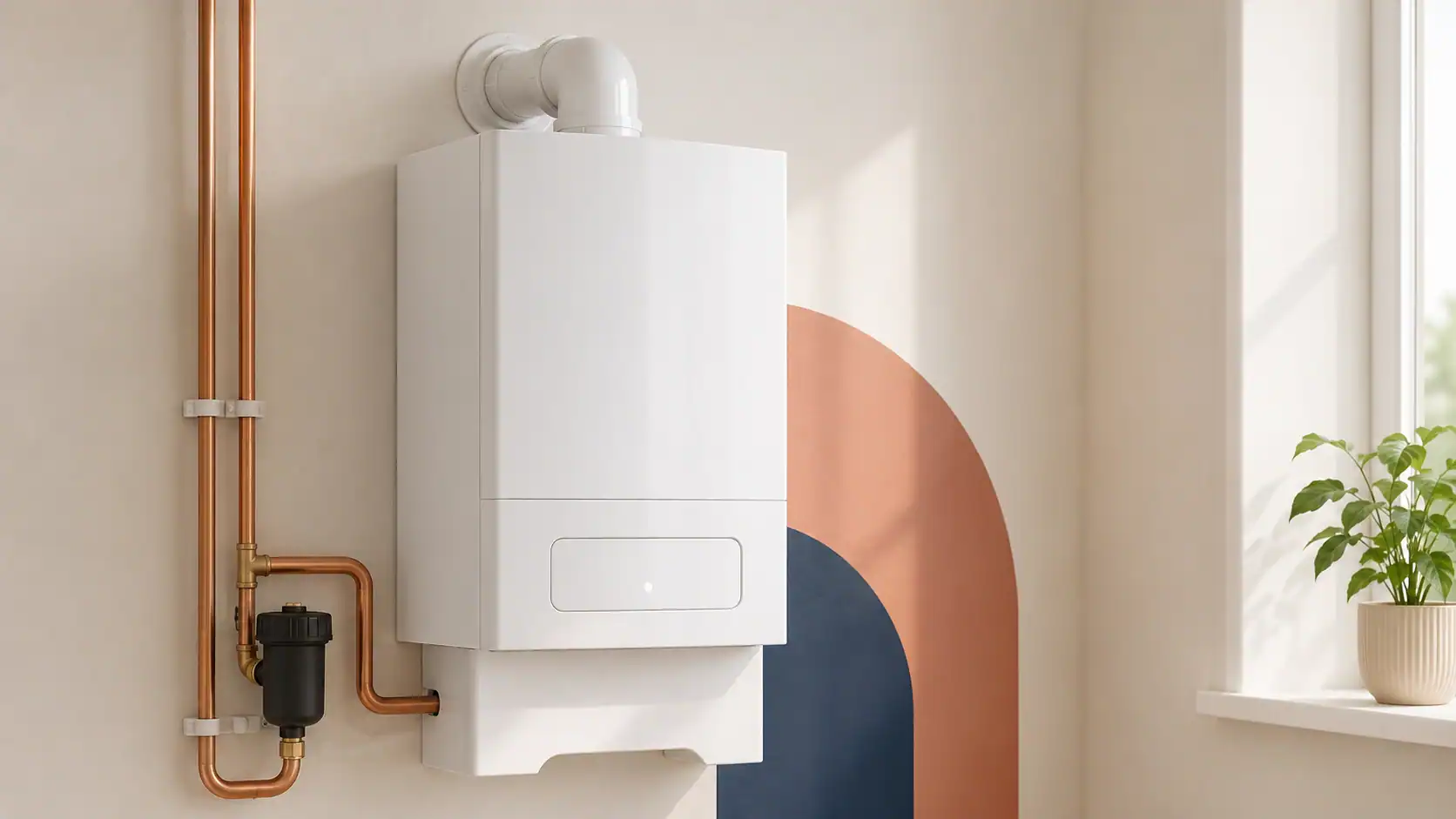
Replacing a regular boiler with a combi boiler can remove the hot-water cylinder and loft tanks, free up space and give you hot water directly from the mains. But it is a system conversion, not a simple boiler swap. The incoming water supply, hot-water demand, existing pipework, gas supply, boiler location and condition of the heating system all need checking before deciding that a combi is the right replacement.
For a smaller or medium home with suitable mains flow and moderate simultaneous hot-water demand, converting from a regular boiler to a combi can be a practical option. For larger homes or households that regularly use several showers and taps together, keeping stored hot water with a system or regular boiler can still be the better arrangement.
A regular boiler normally works with a hot-water cylinder and a cold-water storage tank, usually in the loft. A combi boiler provides central heating and heats domestic hot water on demand, so the cylinder and cold-water storage tanks are normally removed from the domestic hot-water arrangement.
The conversion can work very well where the mains water supply is strong enough and the household does not need large amounts of hot water from several outlets at once. It is less attractive where stored hot water is valuable, the mains supply is weak or the home has high simultaneous demand.
| Feature | Regular boiler | Combi boiler |
|---|---|---|
| Hot-water storage | Uses a separate hot-water cylinder | Heats water on demand |
| Cold-water storage | Usually uses a loft tank | Normally supplied directly from the mains |
| Space required | Boiler, cylinder and tanks | Mainly the boiler itself |
| Several outlets at once | Can suit higher simultaneous demand when correctly designed | Performance is limited by the boiler and incoming mains flow |
| Hot water if the boiler fails | A cylinder may have an immersion-heater backup | No stored hot water from the boiler when the appliance is unavailable |
| Conversion complexity | Like-for-like replacement can be straightforward | Regular-to-combi conversion requires system changes |
For more background, read our guides to combi boilers, different boiler systems and combi vs system boilers.
Replacing a regular boiler with a combi boiler is most attractive when the existing stored-water system no longer suits the property. The strongest reasons are usually about space, simplicity and the way the household uses hot water rather than the idea that a combi is automatically more modern or better.
A survey should confirm these points before the boiler is selected. Choosing the combi first and checking the property afterwards is the wrong order.
Compare your hot-water demand, mains supply and installation options before choosing the new boiler.
Boiler installation available across London and surrounding areas.
Compare new boiler options →A combi is not automatically the best replacement for every older heating system. Stored hot water remains useful in homes with higher demand, and a system boiler can provide a more suitable modern arrangement without relying on one combi boiler to meet every hot-water draw directly from the mains.
In those situations, compare a system boiler or a like-for-like regular boiler before committing to conversion. Our system boiler replacement guide explains that route.
This is one of the most important checks when replacing a regular boiler with a combi boiler. A regular system can be tank-fed, while a combi normally produces domestic hot water directly from the incoming mains.
Worcester Bosch explains that mains-fed hot-water performance depends on both dynamic pressure and flow rate, and that the incoming main needs to provide enough water while other cold outlets are being used. Pressure and flow are not the same thing, so simply seeing a high static-pressure reading is not enough.
The installer should therefore assess the real supply available to the property. A powerful combi cannot create more incoming water than the main can deliver.
The exact work depends on the existing system, but the conversion normally changes more than the boiler itself.
Some homes have loft tanks serving other outlets or equipment, so tanks should never be removed simply because a combi is being installed. The existing plumbing must be traced first.
In a full regular-boiler-to-combi conversion, the old cylinder is usually no longer needed for domestic hot water. Removing it can free useful cupboard space, which is one of the main reasons homeowners consider the conversion.
But removal should be planned rather than assumed. The installer needs to identify any immersion-heater wiring, pumps, valves and pipework connected to the cylinder. Where the cylinder forms part of a more unusual heating arrangement, the wider system design needs checking before anything is removed.
A traditional open-vented heating system can operate at a lower pressure than a sealed combi system. When the system is converted, older radiators, valves and pipework may be exposed to higher operating pressure than before.
That does not mean old pipework must automatically be replaced, but its condition should be considered. Weak radiator valves, corroded pipework or existing weeps may become more obvious after pressurisation. The heating system should also be cleaned and protected in accordance with the boiler manufacturer’s installation requirements.
Sometimes. If the existing boiler position allows a compliant flue, condensate route, gas supply, electrical connection and good service access, using the same location can reduce disruption.
Other conversions make more sense with the new combi in a different position, especially if moving it shortens the hot-water pipe run or frees space elsewhere. Relocation increases the amount of pipework and installation work, so compare the benefit with the extra complexity.
See our boiler relocation guide for the main considerations.
A conversion usually takes longer than a straightforward like-for-like boiler replacement because tanks, the cylinder and pipework may need altering or removing. A relatively simple conversion may be completed over one to two working days, while complex properties can take longer.
The boiler location, tank access, cylinder removal, system condition, pipework and any making good all affect the timescale. Our boiler installation timescale guide explains why system conversions take longer than straight swaps.
We do not use one fixed article price because a regular-to-combi conversion can vary substantially between properties. The combi boiler itself is only one part of the total installation.
Use our boiler replacement cost guide and new boiler cost guide for the wider factors that affect an installation quotation.
Do not choose a combi purely from the number of bedrooms. A combi has to satisfy two different requirements: space heating and domestic hot water. The heating side should reflect the property’s calculated heat loss, while the hot-water side needs to meet the household’s expected flow and temperature-rise requirements.
This is why a relatively small home can sometimes require a higher nominal combi output for hot water even though its space-heating demand is much lower. Modern boilers can modulate down on the heating side, but minimum output still matters.
Read our boiler sizing guide and best combi boilers 2026 before comparing models.
It can be, but the answer depends on how the bathrooms are used and the incoming water supply. A standard combi can struggle to maintain the desired flow when several hot-water outlets are opened together because all of the domestic hot water is being produced instantaneously.
For a home where two showers, a bath and taps are regularly used at the same time, compare a storage combi or a system boiler with a cylinder rather than assuming that a larger conventional combi will solve everything.
Our boilers for larger homes guide covers the alternatives.
A modern condensing combi can remove standing heat losses associated with storing hot water in an older cylinder, and replacing an old boiler can improve efficiency. But it is not responsible to promise a fixed percentage saving simply because the boiler type changes.
Actual energy use depends on the old system, new boiler, controls, flow temperatures, insulation, heating demand and household hot-water habits. A well-insulated modern cylinder can also have relatively low standing losses, so efficiency should be considered alongside suitability rather than used as the only reason to remove stored hot water.
Replacing a boiler is notifiable work under Building Regulations in England. GOV.UK lists new or replacement boilers as notifiable work. Where the installer is registered with an appropriate competent-person scheme, qualifying work can be self-certified and the homeowner receives evidence of compliance.
Gas work must be carried out by an appropriately qualified Gas Safe registered engineer. HSE states that a Gas Safe registered engineer must fit and check a gas appliance.
| Potential advantages | Potential disadvantages |
|---|---|
| Frees cylinder and potentially loft-tank space | More involved installation than a like-for-like boiler swap |
| Hot water on demand | Hot-water performance depends heavily on the mains supply |
| Simplifies the domestic hot-water arrangement | Several simultaneous outlets can reduce available flow |
| No need to reheat a stored cylinder for everyday use | Usually loses the cylinder’s immersion-heater backup |
| Can suit flats and smaller homes particularly well | May be the wrong choice for higher-demand homes |
Sometimes the simplest solution is also the best. If the existing hot-water cylinder, loft arrangement and demand pattern all work well, fitting a modern heat-only boiler can avoid unnecessary conversion work.
A like-for-like replacement can preserve strong stored-hot-water performance while updating the boiler and controls. The correct choice should come from how the house works, not from assuming every old-style system needs to become a combi.
Yes. It is a common boiler-system conversion, provided a combi is suitable for the property’s hot-water demand, mains water supply and heating requirements.
For a full conversion to standard combi hot water, the old cylinder is normally no longer required. The installer should check the existing plumbing and any immersion-heater connections before removal.
Tanks used only by the old regular-boiler heating and hot-water arrangement may become redundant, but the plumbing must be traced first because a tank can serve other outlets or systems.
A combi supplies hot water from the mains, so performance depends on the incoming dynamic pressure and flow. It cannot overcome a poor incoming supply. The shower and other outlets also need to be suitable for the new arrangement.
A relatively straightforward conversion may take around one to two working days. More complicated pipework, boiler relocation, tank access or system work can extend the installation.
Neither type is universally better. A combi can be excellent where space matters and demand is moderate, while stored hot water can be more suitable for homes using several outlets simultaneously.
Before replacing a regular boiler with a combi boiler, the survey should check the mains water supply, heating load, hot-water demand, existing system condition, boiler position and pipe routes. Let’s Heat provides boiler installation across London and surrounding areas, subject to postcode and availability.
Mo Alwadi is Renewable Manager at Let’s Heat and a Gas Safe registered engineer (registration no. 977042), with experience in domestic heating and air conditioning. He contributes technical guidance on boiler installation, boiler replacement, heating systems, air conditioning and home energy solutions, helping UK homeowners understand their options and make informed decisions.
View all posts by Mo Alwadi →