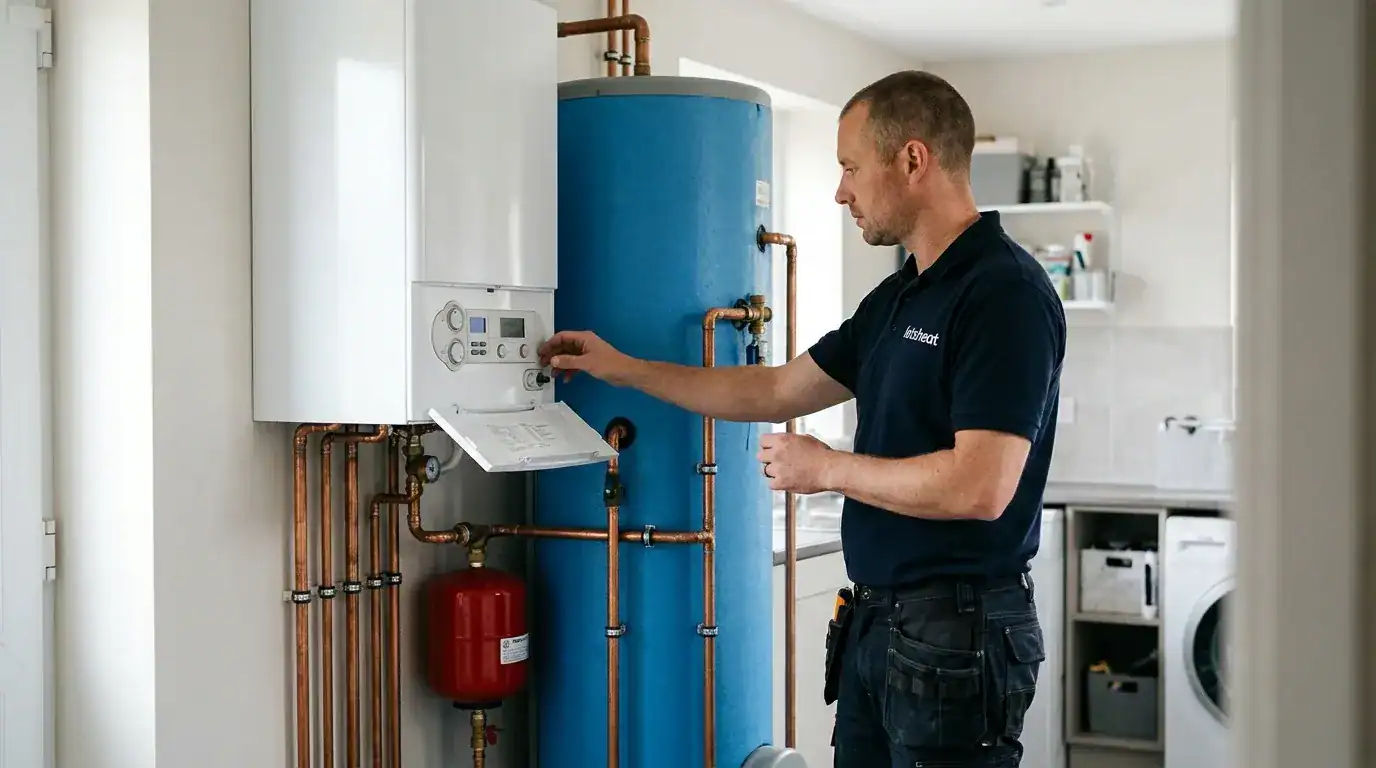

Central Heating Repair in Rhoose
Radiators staying cold, heating taking too long to warm up, pressure problems or controls not responding properly? Let’s Heat provides central heating fault diagnosis and repair across Rhoose and surrounding areas, helping identify problems with radiators, valves, circulation, controls, pipework and the wider heating system.




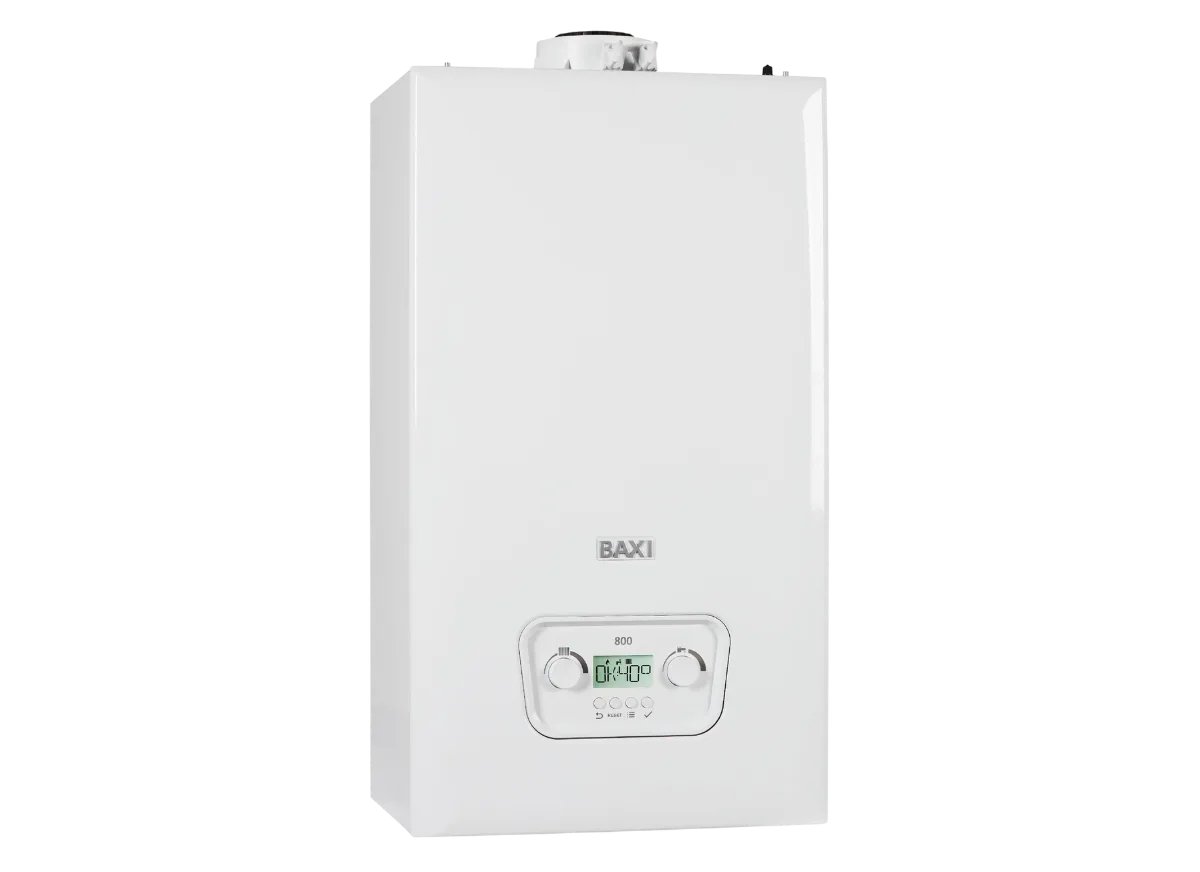

Annual Boiler Service
Stay on top of annual servicing. Regular servicing can help meet manufacturer servicing requirements and keep your boiler properly maintained.
Boiler Repair
No heating, no hot water, or a boiler fault code? We’ll diagnose the problem and explain the repair options clearly.
Loved by homeowners
Don't just take our word for it
Real feedback from customers who have used Let’s Heat for heating and cooling services.

Boiler support for every stage
Get help with a boiler fault
Arrange professional fault diagnosis when your boiler stops working properly or your heating and hot water are affected.



Gas Safe registered engineers
Boiler installation, servicing and repairs carried out by Gas Safe registered engineers.
Warranty and aftercare
Clear handover, warranty information and support after your new boiler installation.
Flexible boiler finance
Spread the cost of your new boiler with available finance options, subject to status and lender approval.
Rated by our customers
Read verified customer feedback across our independent review platforms.
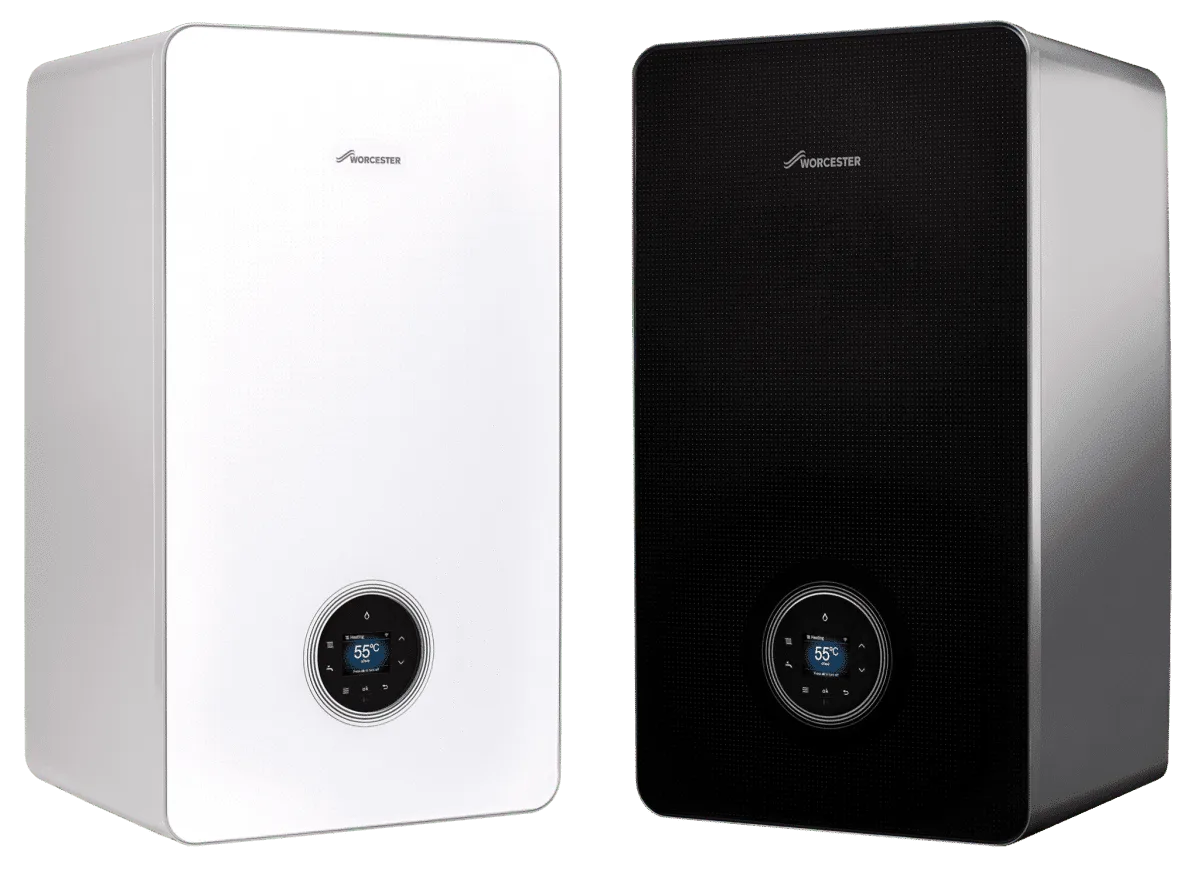
Is it time to replace your old boiler?
Explore modern boiler options for your home and get straightforward guidance on boiler type, size, controls and installation.
Worcester Bosch
Vaillant
Baxi
Ideal
Viessmann
Heating, Boiler & Plumbing Services Across South Wales & Bristol
Let’s Heat provides boiler, heating and plumbing services across Cardiff, Newport, Bristol and surrounding areas. Enter your postcode when booking to check current service availability in your area.
How to Report an Issue
If you have a problem with your boiler, heating, gas or air conditioning, you can report the issue using one of the options below.
Call Us
Speak to our team about the issue and tell us what is happening. We can then advise you on the next step or arrange an appointment where appropriate.
Email Us
Send us details of the issue, including any fault codes or useful information about the appliance or system.
Report an Issue Online
Complete our online form with a few details about the problem, your property and the service you need.
Boiler help & advice
Expert guides and advice to help you make informed decisions.
-

Boiler Repair Cost UK: Diagnosis From £120
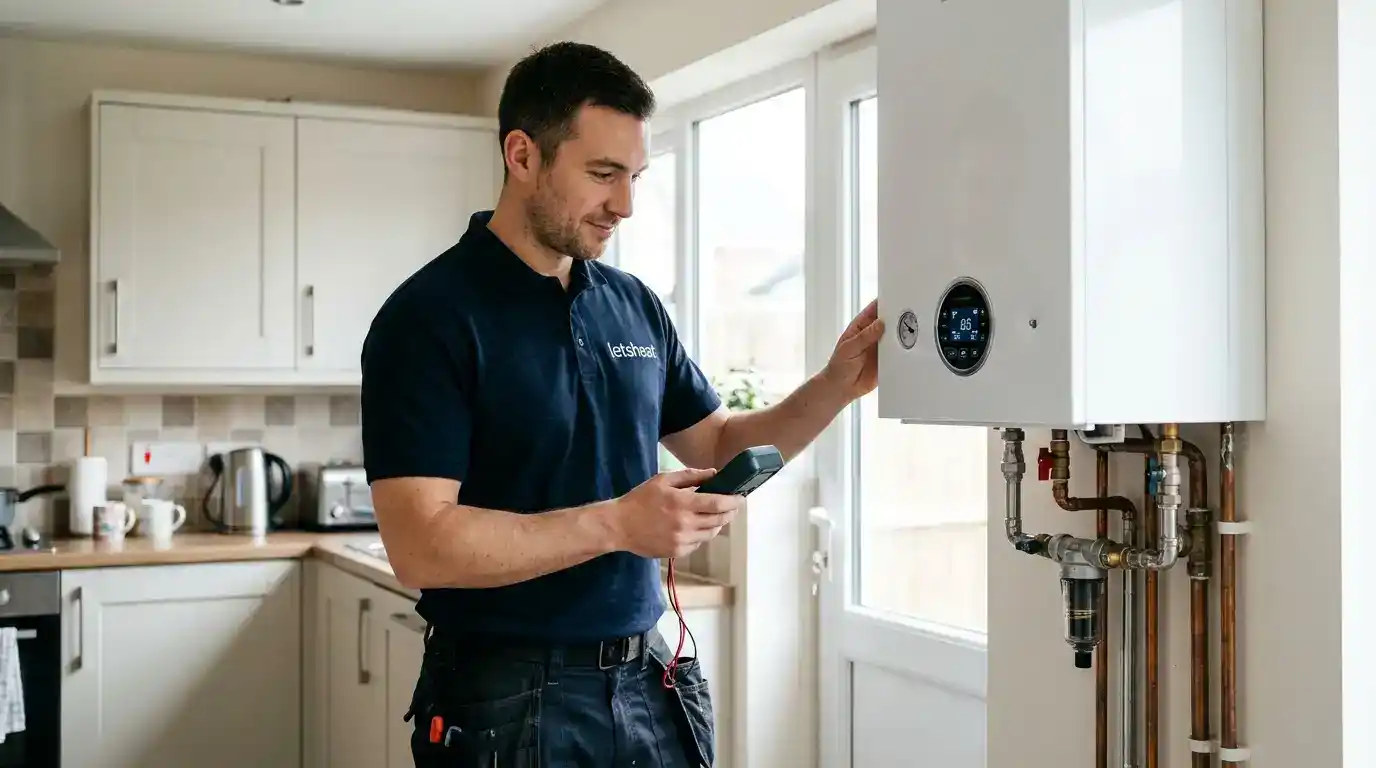
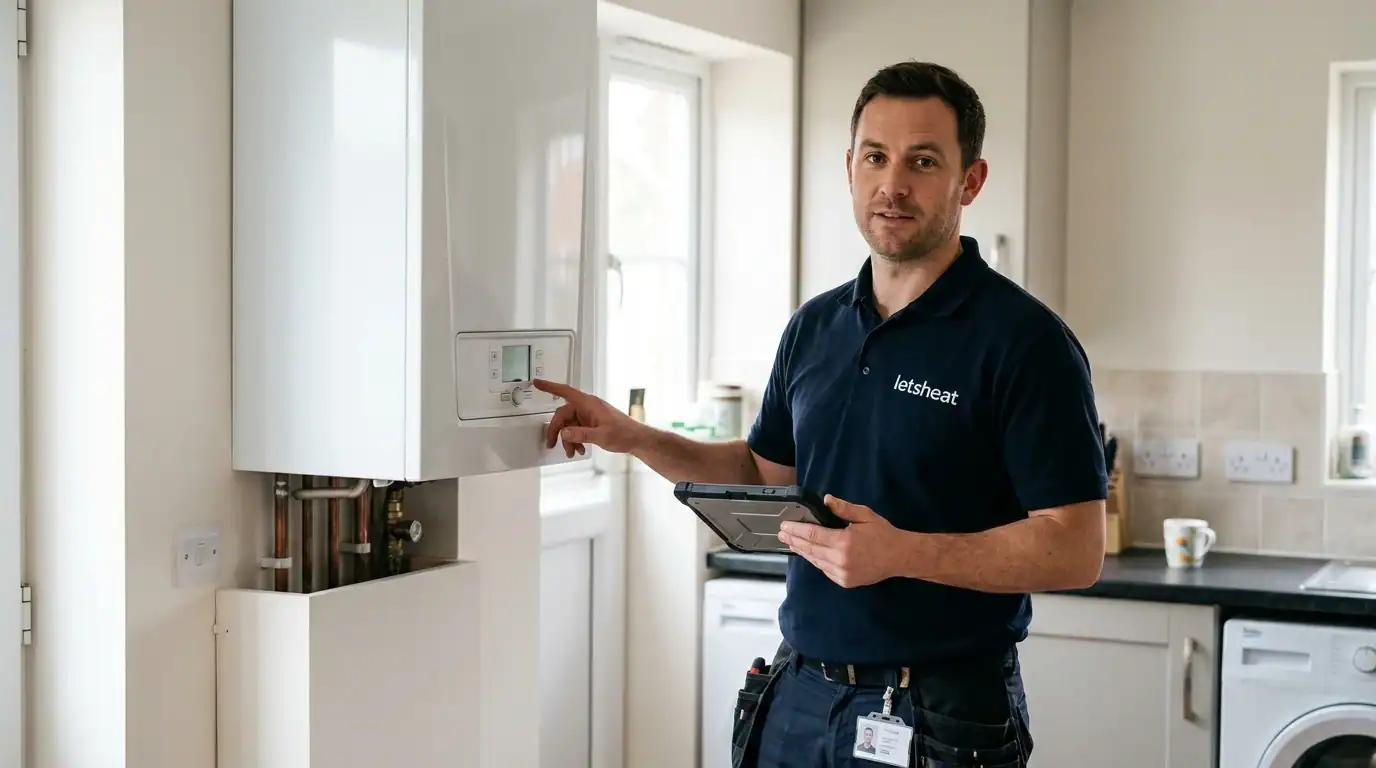
At Let’s Heat, boiler repair cost and fault diagnosis start from £120—a starting price rather than a fixed fee, as the final bill depends on the diagnosed fault, labour time, and any replacement parts required. Before booking an engineer, it helps to understand what shapes your quotation and when replacing an older boiler makes more sense. Quick Answer: What Determines Your Boiler Repair Quote? Initial Diagnosis: Identifies whether the fault needs a minor adjustment or a replacement component. Main Cost Factors: Fault complexity, parts availability, engineer labour time, and standard vs. urgent call-out. Repair vs. Replace: If your boiler is older, breaks down repeatedly, or needs a major part (such as a heat exchanger or PCB), compare repair costs against a new boiler quote.Average Boiler Repair Cost in the UK There is no single price that applies to every boiler repair. The average boiler repair cost depends on the type of boiler, the nature of the fault and whether replacement parts are needed.For example, a minor issue may be relatively straightforward to resolve, whereas problems involving electrical components, pumps or valves may require more time and additional parts.When comparing boiler repair prices, check whether the quote includes:The initial fault diagnosis. Labour and the time required to complete the repair. Replacement parts, if needed. Any additional work identified during the inspection.A low initial price does not always mean a lower final bill. Ask for a clear breakdown before agreeing to the work. What Affects Boiler Repair Costs? Several factors can influence the cost of boiler repair. Understanding them can help you assess a quotation and avoid unexpected charges. 1. Type of Boiler Fault The fault is one of the biggest factors affecting the repair price. Some problems can be resolved with minor adjustments, while others require component replacement or more extensive work.For example, a boiler losing pressure may have a different cause and repair requirement from one that is not producing hot water. 2. Replacement Parts If a component has failed, the engineer may need to replace it. The cost will depend on the part, its availability and whether it is suitable for your boiler model.Some repairs can be completed without replacing parts, but others may require additional components before the boiler can operate safely and correctly. 3. Labour Costs Boiler repair labour cost depends on the time and expertise needed to identify and resolve the problem.A straightforward repair may take less time than a fault that requires further investigation, testing or component replacement. Always check whether labour is included in the quoted price or charged separately. 4. Boiler Make, Model and Age The make and model can affect parts availability and repair requirements. Older boilers may be more difficult or expensive to repair if suitable components are no longer readily available.An engineer may also need to consider the boiler's overall condition before recommending further repairs. 5. Emergency Boiler Repair Cost Emergency boiler repair cost can vary depending on the urgency of the call-out, the time of the appointment, the location and the work required.Before booking an emergency visit, ask whether there is an additional call-out charge and whether the initial price includes diagnosis or labour.Do not assume that every boiler repair company offers 24-hour attendance. Confirm the available appointment times and any additional charges directly with the provider.[caption id="attachment_6889" align="alignnone" width="300"] A Gas Safe registered Let's Heat engineer walking a British homeowner through a transparent boiler repair cost and fault diagnosis quote in a modern kitchen.[/caption] Common Boiler Faults That May Require Repairs Different boiler problems can have different causes, so the cost cannot be confirmed until the fault has been properly diagnosed.The table below gives an overview of common issues and the factors that may affect the repair.Boiler Problem What May Be Involved Typical Repair ComplexityBoiler keeps losing pressure Checking for leaks, pressure relief valve, or expansion vessel faults Minor to ModerateNo hot water Investigating the diverter valve, sensors, or heating controls Moderate (parts may be required)Boiler leaking water Identifying the source of the leak and replacing affected seals or components Minor to Major (depends on source)Boiler keeps switching off Diagnosing circulation, thermostat, sensor, or lockout faults ModerateFaulty heat exchanger Assessing the component and whether repair or replacement is more practical Major (often compared against replacement)Boiler PCB fault Diagnosing the main control board and related electrical faults Major (specialist part & labour)Unusual boiler noises Investigating pump, fan, airlocks, or system circulation issues Minor to ModerateThe examples above are not a diagnosis. A qualified engineer should inspect the boiler before confirming the cause and repair cost.For more information, read our guides to common combi boiler faults, boiler pressure problems and boiler leaks. Boiler Repair or Replacement: Which Is More Cost-Effective? Repairing a boiler is not always the most cost-effective option, particularly if it is older, unreliable or needs repeated repairs.A repair may be a sensible choice when the fault is straightforward, suitable parts are available and the boiler is otherwise in good condition.Replacement may be worth considering if:The boiler has frequent breakdowns. Replacement parts are difficult to source. The repair quotation is high compared with the cost of a new boiler. The boiler is inefficient or no longer meets your household's heating and hot water needs.The right decision depends on the boiler's condition, the repair required and the cost of a suitable replacement.If you are considering a new boiler, explore our boiler replacement options. Boiler Repair and Fault Diagnosis from £120 at Let’s Heat If your boiler is not working properly, Let’s Heat provides boiler repair and fault diagnosis from £120.The final cost depends on the fault identified, labour, replacement parts and any additional work required. You will need a diagnosis and quotation to understand the cost of your particular repair.Let’s Heat uses Gas Safe registered engineers for all gas boiler work (Registration No. 977042).We serve Cardiff, Newport, Barry, Penarth, Bristol and selected surrounding areas. Availability depends on your postcode and engineer availability.Call Let’s Heat on 0330 174 6700 or contact our team online to discuss your boiler problem and check availability in your postcode. Boiler Repair Services in Your Area Looking for professional boiler repairs near you? Let’s Heat provides boiler repair services in selected areas across South Wales. Our engineers can help diagnose boiler faults and recommend suitable repairs, subject to postcode and availability.Explore our local boiler repair services:Boiler Repair in Cardiff Boiler Repair in Newport Boiler Repair in Barry Boiler Repair in Penarth Boiler Repair in BristolFor other locations, contact our team to check whether boiler repair services are available in your postcode. Frequently Asked Questions About Boiler Repair Costs How much does a boiler repair cost in the UK? At Let’s Heat, boiler repair and fault diagnosis start from £120. The final price depends on the diagnosed fault, labour time, and any replacement parts needed, and is confirmed in a clear quote before work begins. What affects the average boiler repair cost? There is no single fixed average because costs depend on the boiler make, age, fault complexity, replacement part availability, and whether an urgent call-out is needed.How much is boiler repair labour? Boiler repair labour costs depend on the time needed to diagnose and complete the repair. Check whether labour is included in the initial quotation or charged separately. Is emergency boiler repair more expensive? It can be. Emergency appointments may involve additional call-out or out-of-hours charges, depending on the provider and appointment time. Confirm the total charges before booking. Is it cheaper to repair or replace a boiler? Repairing is often more practical for a boiler in good condition with a straightforward fault. Replacement may be more cost-effective if the boiler is old, unreliable or requires expensive repeated repairs. Does boiler repair cost include replacement parts? Not necessarily. Some quotations cover diagnosis and labour only, while replacement parts may be charged separately. Always ask for a breakdown of the costs before approving the repair. Can I repair my boiler myself? Gas boiler repairs should only be carried out by appropriately qualified Gas Safe registered engineers. Do not remove the boiler casing or attempt to repair gas components yourself.
-

Viessmann Boilers Review 2026: Models, Prices, Pros and Cons
This Viessmann boilers review compares the main Vitodens ranges homeowners are likely to consider. It explains the differences between the Vitodens 050-W, 100-W, 111-W and 200-W, as well as the heat-only option for traditional cylinder-based systems. Viessmann boilers are available in several domestic heating arrangements, including combi, system, storage-combi and heat-only models. The right choice depends on the property, the household’s hot-water demand, the existing heating system, available space and the installation quotation.No boiler brand is automatically the best for every property. A correctly sized boiler with a well-designed installation is more important than choosing a model simply because it has a premium badge or a high advertised output.If you are comparing replacement options, you can request a new boiler quotation based on your property and heating requirements.Are Viessmann Boilers Any Good? Yes—Viessmann boilers are widely regarded as a reliable, ErP A-rated choice in the UK, known for their corrosion-resistant Inox-Radial stainless steel heat exchangers across the Vitodens range.Viessmann offers a broad range of gas boilers with different sizes, outputs and heating-system arrangements. Its models may suit homeowners looking for compact dimensions, stainless-steel heat-exchanger technology, connected controls or a storage-combi option. The Vitodens 050-W can be a practical starting point for many smaller and medium-sized homes. The Vitodens 100-W offers a broader specification, while the Vitodens 111-W is designed for homeowners who want stored hot water within a storage-combi appliance. The Vitodens 200-W sits at the premium end of the comparison. A Viessmann boiler can be a good choice when the exact model matches the property and the installation is completed correctly. The brand itself does not compensate for poor sizing, weak mains-water flow, unsuitable controls, contaminated system water or an incomplete quotation.Viessmann boiler ranges comparedViessmann Model Boiler Type Key Output Range Best Suited For Installation PricingVitodens 050-W Combi & System Combi: 25kW, 30kW, 35kWSystem: 19kW, 25kW Flats, small and medium homes needing a compact, value-focused boiler Quotation requiredVitodens 100-W Combi & System Up to 35kW (modulating from 3.2kW) Medium-to-large homes wanting connected WiFi controls & broader spec Quotation requiredVitodens 111-W Storage Combi Up to 32kW (integrated hot-water store) Homes with higher hot-water demand without space for a separate cylinder Quotation requiredVitodens 100-W Heat Only Heat-Only (Regular) 11kW, 16kW, 19kW, 25kW, 32kW Traditional cylinder-based systems being replaced like-for-like Quotation requiredVitodens 200-W Combi & System Up to 35kW (1:17 wide modulation) Larger or premium homes wanting a 7-inch touchscreen & advanced controls Quotation requiredVitodens 222-F Floor-Standing Storage Combi Up to 32kW (100L built-in cylinder) Homes preferring a floor-standing unit with strong multi-outlet hot water Quotation required Model names, outputs, warranty offers and availability can change. The exact model and terms should be confirmed in the quotation rather than assumed from a general range name. What Makes Viessmann’s Inox-Radial Heat Exchanger Stand Out? Across the modern Vitodens domestic range—including the Vitodens 050-W, 100-W and 200-W—Viessmann uses its signature corrosion-resistant Inox-Radial stainless steel heat exchanger. Unlike aluminium heat exchangers used in some competing boilers, high-grade stainless steel is engineered to resist corrosion and maintain consistent condensing efficiency over long-term use. Paired with Viessmann’s MatriX-Plus burner and automatic Lambda Pro combustion control, current Vitodens models achieve ErP A-rated efficiency (typically 92%–94%+) while adapting automatically to gas supply conditions—helping reduce wear and keep running performance steady.What type of Viessmann boiler do you need?Combi boilersA combi boiler heats central-heating water and domestic hot water from one appliance. It normally does not need a separate hot-water cylinder, which can make it useful where space is limited.A combi may suit a smaller or medium-sized property with moderate hot-water use. It may be less suitable where several showers or taps are regularly used at the same time.The incoming mains-water flow should be tested before choosing a high-output combi. A larger boiler cannot create additional water flow if the property’s incoming supply is restricted.System boilersA system boiler works with a separate hot-water cylinder. Stored hot water can be useful where several people need hot water close together or where the home already has a suitable cylinder-based heating system.For detailed advice about Viessmann system models, cylinder sizing and stored hot water, read our separate Viessmann system boiler review. That page has a narrower search intent and should be used for system-boiler purchase decisions rather than general brand comparison.Storage combi boilersA storage combi includes stored hot water within the appliance. The Vitodens 111-W is the main model to compare when a homeowner wants more hot-water convenience than a standard instantaneous combi but does not want a separate full-size cylinder elsewhere in the home.The appliance is larger than many standard combis. The installer should check dimensions, service access, hot-water demand and whether the available storage is enough for the household.Heat-only boilersA heat-only boiler is normally used with a hot-water cylinder and, in many traditional installations, a cold-water storage cistern. It can make sense as a like-for-like replacement when the existing system remains suitable.Replacing a heat-only boiler with a combi is not automatically an upgrade. It can require changes to pipework, controls, hot-water arrangements and the boiler position.Our guide to different types of boiler systems explains the main differences before you decide whether the system should be changed.Viessmann Vitodens 050-W reviewThe Vitodens 050-W is a compact range that is available in combi and system arrangements. It is often considered for straightforward replacements where the homeowner wants a Viessmann boiler without moving into the premium end of the range.The 050-W may suit smaller homes and many medium-sized properties, provided the output and hot-water performance match the property. Its compact format can be useful where installation space is limited, but the installer must still allow proper servicing access and check the flue and condensate routes.Advantages•Compact format for suitable replacement positions.•Combi and system versions available.•Suitable output choices across the range.•May offer a practical balance between specification and cost.•Can be paired with compatible controls.Limitations•A standard combi may not suit regular simultaneous hot-water demand.•Compact dimensions do not remove the need for service clearances.•The exact guarantee route should be confirmed before ordering.•A higher-specification model may be more suitable where advanced controls are important.Viessmann Vitodens 100-W reviewThe Vitodens 100-W is available as a combi and system boiler. It may be suitable for homeowners who want a broader specification, connected-control options and a stainless-steel heat-exchanger platform.The model should be compared by its exact output and arrangement. A 100-W combi and a 100-W system boiler serve different heating and hot-water requirements, even though they share the same family name.Advantages•Combi and system options.•Broad range of heating outputs.•Connected-control compatibility on current versions.•Suitable for homeowners wanting more features than a basic replacement.•Can be considered for both new installations and suitable replacements.Limitations•Extra features may not benefit every household.•The warranty period depends on the exact registration and installation route.•A combi version may still be unsuitable for high simultaneous demand.•The full installed cost can be higher than the appliance price suggests.Viessmann Vitodens 111-W reviewThe Vitodens 111-W is a storage combi with an integrated hot-water store. It is designed for homeowners who want stronger hot-water convenience than a conventional instantaneous combi can provide, without installing a separate full-size cylinder elsewhere in the property.The storage arrangement can be useful in homes with higher hot-water demand, but it does not remove the need for careful sizing. The appliance is deeper and heavier than many standard combis, so the proposed location must be checked.Advantages•Integrated hot-water storage.•May provide a stronger response for some high-demand households.•Can be considered where a separate cylinder is difficult to accommodate.•Combi-style heating and hot-water operation in one appliance.Limitations•Larger installation footprint.•Storage capacity is not unlimited.•A system boiler and correctly sized cylinder may be more suitable for some larger households.•Installation access and servicing space need careful planning.Viessmann Vitodens 100-W Heat Only reviewThe Vitodens 100-W Heat Only is designed for homes that retain a heat-only arrangement with stored hot water. It can be considered where the existing cylinder, pipework and controls are in good condition.A heat-only replacement may reduce disruption compared with converting the entire property to a combi. It may also be appropriate where the home’s hot-water system already performs well and there is no practical reason to remove the cylinder or storage arrangement.The installer should check the cylinder, pump, valves, controls, cold-water storage and pipework before recommending a like-for-like replacement.Viessmann Vitodens 200-W reviewThe Vitodens 200-W is the premium model in this comparison. It may appeal to homeowners who want advanced controls, a wider modulation range and a higher-specification interface.Premium features only add value when the heating system can use them. The installer should explain how the boiler will operate at different heat loads, what controls are included and why the model is more suitable than a less expensive alternative.Advantages•Premium specification and control options.•Wide modulation range on applicable models.•Combi and system arrangements may be available depending on the exact range.•Suitable for higher-specification replacement projects.•May work well with a carefully designed and balanced heating system.Limitations•Higher appliance and installation cost.•Extra controls may not benefit a simple property.•A premium boiler is not automatically more suitable for a small home.•The quotation should explain the value of the additional features.What size Viessmann boiler do you need?Boiler output should be based on the heat loss of the property, not only the number of bedrooms. The assessment may consider floor area, insulation, windows, external walls, radiator output, flow temperature and the condition of the existing system.For a combi, the installer should also consider the incoming mains-water flow and the hot-water demand. For a system boiler, the cylinder size and recovery requirement are equally important.Our boiler kW calculator can help you understand the factors involved, but it should not replace a professional assessment.Oversizing is not automatically better. A boiler that is much larger than the heating requirement may cycle more frequently, while an undersized boiler may struggle to meet the heating and hot-water demand.Viessmann controls and efficient operationThe boiler’s efficiency label does not predict the household’s final gas use. Performance depends on flow temperature, controls, radiator sizing, balancing, insulation, weather and the way the household uses heating and hot water.Useful controls may include a room thermostat, programmer, thermostatic radiator valves, weather compensation and connected monitoring. Ask the installer whether the controls are included in the quotation and how they will work with the chosen boiler type.A complicated control package is not automatically better. It should be selected because it helps the household operate the system more effectively.Viessmann boiler prices and installation costsThere is no single installed price for a Viessmann boiler. The total depends on the exact model, output, boiler type and installation work.The quotation may be affected by:•Same-position replacement or boiler relocation.•Combi, system, storage-combi or heat-only arrangement.•Flue length and terminal position.•Condensate drainage.•Gas-supply pipework.•Cylinder and valve work.•Controls and electrical connections.•System cleaning and inhibitor.•Filter and system protection.•Removal and disposal of old equipment.•Making good after the installation.Our new boiler cost guide explains why two quotations for similar boilers can have different totals.Viessmann warranty and guarantee considerationsDo not compare warranties only by the longest number of years shown in an advert. Check the exact model, registration deadline, installer conditions, annual servicing requirements and whether the cover includes parts and labour.Keep the invoice, installation paperwork, Benchmark record and service history. Citizens Advice explains how warranties and guarantees work alongside legal rights. Our guide to boiler warranties explains what homeowners should compare.Advantages of Viessmann boilersDepending on the model and property, potential advantages include:•A broad selection of boiler types.•Compact options for suitable installation positions.•Combi, system, storage-combi and heat-only choices.•Compatible control and connectivity options.•Stainless-steel heat-exchanger options across relevant ranges.•Models aimed at both straightforward and premium installations.These advantages depend on the complete installation. Correct sizing, clean system water, suitable controls and proper commissioning remain essential.Potential disadvantages and limitationsPotential limitations include:•Several ranges and model names can make comparison confusing.•Warranty wording may vary by model and registration route.•Premium features can increase cost without helping every household.•High-output combis cannot overcome poor incoming mains-water flow.•A storage combi needs more space than a standard combi.•A system or heat-only boiler requires suitable stored-hot-water equipment.A professional quotation should explain why the proposed model is suitable and what alternatives were considered.Reliability, servicing and repairsReliability depends on the exact model, installation quality, water condition, servicing and the wider heating system. No manufacturer name guarantees that a boiler will be trouble-free.Annual servicing may be required under the conditions of an extended guarantee. Keep the service record and arrange professional diagnosis if the boiler repeatedly loses pressure, locks out or fails to provide heating or hot water.Our boiler service page provides information about ongoing care. If the boiler develops a fault, compare repair with replacement through our boiler repairs service before assuming that a new boiler is necessary.Choosing a safe installerGas boiler work must be completed by a suitably qualified Gas Safe registered engineer. You can use the Gas Safe Register to check an engineer or business before work begins.If you are in Cardiff or the surrounding area, you can explore our boiler installation in Cardiff service for a property-specific quotation. [caption id="attachment_2365" align="alignnone" width="300"] Viessmann boilers review 2026[/caption]What should a Viessmann boiler quotation include?Before comparing quotations, check that each one identifies:•Exact manufacturer, model and output.•Boiler type and hot-water arrangement.•Controls and thermostat.•Boiler position and service clearances.•Flue and condensate route.•Gas-supply and heating-pipe alterations.•Filter, cleaning and inhibitor.•Cylinder and storage work where applicable.•Commissioning and registration.•Guarantee route and servicing requirements.•Removal, disposal and making-good work.•Any exclusions or additional charges.A cheaper quotation may exclude controls, system cleaning, flue work or other necessary installation items. Compare the scope before comparing the headline price.Viessmann Boilers FAQsWhich Viessmann boiler is best?There is no universal best model. The Vitodens 050-W may suit a compact replacement, the 100-W offers a broader specification, the 111-W is relevant for storage-combi demand, the heat-only option suits traditional systems and the 200-W targets premium installations.Is the Vitodens 111-W a system boiler?No. It is a storage combi. It includes stored hot water within the appliance, while a system boiler normally works with a separate hot-water cylinder.Is Viessmann better than other boiler brands?The answer depends on the exact model, property, installer, controls, warranty and quotation. Compare equivalent boiler types and outputs rather than comparing brand names alone.Is a Viessmann combi suitable for two bathrooms?It may be suitable in some homes, but simultaneous demand and incoming water flow must be assessed. A storage combi or system boiler with a correctly sized cylinder may be more appropriate for regular simultaneous use.How long does a Viessmann boiler last?The service life depends on installation quality, maintenance, water condition, usage and the model. A boiler that needs frequent expensive repairs may no longer be economical to keep, even if it is still operating.Do Viessmann boilers need annual servicing?Follow the manufacturer’s requirements and the terms of the guarantee. Annual servicing is commonly required for extended cover, and the service record should be retained.Can I replace a heat-only boiler with a Viessmann combi?It may be possible, but the change can require alterations to pipework, controls, hot-water arrangements and the boiler position. The installer should compare the conversion with a like-for-like replacement.What is the difference between the Vitodens 100-W and 200-W? Both use Viessmann’s Inox-Radial stainless steel heat exchanger and built-in WiFi, but the Vitodens 200-W adds a wider 1:17 modulation range, Lambda Pro Plus control, and a 7-inch colour touchscreen. How does a Viessmann boiler compare to Worcester Bosch? Both are A-rated brands offering up to 12-year warranties on selected models. Viessmann is known for its Inox-Radial stainless steel heat exchanger; compare models in our Worcester Bosch boiler review. Does Viessmann make floor-standing boilers? Yes. Alongside wall-mounted ranges, Viessmann offers floor-standing options like the Vitodens 222-F, which combines a condensing boiler with a built-in 100-litre hot-water cylinder.Final verdictViessmann offers a flexible range rather than one model that suits every home: the Vitodens 050-W fits compact replacements, the 100-W adds broader specification, the 111-W provides built-in hot-water storage, the Heat Only range suits traditional cylinder systems, and the 200-W targets premium installations. Before ordering, always confirm the boiler type, calculated kW output, controls, installation scope and guarantee conditions. If you are comparing Viessmann boiler installation options in Cardiff, Newport, Barry, Penarth, Bristol or selected surrounding areas (subject to postcode and availability), our Gas Safe registered engineers at Let’s Heat (Registration No. 977042) can assess your property and provide a clear, tailored quote. Call 0330 174 6700, request a new boiler quote online, or view our boiler servicing (from £75) and boiler repair (from £120) pages.
-
Alpha Boiler Fault Codes / Error Codes List
Alpha boiler fault codes help identify heating and hot-water issues—from ignition failure and low water pressure to overheating or fan faults—so you know what the display means and when to call a qualified engineer. In this guide, the Gas Safe registered heating team at Let's Heat lists common Alpha boiler error codes across the E-Tec, E-Tec Plus, Evoke, Regular, and Protec Plus ranges, alongside flashing light meanings and safe next steps. For a wider overview of models and warranties, see our Alpha Boilers guide. Quick Summary: Most Common Alpha Boiler Fault Codes01 / E01: Ignition failure (no flame detected — Gas Safe engineer required).10 / E10: Low primary system pressure (check pressure gauge and manual; look for leaks if it keeps dropping).02 / 25: Overheat boiler lockout (restricted flow, air in the system, or pump issue).16: Fan fault (fan or wiring issue — Gas Safe engineer required).Legal Disclaimer: Professional Repair OnlyIt is important to note that attempting to fix your Alpha boiler on your own is both illegal and dangerous. Only a Gas Safe registered engineer is authorised to work on gas appliances. This guide is meant to provide diagnostic information to help you communicate effectively with professionals and understand potential repair costs.General Alpha Boiler Error/Fault CodesBelow is a table of the most common fault codes encountered in Alpha boilers, along with descriptions of the issues they represent.Common Fault Codes and DescriptionsFault Code Fault Description1 Ignition failure Possible causes: issues with gas supply, pressure tubes, ignition electrode, flame sensor, gas valve, or PCB (Printed Circuit Board).2 Overheat boiler lockout Caused by a blocked heat exchanger, air in the system, pump issues, or thermostat problems.3 High flue thermostat temperature Indicates restricted primary flow, blocked heat exchanger, or flue issues.4 Gas valve electrical fault Related to faulty wiring connections or gas valve.5 Heating flow sensor fault Issues with flow sensor wiring or sensor failure.6 Domestic hot water (DHW) sensor fault Faulty wiring or sensor malfunction in the DHW system.8 Maximum number of resets Indicates repeated attempts to reset the boiler have failed. Review fault history for more information.10 Low primary system pressure Often due to leaks, faulty pressure relief valves, or insufficient expansion vessel pressure.12 Cylinder sensor fault (FlowSmart only) Indicates a fault in cylinder sensor wiring or sensor malfunction.15 Internal wiring error Involves issues with internal wiring connections to the PCB.16 Fan fault Related to faulty fan or its wiring connections.20 Flame sensing fault Fault in flame sensing electrode or related wiring.24 Control panel button fault Usually caused by jammed buttons on the control panel or PCB.25 Overheat lockout Caused by air in the heat exchanger or restricted flow within the system.27 Insufficient primary flow Possible blockages in the system, air in the heat exchanger, or pump issues.29 Flue sensor fault Indicates faulty flue sensor or related wiring issues.31 Communication loss with external control Involves issues with remote control or receiver connection.37 Low supply voltage Check the main power supply for irregularities.38, 43 Loss of flame rectification Potential gas supply issues or problems with flame sensing components.44 Safety lockout Caused by thermostat issues or hot tap requests being processed too quickly.46 External sensor intervention Often caused by external sensor damage or faulty connections.47 Reduced burner output Indicates airflow restrictions, heat exchanger issues, or pump faults.51 Climatic RF communication fault Related to communication issues between the boiler and the climatic control unit.[caption id="attachment_6878" align="alignnone" width="300"] Troubleshooting Alpha E-Tec, Evoke, and Protec Plus fault codes and flashing warning lights in a UK home with Let's Heat.[/caption] Alpha E-Tec, E-Tec Plus, Evoke Combi Boiler Error/Fault CodesSpecific Error Codes for E-Tec ModelsFault Code Fault Description60 Pump error Either the pump is stuck or there is an electrical fault. The pump may need freeing, or replacement may be required.61 Air in pump This is due to restricted central heating flow, improper system pressure, or valves being closed.70 Return/flow sensor fault Sensor wiring issues or faulty sensor resistance are likely causes.75/76 Return/flow sensor failure Both sensors may need to be inspected for potential failures.SR Service reminder Indicates that the service countdown has reached 0, but the boiler will continue working.Alpha E-TEC Regular Gas Boiler Error CodesCommon Fault Codes for Regular Gas BoilersFault Code Fault Description1 Ignition failure Possible issues include problems with the gas supply, ignition electrode, or flame sensor.2 Overheat boiler lockout Caused by blocked heat exchangers, pump failures, or air trapped in the system.3 High flue thermostat temperature Indicates restricted flow or blocked heat exchangers.4 Gas valve electrical connection fault Fault in gas valve wiring or a faulty PCB.5 Heating flow sensor fault Issues with flow sensor wiring or malfunctioning sensor.6 Internal wiring error Indicates incorrect wiring configurations or internal PCB faults.7 Chimney sweep function active The chimney sweep function is active and needs to be disabled.16 Fan fault Indicates a problem with fan wiring or fan malfunction.27 Insufficient primary flow Blocked flow, air in the heat exchanger, or pump faults are common causes.44 Safety lockout Triggered by faulty thermostat requests or rapid on/off hot tap commands.Alpha Protec Plus System Error CodesFault Codes Specific to Protec Plus SystemsFault Code Fault Description0A1 Ignition failure Could be caused by gas supply issues or spark electrode faults.0A2 Flame detection fault Indicates issues with flame sensing electrode connections.0A3 Overheat thermostat lock-out Caused by overheating in the primary heating circuit, restricted water circulation, or a faulty overheat thermostat.0A5 Fan speed fault Flue/ventilation problems or fan wiring issues.0A7 High flue temperature fault Could be caused by air in the heat exchanger or system restrictions.0A9 Gas valve electrical error Indicates a fault in valve connections or PCB.0A15 Flow and return sensor anomaly Detected abnormal temperature changes in the flow/return sensor.0A30 Flow sensor short circuit Indicates flow sensor wiring or connections need attention.0A31 Flow sensor out of range The flow sensor is detecting a temperature outside the normal range.0A37 Insufficient system flow The system flow is too low, likely due to restrictions or pump issues.0A43 Return sensor short circuit Caused by damaged return sensor wiring or connections. Alpha Flashing Light Error CodesUnderstanding Flashing Lights on Alpha BoilersAlpha boilers use a flashing light sequence to indicate specific problems. Below are common flashing light sequences and their meanings:Light Sequence Fault DescriptionNo lights on Electricity fault Indicates no power supply to the boiler.Red A or B Burner has failed to ignite Rotate selector switch to the reset position and try again.Yellow B or C Burner is lit No action required.Flashing yellow or green D Electrical supply is on No action required.Flashing red A or B Temperature sensor fault Contact a Gas Safe engineer.Red and yellow flashing Pump fault or restricted flow A Gas Safe engineer should check the pump and system.Final Thoughts: Boiler Maintenance and WarrantyRegular maintenance is essential for the long-term reliability of your Alpha boiler. Schedule an annual service to keep warranty conditions valid and spot developing issues early. If faults keep returning and repairs are no longer cost-effective, replacing the boiler may be the smarter long-term option. Always prioritise safety and never remove the boiler casing or attempt internal gas repairs yourself. If your Alpha boiler keeps showing a fault code across Cardiff, Newport, Bristol, or South Wales, our Gas Safe registered engineers (Registration No. 977042) can help. Whether you need boiler repairs, urgent emergency boiler repair, or want to weigh up a replacement with a free new boiler quote, call Let's Heat on 0330 174 6700 or visit our Contact Us page. Frequently Asked Questions About Alpha Boiler Fault CodesWhat does E01 mean on an Alpha boiler?Error E01 indicates an ignition failure—meaning the boiler could not detect a flame when trying to light the burner. Common causes include gas supply, ignition electrode, or flame sensor faults, which require a Gas Safe engineer.Why is my Alpha boiler flashing red?A flashing red light on the A indicator usually signals an overheat thermostat fault (often alongside code 2, 25, or 0A3). Switch off the demand and contact a Gas Safe registered engineer to inspect the cause safely.What does fault code 10 (E10) mean on an Alpha boiler? Fault code 10 (or E10) indicates low primary water pressure in the heating system. Check the pressure gauge against your manual; if the pressure keeps dropping after topping up, contact a Gas Safe engineer to check for leaks or a faulty pressure relief valve. Can I reset my Alpha boiler myself? Yes, you can try a single reset following your exact model’s user manual (for example, turning the selector switch to the reset position). Avoid repeated resets—too many attempts can trigger fault code 8—and call a Gas Safe engineer if the error returns.
-
Troubleshooting Ariston Boiler Error Codes | Expert Solutions & Fixes
Ariston boiler error codes help identify faults affecting your heating system, from overheating and low water pressure to ignition and circulation problems. Each code points to a particular issue, helping you understand why your boiler may have stopped working and whether you need professional assistance. In this guide, the Gas Safe registered heating team at Let's Heat explains common Ariston boiler fault codes—including 101, 108, and 501—alongside model-specific codes and when to call an engineer. Error code meanings and model compatibility can vary, so always check the user manual for your specific boiler before taking action. Important: Never remove the boiler casing or attempt to repair internal components, gas valves, burners, fans, flues or electrical parts yourself. Work on gas appliances must be carried out by a suitably qualified Gas Safe registered engineer. Quick Summary: Key Ariston Faults at a Glance101: Overheating (circulation or primary circuit issue — engineer required).108: Low water pressure ("Filling Needed" — check pressure gauge and manual).501: No flame detected (ignition or gas supply fault — Gas Safe engineer required).5P1 / 5P3 / 5P4 (often misread as SP1/SP3): Ignition attempt failed or flame cut-off warning.What Do Ariston Boiler Error Codes Mean? Ariston boilers display numerical or alphanumeric codes when their internal safety and monitoring systems detect a fault or unusual operating condition. The first digit often indicates the part of the boiler associated with the issue:1xx: Primary heating circuit2xx: Domestic hot water circuit3xx: Internal electronic components4xx: External electronic components and controls5xx: Ignition and flame detection6xx: Air intake and flue gas outlet7xx: Multi-zone heatingThe exact meaning depends on the boiler model and its control system. Some codes indicate a warning, while others cause the boiler to shut down for safety. Common Ariston Boiler Error Codes Explained Some Ariston fault codes are particularly useful to recognise because they relate to common boiler operating problems. Ariston Boiler Error 101 – Overheating Error 101 indicates that the boiler has detected an overheating condition. This may be associated with restricted water circulation or another issue affecting the heating circuit. The boiler may shut down to protect itself. Do not remove the casing or attempt to investigate internal components. If the code remains or returns, contact a Gas Safe registered engineer. Ariston Boiler Error 108 – Low Water Pressure Error 108 is commonly associated with insufficient water pressure in the heating system. The boiler may display a message such as “Filling Needed”. Check the pressure gauge against the recommended range in your boiler manual. If the pressure is low, only follow the manufacturer's filling instructions if you are confident using the filling loop. If the pressure keeps dropping or you need to refill the system repeatedly, stop topping it up and arrange an inspection. There may be a leak or another fault that needs attention. Ariston Boiler Error 501 – No Flame Detected Error 501 means the boiler has not detected a flame during the ignition process. The appliance may shut down because it cannot confirm that combustion has started correctly. Possible causes include an ignition fault or a problem with the gas supply or flame detection system. These components must be checked by a qualified engineer. Do not attempt to clean the burner, adjust the gas valve or investigate internal ignition components yourself. Ariston Boiler Error 1P4 – Circulation or Water-Related Warning The meaning of 1P4 depends on the Ariston model. It is listed differently across some model ranges and should not be treated as a universal fault description. Check the exact code against your boiler's user manual. If the warning remains, contact a qualified heating engineer. Ariston 5P1, 5P3 and 5P4 – Ignition and Flame Warnings These warning codes are associated with ignition and flame detection on certain Ariston models:5P1: First ignition attempt failed.5P3: Second ignition attempt failed.5P4: Flame cut-off.The display format and precise meaning can vary by model. If one of these warnings appears repeatedly, arrange a professional inspection rather than attempting to work on the boiler's ignition or gas components. [caption id="attachment_6875" align="alignnone" width="300"] A Gas Safe registered Let's Heat engineer diagnosing Ariston boiler error codes including 101, 108, 501, 1P4, and 5P1 in a British home utility room.[/caption] Ariston Boiler Error Codes List The tables below bring together the codes included in this guide. They are intended as a reference, not a universal list for every Ariston boiler. Always check the model-specific manual before interpreting a code or deciding what action to take. Central Heating Circuit Error CodesError Code Possible Cause101 Overheating102 Pressure sensor error103–107 Insufficient circulation108 Insufficient water pressure – filling required109 System pressure above 3 bar110 Central heating flow temperature probe circuit open or short circuit112 Central heating return temperature probe circuit open or short circuit114 External sensor circuit open or short circuit116 Floor thermostat contact open118 Heating delivery probe problem1P1–1P3 Insufficient circulation warning1P4 Model-dependent warning; check the relevant manualDomestic Hot Water Circuit Error CodesError Code Possible Cause202 Bottom storage temperature probe open or short circuit204 Solar collector temperature probe open or short circuit205 Domestic hot water inlet probe open circuit207 Solar collector overheating208 Solar collector frost protection temperatureThese codes are listed for selected Ariston models with the relevant hot water or solar heating components. They may not apply to every boiler. Internal and External PCB Error CodesError Code Possible Cause301 EEPROM error302 Communication error303 Main printed circuit board (PCB) error304 Too many resets within 15 minutes305 Main PCB error306 Main PCB error307 Main PCB error3P9 Service or scheduled maintenance indication407 Room sensor circuit open or short circuitPCB and electronic faults require professional diagnosis. Do not open the boiler or attempt electrical testing yourself. Ignition and Flame Detection Error CodesError Code Possible Cause501 No flame detected502 Flame detected with gas valve closed504 Flame lift5P1 First ignition attempt failed5P3 Second ignition attempt failed5P4 Flame cut-offThese faults can involve ignition, flame detection or gas-related components. Contact a Gas Safe registered engineer if the boiler displays one of these codes and the problem does not clear in accordance with the user manual. Air Intake and Flue Error CodesError Code Possible Cause604 Insufficient fan speed610 Thermofuse open612 Incorrect fan speed measurementThese faults may relate to the fan, air intake or flue system. Do not inspect or dismantle these components yourself. A qualified engineer should investigate the cause. Multi-Zone Heating Error CodesError Code Possible Cause701 Zone 2 outgoing sensor defective702 Zone 2 return sensor defective703 Zone 3 outgoing sensor defective704 Zone 3 return sensor defective705 Hydraulic separation sensor defective706 Zone 2 overheating707 Zone 3 overheatingMulti-zone codes apply only to compatible heating systems. Your boiler manual or a qualified engineer can confirm whether they are relevant to your installation. How to Troubleshoot Basic Ariston Boiler Problems There are a few basic checks you can make without opening the boiler. These checks do not replace professional diagnosis. Check the Boiler Pressure Look at the pressure gauge and compare the reading with the recommended range in your user manual. If the pressure is too low, follow the manufacturer's instructions for repressurising the system, provided you are confident doing so. If the pressure keeps falling, do not keep topping it up. Contact a heating engineer to investigate the cause. Check the Thermostat Settings Make sure your room thermostat is switched on and set to a temperature higher than the current room temperature. If it is wireless, check the batteries and make sure the receiver has power. If the boiler is not responding to the thermostat, the problem may involve the heating controls or their connection rather than an internal boiler fault. Read our guide to thermostat and boiler communication problems. Reset the Boiler Only as Instructed Some Ariston models allow the user to reset the boiler using the control panel. Follow the instructions in your specific user manual and do not repeatedly press the reset button. If the same fault returns, stop resetting the boiler and arrange professional assistance. Repeated resets can trigger a further shutdown on some models. When Should You Call a Gas Safe Engineer? You should contact a Gas Safe registered engineer if:An error code remains after following the checks in your user manual.The same fault keeps returning after a reset.The boiler repeatedly loses pressure.You have no heating or hot water and cannot identify a simple control-setting issue.The display shows an ignition, flame detection, fan, flue or PCB fault.You notice unusual noises, leaks or signs of damage.Never remove the boiler casing or attempt to repair gas, combustion, electrical or internal components yourself. You can use the Gas Safe Register's engineer checking service to check an engineer's registration. How to Prevent Ariston Boiler Problems Regular maintenance can help keep your boiler operating safely and may identify developing faults before they cause a breakdown.Arrange an annual service: Have your boiler checked by a Gas Safe registered engineer.Pay attention to changes: Note unusual noises, pressure changes or recurring error codes.Follow the user manual: Use the manufacturer's guidance for normal operation and basic checks.Use suitable replacement parts: Repairs should use parts approved for the relevant boiler model and be carried out by a qualified professional.Ariston Boiler Manuals and Technical Support Ariston produces different boiler ranges, and fault codes can vary between models. If you are unsure what a code means, find the user manual for your exact boiler rather than relying on a general error-code list. You can also visit Ariston UK Technical Support, which provides product documentation and technical resources for registered Gas Safe installers. Need Help with an Ariston Boiler? If your Ariston boiler keeps displaying an error code or has stopped providing heating or hot water, a professional inspection can diagnose the fault safely and prevent further damage. At Let's Heat, our Gas Safe registered engineers (Registration No. 977042) support homeowners across Cardiff, Newport, Bristol, and South Wales. Whether you need boiler repairs, urgent emergency boiler repair, or want to compare options for a replacement with a free new boiler quote, we can help you choose the right next step. Call Let's Heat on 0330 174 6700 or visit our Contact Us page to book an engineer. Frequently Asked Questions What do Ariston boiler error codes mean? Ariston boiler error codes identify faults or warnings detected by the boiler's control system. The meaning depends on the code and the specific boiler model. What does error 101 mean on an Ariston boiler? Error 101 indicates overheating. The boiler may shut down to protect the heating system, and a Gas Safe registered engineer should investigate if the fault persists. What does error 108 mean on an Ariston boiler? Error 108 commonly indicates low water pressure in the heating system. Check the pressure against your boiler manual and seek professional help if it keeps dropping. What does error 501 mean on an Ariston boiler? Error 501 means the boiler has not detected a flame during ignition. It may involve an ignition or flame detection fault and should be checked by a qualified engineer. What do Ariston SP1 and SP2 error codes mean? On Ariston digital displays, 5P1 and 5P2 (ignition warnings) are often misread as SP1 or SP2. Always check your model’s user manual or ask a Gas Safe engineer to confirm the exact fault. Can I reset my Ariston boiler? Some Ariston boilers allow a reset through the control panel. Follow the instructions in your user manual and avoid repeated resets. If the fault returns, contact a qualified engineer. How often should an Ariston boiler be serviced? A boiler should be serviced annually by a Gas Safe registered engineer to check its condition and safe operation. More Boiler Error Code Guides You may also find these boiler fault-code guides useful:Potterton Boiler Error CodesIntergas Boiler Error CodesBiasi Boiler Error CodesZanussi Boiler Error CodesVokèra Boiler Fault CodesFerroli Boiler Error CodesCombi Boiler Common Faults
-
Thermostat and Boiler Not Communicating: Common Issues and Fixes
Thermostat and Boiler Not Communicating? If your boiler is ignoring your thermostat or your thermostat is not talking to the boiler, the issue is commonly caused by flat batteries, incorrect settings, a lost wireless signal, or a fault with the receiver or wiring. In this troubleshooting guide, the Gas Safe registered heating team at Let's Heat walks through the safe checks you can do yourself and when to call an engineer. Quick Fix Checklist (Safe First Checks):Check the batteries: Replace flat batteries in battery-powered or wireless thermostats.Check settings & schedules: Confirm heating mode is active and the target temperature is set above the current room temperature.Check receiver lights: For wireless models, ensure the boiler receiver has power and is showing a normal connection indicator.Check boiler power: Confirm the boiler control panel is lit and not displaying a fault or error code.Re-pair if needed: Follow your exact manufacturer’s manual to re-bind a lost wireless connection.Understanding the Thermostat-Boiler Connection Your room thermostat controls your central heating by sending a signal to the boiler when the room temperature falls below the selected setting. Once the required temperature is reached, it signals the heating system to stop. Wired thermostats communicate through electrical connections, while wireless models send signals to a receiver connected to the boiler. Some compatible systems also use digital protocols such as OpenTherm to allow the thermostat and boiler to exchange more detailed heating information. The type of control system you have can help narrow down the cause of a connection problem. You can also read our guide to how a Y-plan heating system works. Heating controls vary between properties and boiler systems. The Energy Saving Trust guide to thermostats and heating controls explains the different types of controls used in UK homes and how they help manage central heating. Why Is My Boiler Not Responding to the Thermostat? If your boiler does not switch on when you increase the thermostat temperature, the problem may be with the thermostat, receiver, wiring or boiler itself. Here are the most common causes.Symptom Likely Cause Safe First CheckThermostat screen is blank Flat batteries or power loss Replace batteries or check power supplyBoiler ignoring thermostat demand Incorrect schedule, mode, or lost RF signal Raise target temperature above room temp & check receiverWireless receiver showing red/flashing light Lost wireless pairing or receiver fault Check power and follow model-specific pairing stepsBoiler control panel not working or showing a code Boiler power issue or internal boiler fault Check boiler fuse/power switch & consult user manualWired thermostat display works but heating stays off Loose wiring or control circuit fault Contact a qualified electrician or Gas Safe engineer1. Thermostat Is Off or Needs New Batteries Flat or incorrectly fitted batteries can prevent a battery-powered thermostat from sending signals to the boiler. Check the thermostat display for a low-battery warning. Replace the batteries if necessary, following the manufacturer's instructions, and check whether the heating responds. If the display remains blank, consult the thermostat manual before considering a replacement. 2. Incorrect Thermostat Settings Sometimes, the thermostat is working properly but has been set incorrectly. Check that:The thermostat is set to heating mode.The target temperature is higher than the current room temperature.The heating schedule allows the system to run.Holiday mode or another setting is not preventing the heating from switching on.If your system has separate heating and hot water controls, make sure you are adjusting the correct setting. 3. Incorrect Thermostat Placement A thermostat may give inaccurate temperature readings if it is positioned near direct sunlight, radiators, draughts or other sources of heat. Keep it away from these areas so it can measure the room temperature accurately. A wireless thermostat may be easier to reposition, but moving a wired thermostat involves electrical work and should be left to a qualified professional. 4. Wiring Problems in Wired Thermostats A wired thermostat relies on electrical connections to communicate with the heating system. Damaged cables, loose connections or electrical faults can prevent it from sending the correct signal. If the thermostat display is working but the boiler does not respond, the wiring or control circuit may need checking. Do not remove the thermostat cover or attempt electrical repairs yourself. Contact a qualified electrician or heating engineer. 5. Boiler Power or Fault Problems Your thermostat cannot start the heating if the boiler has no power, the boiler control panel is not working, or the appliance has locked out due to a fault. Check that the boiler's power supply is switched on and look at its control panel display for any warning messages or fault indicators. If your boiler displays an error code, the cause will depend on its make and model. For example, our guide to Ariston boiler error codes explains faults specific to Ariston boilers. If the boiler repeatedly stops working or displays a fault, contact a qualified heating engineer rather than repeatedly resetting it. 6. Faulty Wireless Thermostat Receiver Wireless thermostats communicate with a receiver connected to the boiler. The receiver passes the thermostat's heating demand to the heating system. If the receiver loses power, develops a fault or loses its connection with the thermostat, the boiler may not respond. Check the receiver's indicator lights and power status using the manufacturer's instructions. If it appears to have power but does not respond, a heating engineer may need to inspect or replace it. Wireless Boiler Thermostat Problems If your wireless thermostat is not communicating with your boiler, the connection between the thermostat and receiver may have been interrupted. Common causes include:Flat or incorrectly fitted batteries.The thermostat being too far from the receiver.Wireless interference or a lost connection.The receiver losing power.A fault with the thermostat or receiver.Start by checking the batteries and making sure both devices have power. If the thermostat has been moved, return it to a suitable position and check whether communication is restored. If the connection remains lost, follow the manufacturer's instructions to pair the thermostat with its receiver again. The pairing process varies between models, so avoid using instructions intended for a different thermostat. Honeywell Thermostat Not Connecting to Boiler If your Honeywell thermostat is not connecting to your boiler, the problem may involve the batteries, wireless signal or receiver. Try these basic checks:Check the thermostat display and replace the batteries if required.Make sure the receiver has power.Check the receiver's indicator lights against the instructions for your model.Make sure the thermostat is within the recommended range of the receiver.Follow the manufacturer's instructions if the thermostat needs to be paired again.Honeywell Home thermostats use different controls and pairing procedures, so check the instructions for your specific model. For further guidance, see Honeywell Home's thermostat troubleshooting video. If the thermostat and receiver still cannot communicate, a qualified heating engineer can check whether either component has developed a fault. For model-specific guidance, refer to the Honeywell thermostat troubleshooting guide, which explains common wireless communication problems and the checks recommended for compatible systems. Center Wireless Thermostat Not Working If you have a Center wireless thermostat (commonly supplied in UK homes through plumbing merchants) that is not communicating with your boiler, the fault usually comes down to low batteries, wireless range, or a lost link with the receiver box. Start with these safe checks:Replace the batteries in the room thermostat with fresh alkaline batteries.Check that the Center receiver box beside the boiler has power and note any flashing or red status lights.Move the thermostat closer to the receiver to rule out wireless interference.Follow the specific re-binding instructions in your Center thermostat user manual (steps vary between Center models such as digital and programmable units).If the receiver still does not respond to a heating demand, arrange an inspection by a qualified heating engineer. How to Check If Your Boiler Thermostat Is Working You can carry out a few basic checks to find out whether your thermostat is responding correctly.Check the display: Make sure the thermostat is switched on and showing a temperature reading.Increase the target temperature: Set it above the current room temperature to create a demand for heating.Check the receiver: If you have a wireless thermostat, look at its status indicators.Check the boiler: See whether it responds to the heating demand.Allow time for a response: Some heating systems take a short time to respond after a change in settings.If the thermostat appears to be working but the boiler does not respond, the fault could involve the receiver, wiring or boiler controls. Do not remove electrical covers or test live connections. If these checks do not identify the problem, contact a qualified heating engineer. [caption id="attachment_6871" align="alignnone" width="300"] A Gas Safe registered Let's Heat engineer diagnosing a thermostat and boiler not communicating issue in a British home, including wireless receiver, Honeywell, and Center thermostat checks.[/caption] How to Reconnect a Wireless Thermostat to a Boiler If your wireless thermostat has stopped communicating with the boiler, it may need to be paired with the receiver again. The exact process depends on the model, but these general checks can help:Check that the thermostat has working batteries or a suitable power supply.Make sure the receiver connected to the boiler has power.Place the thermostat within the recommended range of the receiver.Follow the manufacturer's instructions to enter pairing mode on both devices.Check whether the connection has been restored and the boiler responds to a heating demand.Some systems require a specific sequence to reconnect. Always use the instructions for your thermostat model rather than guessing which buttons to press. If the connection cannot be restored, or the receiver shows signs of an electrical fault, contact a qualified professional. For more detailed guidance, read our guide on how to connect a wireless thermostat to a boiler. When Should You Call a Heating Engineer? Basic checks may resolve simple thermostat problems, but some faults need professional attention. Contact a qualified heating engineer if:The thermostat display works but the boiler does not respond.A wireless thermostat will not pair with its receiver.The receiver appears to have developed a fault.You suspect damaged wiring or an electrical problem.The boiler displays a fault or repeatedly stops working.A qualified professional can test the thermostat, receiver and boiler controls to identify the cause and recommend the appropriate repair. Any work involving a gas boiler or its gas components must be carried out by a suitably qualified Gas Safe registered engineer. You can use the HSE guidance on checking a Gas Safe registered engineer before arranging work. How Much Does It Cost to Fix a Boiler Thermostat? The cost depends on the cause of the problem and which parts need attention. Replacing thermostat batteries may cost very little, while replacing a thermostat or wireless receiver will usually cost more. Wiring repairs and faults involving boiler controls may also require additional labour and parts. A heating engineer can diagnose the problem and provide a quote before carrying out the repair. Frequently Asked Questions Why are my thermostat and boiler not communicating? If your thermostat and boiler are not communicating, the cause could be flat batteries, incorrect settings, wireless signal loss, faulty wiring or a problem with the receiver. Why is my boiler not responding to the thermostat? Your boiler may not respond because the thermostat is not sending a heating signal, the receiver has lost its connection or the boiler has a fault. Why is my wireless thermostat not connecting to my boiler? Common causes include low batteries, wireless interference, excessive distance between the thermostat and receiver or lost pairing. How do I reconnect my wireless thermostat to my boiler? Check that both devices have power, then follow the manufacturer's instructions to pair the thermostat with its receiver. The process varies by model. How can I tell if my boiler thermostat is faulty? If the thermostat display works but the boiler does not respond to heating commands, the thermostat, receiver or wiring may be faulty. A qualified engineer can identify the cause. Need Help With Your Boiler or Heating Controls? At Let's Heat, our Gas Safe registered engineers (Registration No. 977042) help homeowners across Cardiff, Newport, Bristol and surrounding areas with boiler installations, servicing and repairs. Whether you have a thermostat and boiler not communicating fault, need a routine service, or want advice on replacing an older system, our team can help. Contact Let's Heat on 0330 174 6700 or get in touch online to discuss your heating requirements. You can also explore our boiler services and new boiler options.
-
Ferroli Boiler Error Codes / Fault codes List
Ferroli boiler error codes help identify faults affecting your heating or hot water—from ignition failure and low water pressure to sensor or fan issues—so you know what the display means and when to call a qualified engineer. In this guide, the Gas Safe registered heating team at Let’s Heat lists fault codes across Ferroli’s BlueHelix Tech, iBoiler, Modena HE, and legacy DOMIcondens / Optimax ranges, along with safe next steps. Quick Summary: Most Common Ferroli Boiler Fault CodesA01: No burner ignition (gas supply, electrode, or gas valve issue — Gas Safe engineer required).F37 / A37: Incorrect or low system water pressure (check pressure gauge and manual; call an engineer if it keeps dropping).A03 / F08: Over-temperature protection / overheating (circulation, sensor, or trapped air issue).A05 / F14 / F15: Fan or air pressure switch fault (Gas Safe engineer required).Important: Never remove the boiler casing or attempt internal gas or electrical repairs yourself. Gas boiler work must be carried out by an appropriately Gas Safe registered engineer.Read more: The Best Brands of System Boilers & PricingWhat are Ferroli Boiler Error Codes?Ferroli Bluehelix Tech Error CodesFault Code The Problem Possible causeA01 No burner ignition No gas or ignition – issue with detection electrode, faulty gas valve or insufficient gas supply pressureA02 Flame signal present with burner off Electrode error or PCB errorA05 Fan error No 230V power supply or tachometric signal interrupted fan damaged or out of balanceA06 No flame after the ignition phase Ionisation electrode fault – flame unstable or air/flue ducts obstructed or condensate trap or pipes blockedF07 - F14 - A07 High flue gas temperature The flue gas probe detects excessive temperatureF08 - A08 Overtemperature protection intervention Heating sensor damaged – no water circulation in the system or air in the systemF09 - A09 Overtemperature protection intervention Return sensor damaged – no water circulation in the system or air in the systemF10 - A10 Flow sensor error Sensor damaged – wiring shorted or wiring disconnectedF11 - A11 Return sensor fault Sensor damaged – wiring shorted or wiring disconnectedF12 DHW sensor error Sensor damaged – wiring shorted or wiring disconnectedF13 - A13 Flue probe fault Probe damaged – wiring shorted or wiring disconnectedA14 Flue extraction duct safety device intervention Fault F07 generated 3 times in the last 24 hoursF34 Supply voltage under 170V Electric mains troubleF37 Incorrect system water pressure Pressure too low – water pressure switch either damaged, blocked or not connectedF39 Optional external probe error Probe damaged or wiring shorted – probe disconnected after activating the outside temperature modeF41 Activation of maximum ELTA T protection Heating sensor damaged, return sensor damaged, no water circulation as air in the systemF42 - A42 Sensor control protection activation Heating sensor damaged, return sensor damaged or disconnectedF43 Exchanger protection intervention No system water circulation – air in systemA23 - A24 - A26 - F15 - F21 - F40 - F47 - F50 - F51 - F53 Printed circuit board (PCB) parameter fault Wrong PCB parameter settingF56 - A56 Calibration error/calibration procedure not completed Incorrect parameters electrode damaged or not correctly positionedF61 - A61 Printed circuit board (PCB) AGC01 error PCB AGC01 internal errorA54 - A55 - A63 Printed circuit board (PCB) AGC01 fault PCB AGC01 faultF67 - Boiler chip card (BCC) service key connectedF68 - A68 Boiler chip card (BCC) service key fault Error loading BCC service key fileA62 No communication between PCB and gas valve PCB not connected – valve damaged, replace the valveA64 Maximum number of consecutive resets exceeded Maximum number of consecutive resets exceededF66 - Firmware not loaded successfullyFerroli iBoiler Error CodesFault Code The ProblemA01 Ignition error – possible electrode fault or power too low, no gas or excessive condensate levelA02 Electrode or card errorA03 Heating sensor damaged, no water circulation or air in the systemF04 Wrong card parameter settingF05 Air pressure switch contact error – wrong flue baffle obstructed or not correctly sizedA06 No flame after the ignition phase – low pressure in gas system burner minimum pressure settingF07 Air pressure switch error – contacts closed on activation of fanA09 Gas valve error – wiring could be disconnected or error with gas valveF10 Delivery sensor error, sensor damaged wiring shorted or disconnectedF11 Domestic hot water (DHW) sensor error – sensor damaged, wiring shorted or disconnectedA15 Fault F05 generated 5 times within the last 24 hours – possible error with the air pressure switchA16 Gas valve error – wiring disconnected or faulty gas valveA23 Card parameter error – possibly wrong card parameter settingA24 Card parameter error – possibly wrong card parameter settingF34 Supply voltage under 170V – electric mains errorF35 Faulty mains frequency – electric mains errorF37 Error with system water pressure, possible pressure too low or water pressure switch is damagedF43 Exchanger protection intervention – could be because no system water circulation or there’s air in the systemF50 Controller DBM23B error – controller could have an internal errorF51 Controller DBM23B error – controller could have an internal errorRead more: Combi boilers common faults Ferroli Modena HE Combi Error Codes Fault Code The ProblemA01 No burner ignition – possibly no gas, detection or ignition electrode fault, defective gas valve, or incorrect inlet gas pressure.A02 Flame detected with the burner off – possibly caused by a defective ionising electrode or mainboard (PCB) fault.A03 High limit protection – flow temperature sensor not active or incorrectly positioned, or no system water circulation.A04 Flue gas fault – fault F07 occurred 3 times in the last 24 hours; flue system requires inspection by a Gas Safe engineer.A05 Fan problem – tachometer signal interrupted for 1 hour or longer; fan and wiring require inspection.A06 No flame after ignition phase – possible detection electrode fault, unstable flame, incorrect gas valve offset, or flue circuit obstruction.A41 Flow sensor disconnected – sensor positioning and operation require checking.A42 Flow sensor fault – sensor damaged and requires replacement.F07 High flue gas temperature – exchanger probe detected excessive temperature for over 2 minutes.F10 Flow sensor fault – sensor damaged, short-circuited, or wiring broken.F11 Return sensor fault – sensor wiring shorted or broken.F12 Domestic hot water (DHW) sensor fault – sensor damaged, wiring shorted, or disconnected.F13 Exchanger probe fault – wiring shorted or broken.F14 Flow sensor fault – sensor damaged, short-circuited, or wiring broken.F15 Fan problem – tachometer signal interrupted, fan connection faulty, or debris in the fan.F34 Supply voltage under 170V – electrical mains supply problem.F35 Irregular mains frequency – electrical mains supply problem.F37 Incorrect system water pressure – pressure too low (system may need repressurising) or water pressure sensor damaged.F39 External probe fault – optional outside sensor damaged or short-circuited.F43 Exchanger protection activation – no system water circulation, trapped air in the system, or damaged sensor.F52 Flow sensor fault – sensor damaged and requires replacement.A61 Controller fault – internal controller (PCB) error.A62 No communication between controller and gas valve – controller disconnected or gas valve damaged.A63 / A64 / F66 Controller fault – internal controller (PCB) error. Read about: Intergas Boiler Error Codes / FaultFerroli Modena HE System Error CodesFault Code The ProblemA01 No burner ignition – possible electrode error, defective gas valve or incorrect inlet gas pressureA02 Flame detected with the burner off – electrode defective main board defectiveA03 High limit protection – possible flow temperature sensor not active or incorrectly located, no system circulationA04 Flue gas fault – fault F07 happened 3 times in the last 24 hoursA05 Fan error – tachometer signal interrupted for 1 hour or longerA06 No flame after the ignition phase – electrode error, flame unstable, incorrect valve gas offset or flue gas circuit obstructedA41 Flow sensor error – sensor disconnectedA42 Flow sensor error – sensor damagedF07 High fume temperature – the exchanger probe detects an excessive temperatureF10 Flow sensor error – sensor damaged, short-circuited, sensor damaged or wiring brokenF11 Return sensor error – t-sensor damaged, short-circuited, sensor damaged or wiring brokenF13 Exchanger probe error – t-sensor damaged, short-circuited, sensor damaged or wiring brokeF14 Flow sensor error – t-sensor damaged, short-circuited, sensor damaged or wiring brokenF15 Fan problem – tachometer signal interrupted fan connection or damaged debris in fan. You need to check and clean fan debrisF34 Supply voltage under 170v – electric supply errorF35 Irregular mains frequency – electric supply problemF37 Incorrect system water pressure error – possible sensor damaged or pressure too lowF43 Exchanger protection activation – no system circulation air in the systemF52 Flow sensor – fault sensor damagedA61 Controller ABM03B error – controller has an internal errorA62 No communication between controller and gas valve – controller not connected or valve damagedA63 - A64 - F66 Controller ABM03B error – controller internal errorRead about: Ravenheat Boilers Error Codes / Fault Codes List [caption id="attachment_6899" align="alignnone" width="300"] A Let's Heat Gas Safe registered heating engineer inspecting a digital display showing Ferroli boiler error codes (A01) inside a UK home kitchen to diagnose and repair the fault safely.[/caption]Ferroli Discontinued Boiler Error Codes of:DOMIcondens HE 26 COPTIMAX HE PLUS 31C boilerOPTIMAX HE PLUS 38C boiler.Boilers Fault Code The ProblemDOMIcondens HE 26 C / OPTIMAX HE PLUS 31C A01 No burner ignitionOPTIMAX HE PLUS 38C A01 The burner fails to lightDOMIcondens HE 26 C / OPTIMAX HE PLUS 31C boiler / OPTIMAX HE PLUS 38C A02 Flame present signal with burner off, possible electrical faultDOMIcondens HE 26 C / OPTIMAX HE PLUS 31C boiler / OPTIMAX HE PLUS 38C A03 Over-temperature protection activationDOMIcondens HE 26 C / OPTIMAX HE PLUS 31C A04 Fume thermostat faultOPTIMAX HE PLUS 38C A04 Fume extraction duct safety device activationDOMIcondens HE 26 C / OPTIMAX HE PLUS 31C A05 Fan fault or fume pressure switch faultOPTIMAX HE PLUS 38C A05 Fan protection activatedDOMIcondens HE 26 C / OPTIMAX HE PLUS 31C boiler / OPTIMAX HE PLUS 38C A06 No flame after the ignition phaseOPTIMAX HE PLUS 31C boiler / OPTIMAX HE PLUS 38C F07 High fume temperatureDOMIcondens HE 26 C F07 Card parameterDOMIcondens HE 26 C A09 Gas value faultDOMIcondens HE 26 C / OPTIMAX HE PLUS 31C boiler / OPTIMAX HE PLUS 38C F10 Delivery sensor 1 faultDOMIcondens HE 26 C F11 DHW sensor faultOPTIMAX HE PLUS 31C boiler / OPTIMAX HE PLUS 38C F11 Return sensor faultOPTIMAX HE PLUS 31C boiler / OPTIMAX HE PLUS 38C F13 Fume sensor faultDOMIcondens HE 26 C / OPTIMAX HE PLUS 31C boiler / OPTIMAX HE PLUS 38C F14 Delivery sensor 2 faultOPTIMAX HE PLUS 31C boiler / OPTIMAX HE PLUS 38C F15 Fan faultDOMIcondens HE 26 C A16 Gas valve faultDOMIcondens HE 26 C F20 Combustion control faultDOMIcondens HE 26 C A21 Poor combustion failDOMIcondens HE 26 C A23 Set nominal system water pressure not reached within 4 minutesDOMIcondens HE 26 C A24 4 fillings within 24 hoursDOMIcondens HE 26 C / OPTIMAX HE PLUS 31C boiler / OPTIMAX HE PLUS 38C A34 Supply voltage under 170V / 180VDOMIcondens HE 26 C A35 Faulty mains frequencyOPTIMAX HE PLUS 31C boiler / OPTIMAX HE PLUS 38C A35 Mains frequency anomalyDOMIcondens HE 26 C / OPTIMAX HE PLUS 31C boiler / OPTIMAX HE PLUS 38C A37 Incorrect system water pressureDOMIcondens HE 26 C / OPTIMAX HE PLUS 31C boiler / OPTIMAX HE PLUS 38C A39 External probe faultDOMIcondens HE 26 C / OPTIMAX HE PLUS 31C boiler / OPTIMAX HE PLUS 38C A41 Sensor positioningDOMIcondens HE 26 C / OPTIMAX HE PLUS 31C boiler / OPTIMAX HE PLUS 38C F42 Heating sensor faultDOMIcondens HE 26 C A43 Exchange protection activationDOMIcondens HE 26 C A50 Gas valve faultDOMIcondens HE 26 C A51 Poor combustion faultOPTIMAX HE PLUS 31C boiler / OPTIMAX HE PLUS 38C A62 No communication between electronic controller and gas valve However, in some cases, getting a new boiler might be more cost-effective than getting your old boiler fixed. Some issues might be costly to fix. What is more, a new boiler will probably be more efficient and can help you save both money and energy. That is why getting a new boiler is a good investment in the long run. If recurring Ferroli boiler error codes are leading to frequent repair bills on an older boiler, replacing it with a modern, more efficient model can be more cost-effective in the long run.Read about: Common Sime Boiler Error CodesBest combi boilers & boiler brandsHow to reset a Ferroli Boiler?Resetting a Ferroli boiler is a common procedure to address certain issues or errors. Here are general steps to reset a Ferroli boiler:Locate the Reset Button:Find the reset button on your Ferroli boiler. This button is often on the control panel or near the display.Turn Off the Boiler:Switch off the boiler using the main power switch or by turning off the electricity supply to the unit.Wait for a Few Seconds:Allow the boiler to remain off for about 10-15 seconds. This brief pause helps reset the internal electronics.Press and Hold the Reset Button:Press and hold the reset button. While holding it down, turn the boiler back on.Continue Holding Until Reset:Keep the reset button pressed until you see a change in the display or until the boiler goes through its reset sequence. This may take a few seconds.Release the Reset Button:Once the reset process is complete, release the reset button.Monitor the Boiler:Observe the boiler's operation to see if the issue has been resolved. Check for any error codes or fault indicators.Read more: Main Boiler Error Codes / Fault CodesNavien Boiler Error Codes / Fault CodesNeed Help With a Ferroli Boiler Fault? If your heating system keeps showing Ferroli boiler error codes or locks out repeatedly, Let’s Heat provides boiler repair and fault diagnosis from £120 (final cost depends on diagnosis, labour, parts and work required). Our Gas Safe registered engineers (Registration No. 977042) serve Cardiff, Newport, Barry, Penarth, Bristol and selected surrounding areas—call 0330 174 6700, visit our boiler repairs page, or request a new boiler quote to compare replacement options.Read about: Ariston Boiler Error and Fault CodesBiasi Boiler Error Codes / Fault Codes Keston Boiler Error Codes / fault codesFAQsDo Ferroli still make boilers?Italian boiler manufacturer Ferroli has been at the leading edge of heating appliance design and development for more than half a century and now operates in over 100 countries worldwide.Why won't my Ferroli boiler fire up?A Ferroli boiler typically fails to fire up due to an ignition fault (A01), low pressure (F37), a gas supply issue, or a PCB or electrode fault. Never open the casing or test internal parts—call a Gas Safe registered engineer.What pressure should my Ferroli boiler be?Your boiler gauge should show that the boiler pressure is between 1.0 and 2.0 bar. If the pressure drops below 1.0 bar, then you'll need to repressurise it.
-
Worcester Bosch Greenstar System Boiler
A Worcester Bosch Greenstar system boiler provides reliable central heating and domestic hot water through a separate hot water storage cylinder, making it ideal for UK homes with two or more bathrooms. Whether you are comparing the current Greenstar 4000 and Greenstar 8000 ranges or checking specifications for legacy Greenstar i System models (such as the 15i, 18i, and 24i), choosing the right output and cylinder size is essential. Quick Answer: Which Worcester Bosch Greenstar System Boiler Should You Choose?Best for Small to Medium Homes: Greenstar 4000 System (12kW–24kW) — A-rated, compact, and Let's Heat packages start from £2,399 fitted (up to 10-year guarantee).Best for Larger, Multi-Bathroom Homes: Greenstar 8000 Style & Life (30kW & 35kW) — 94% efficiency, 1:10 modulation, and guarantees extendable up to 12 years.Earlier i-Series Models (15i, 18i, 24i): Still widely installed across UK homes; if you are replacing an older Greenstar 15i, 18i, or 24i system boiler, the Greenstar 4000 is typically its modern direct equivalent.What Is a Worcester Bosch Greenstar System Boiler? A Worcester Bosch Greenstar system boiler heats water for central heating and stores domestic hot water in a separate cylinder. Unlike a regular boiler, it does not require a separate feed and expansion cistern in the loft. Most of the main heating components are built into the boiler itself. A system boiler can be a practical choice for homes with higher hot water demand, particularly where more than one tap or shower may be used at the same time. Full manufacturer data is available in the official Worcester Bosch Greenstar 4000 System technical specifications, while our Gas Safe engineers can advise which output best suits your home. Worcester Bosch Greenstar System Boiler Models Worcester Bosch offers several Greenstar system boiler models with different outputs and features. The right option depends on your home's heating requirements, hot water demand and available space. Worcester Bosch Greenstar 4000 System Boiler The Worcester Bosch Greenstar 4000 system boiler is designed for small and medium-sized homes. It is A-rated for energy efficiency and offers a range of central heating outputs from 12kW to 24kW. Key features include:A-rated energy efficiency.System models available from 12kW to 24kW.Full-colour text display.Compatibility with Bosch EasyControl.Solar compatibility.Front access to key components for easier servicing.Standard guarantee and extended guarantee options, subject to the installation requirements and manufacturer's terms.Let’s Heat's current product information lists the Worcester Bosch Greenstar 4000 at from £2,399 fitted, with a guarantee of up to 10 years. The final price and applicable guarantee depend on the exact model, installation and eligibility conditions. [caption id="attachment_6838" align="alignnone" width="300"] A Gas Safe registered Let's Heat engineer inspecting a Worcester Bosch Greenstar system boiler installation, covering the 4000, 24i, 15i, 18i, and 8000 models with UK fitted prices.[/caption] Worcester Bosch Greenstar 24i System Boiler The Worcester Bosch Greenstar 24i system boiler is a wall-mounted gas boiler designed to work with a separate hot water storage cylinder. Key specifications for this model include:Feature SpecificationBoiler type System boilerEfficiency 94%ErP rating A-ratedFuel compatibility LPG compatibleOutput 24.6kWInstallation Wall-mountedStandard warranty 5 yearsAverage boiler price £1,050Average installed price £2,000The Greenstar i System range includes features such as a pre-wired mains cable, wall mounting jig, front access to components, a Benchmark menu and a commissioning mode. It can also be used with Greenstore hot water cylinders. Alongside the 24i, Worcester Bosch also produced lower-output models in the same range, including the Worcester Bosch Greenstar 15i system boiler and Worcester Bosch Greenstar 18i system boiler, suited to smaller properties with lower heating demands. While the i System series has since been superseded by the newer Greenstar 4000 range, many UK homes still run these models and upgrade to a modern equivalent when replacing them. Worcester Bosch Greenstar 8000 System Boilers The Worcester Bosch Greenstar 8000 range includes two system boiler options: the Greenstar 8000 Style and Greenstar 8000 Life. Both models are available in 30kW and 35kW outputs, 94% efficiency and a standard five-year warranty that can be extended to 12 years, subject to the applicable terms. Greenstar 8000 Style System Boiler The Greenstar 8000 Style System Boiler combines a modern design with heating performance. It is available in high-gloss black and white finishes. Key features include:94% efficiency.Available in 30kW and 35kW outputs.Modulation ratio of 1:10.Push-button LCD and full-colour display.Clear text display.Compatibility with smart technology.Lightweight design.Standard warranty of five years, extendable to 12 years subject to conditions.Greenstar 8000 Style System Boiler PricesSpecification 30kW 35kWBoiler price (inc. VAT) £1,316 £1,445Installation £500–£1,000 £500–£1,000Sundries £300 £300Total estimated cost £2,116–£2,616 £2,245–£2,745Dimensions 780 x 440 x 365mm 780 x 440 x 365mmGreenstar 8000 Life System Boiler The Greenstar 8000 Life System Boiler is another option in the Worcester Bosch Greenstar 8000 range. Key features include::94% efficiency.A-rated.LPG compatible.Wall-mounted.Available in 30kW and 35kW outputs.Standard warranty of five years, extendable to 12 years subject to conditions.Greenstar 8000 Life System Boiler PricesSpecification 30kW 35kWBoiler price (inc. VAT) £1,235 £1,356Installation £500–£1,000 £500–£1,000Sundries £300 £300Total estimated cost £2,035–£2,535 £2,156–£2,656Dimensions 780 x 440 x 365mm 780 x 440 x 365mmFor more information about the model range, read our dedicated guide to the Worcester Bosch Greenstar 8000. Advantages of Worcester Bosch System Boilers A Worcester Bosch system boiler can offer several benefits, depending on your household's heating and hot water requirements.Hot water for multiple outlets: When correctly sized, a system with a suitable cylinder can supply several taps or showers at the same time.No loft feed tank: A system boiler does not need the separate feed and expansion cistern used by a regular boiler.Solar compatibility: Suitable system configurations can work with solar water heating and a compatible cylinder.Integrated components: Most of the main heating components are built into the boiler.Suitable for larger hot water demand: Stored hot water can be useful for households with more than one bathroom.Disadvantages of System Boilers Before choosing a system boiler, consider the following points:Cylinder space: You need enough room for a separate hot water storage cylinder.Stored hot water can run out: Once the cylinder has been depleted, it may take around 30–40 minutes to reheat, depending on the system.Installation requirements: The boiler and cylinder must be correctly sized for your property's heating and hot water demand.Is a Worcester Bosch Greenstar System Boiler Right for Your Home? A Worcester Bosch Greenstar system boiler may suit a home with multiple bathrooms or a household that regularly uses hot water at several outlets. The best model depends on your property's size, heating demand, number of bathrooms, hot water usage and available cylinder space. A qualified heating engineer can assess your existing system and recommend a suitable boiler output and cylinder capacity. If you are considering a replacement, read our guide to boiler installation to understand the process and what to consider before choosing a new boiler. Worcester Bosch Greenstar System Boiler FAQs What is a Worcester Bosch Greenstar system boiler? It is a gas boiler that heats your central heating and stores domestic hot water in a separate cylinder for household use. Does a Worcester Bosch system boiler need a hot water cylinder? Yes. A system boiler requires a separate hot water storage cylinder to supply domestic hot water. What is the difference between a system boiler and a regular boiler? A system boiler has most of its main heating components built in and does not need a separate feed and expansion cistern. A regular boiler uses additional tanks, usually located in the loft. Is the Worcester Bosch Greenstar 24i a system boiler? Yes. The Greenstar 24i System is a wall-mounted system boiler designed to work with a separate hot water cylinder. How efficient is a Worcester Bosch Greenstar system boiler? Both the Greenstar 24i and the Greenstar 8000 Style and Life models achieve 94% efficiency. Efficiency ratings vary by model. How much does a Worcester Bosch system boiler cost? Boiler prices vary by model and output. For example, the Greenstar 8000 Style 30kW boiler is listed at £1,316 before installation and sundries. Let’s Heat also lists a Greenstar 4000 package from £2,399 fitted. The final price depends on the selected model and installation requirements. How long does a Worcester Bosch boiler last? Most models have an expected average lifespan of around 10–15 years with regular servicing. How often should a Worcester Bosch system boiler be serviced? A system boiler should be serviced annually by a qualified heating engineer to check its operation and condition. Always use an appropriately registered engineer for gas boiler servicing. You can check an engineer's registration through the official Gas Safe Register. Get a Worcester Bosch System Boiler Quote from Let's Heat Choosing the right Worcester Bosch Greenstar system boiler starts with understanding your home's heating and hot water requirements. At Let's Heat, our Gas Safe registered engineers (Registration No. 977042) install and maintain Worcester Bosch system boilers across South Wales and the South West—explore our local boiler installation in Cardiff, boiler installation in Newport, and boiler installation in Bristol pages, or request a free boiler quote today.
-

Natural Gas vs LPG: A Cost and Efficiency Comparison
LPG vs natural gas is an important comparison for UK homeowners choosing between mains and off-grid heating. For most homes connected to the gas grid, natural gas is generally cheaper and more convenient than LPG, while LPG can be a practical alternative for properties without access to mains gas.The cost of LPG vs natural gas depends on current fuel prices, boiler efficiency, your property, storage arrangements and how much energy your household uses.In this guide, we compare LPG vs natural gas prices, running costs, efficiency, installation, availability and environmental considerations to help you understand which option may be better suited to your home. LPG vs Natural Gas: Quick ComparisonComparison Factor Mains Natural Gas Bulk LPG (Propane)Indicative UK Cost (Late 2026) 7.97p/kWh (Ofgem price cap average)* ~60p–75p/litre (approx. 9p–13p/kWh; varies by supplier & contract)Price Cap Protection Covered by Ofgem energy price cap Not covered by Ofgem price capSupply Method Piped directly via the mains gas grid Delivered by tanker to an on-site tank (or 47kg cylinders)Storage & Standing Fees No tank needed; 29.68p/day standing charge* On-site tank required; tank rental & delivery terms applyTypical Running Costs Generally lower Generally higher than mains gasBest Suited For Homes connected to the mains gas grid Off-grid and rural properties without mains gasThe natural gas figure is the Ofgem average price-cap unit rate for Direct Debit customers in England, Scotland and Wales from October to December 2026. Actual tariffs vary.In short: if your home already has access to mains gas, natural gas is usually the more economical and convenient option. LPG is particularly useful for properties that cannot connect to the gas grid. Is LPG Cheaper Than Natural Gas in the UK? LPG is generally not cheaper than mains natural gas for heating a UK home. If your property already has a gas-grid connection, natural gas will usually be the more economical option.However, the actual amount you pay depends on current fuel prices, your gas tariff or LPG supply agreement, boiler efficiency and how much heating and hot water your household uses.For off-grid homes, the comparison is different because mains natural gas may not be available. In that situation, LPG can be compared with other heating options such as oil, electricity and heat pumps. LPG vs Natural Gas Price and Running Costs When comparing LPG vs natural gas prices, it is important not to rely on an old fixed pence-per-kWh figure. Gas tariffs and LPG supplier prices change over time, so historic prices may not accurately reflect what a household will pay today.Natural gas is supplied through the mains gas network and billed according to your tariff and usage. LPG is purchased from a supplier and stored at your property, with pricing affected by your supply agreement and delivery arrangements.LPG may also involve additional costs associated with the storage tank and supply arrangement.For this reason, compare current gas tariffs and LPG supplier quotes when calculating the likely running cost for your property rather than making a decision based on historic fuel prices.As of October 2026, the Ofgem price cap average for mains gas is 7.97p per kWh for Direct Debit customers in England, Scotland and Wales. The daily gas standing charge is 29.68p. Actual prices vary by region, tariff and payment method.For example, a home using 12,000 kWh of gas per year would pay around £956 for the gas used at 7.97p per kWh, before standing charges. This is an example calculation rather than an average household bill. LPG prices vary considerably between suppliers and contracts. Domestic bulk LPG customers may pay different rates depending on their supplier, contract and delivery arrangements. For this reason, homeowners should check their current supplier quote when estimating LPG heating costs.What Is the Difference Between LPG and Natural Gas? Both LPG and natural gas can be used to provide heating and hot water, but they differ significantly in how they are supplied and stored. What Is LPG? LPG stands for liquefied petroleum gas. In the UK, domestic bulk LPG used for home central heating is predominantly propane, stored under pressure as a liquid in an outdoor above-ground or underground tank and topped up by tanker deliveries. Smaller bottled gas (47kg propane cylinders) is also used by some off-grid homes, though it typically costs more per kWh than bulk tank LPG. Mains natural gas (sometimes called piped gas) is mostly methane supplied directly to your property through the national gas network—so you never need a storage tank or fuel deliveries.What Is Natural Gas? Natural gas used for domestic heating is supplied directly to properties through the mains gas network.Unlike LPG, households connected to the gas grid do not normally need to store their heating fuel on-site or arrange regular fuel deliveries.For homes already connected to the gas network, this generally makes natural gas a convenient option for central heating and hot water. LPG vs Natural Gas Boiler Installation Costs The cost of installing an LPG or natural gas boiler depends on much more than the fuel type.Factors that can affect the installation price include:The boiler make, model and output The type of boiler The existing heating system Flue requirements Heating controls The location of the boiler The complexity of the installation Any work required to convert the existing systemAn LPG heating system also requires suitable fuel storage arrangements at the property.If your existing boiler needs replacing, it is worth comparing new boiler options and the overall cost of the heating system rather than looking only at the purchase price of the boiler. LPG vs Natural Gas: Which Is More Efficient? The different energy content of LPG and natural gas does not automatically mean that an LPG boiler is more efficient.Boiler efficiency describes how effectively the appliance converts the energy in its fuel into useful heat. This depends on factors such as the boiler design, age, condition, controls and installation.Modern condensing boilers improve efficiency by recovering heat from exhaust gases that would otherwise be lost through the flue. The Energy Saving Trust provides further guidance on boiler types, efficiency and choosing a heating system.Regular boiler servicing can also help ensure your boiler is checked and properly maintained.Therefore, when comparing LPG and natural gas, consider the efficiency of the specific boiler alongside the price of the fuel rather than assuming one fuel automatically produces a more efficient heating system. LPG vs Natural Gas: Pros and Cons Advantages of LPGSuitable for properties without access to mains gas Can provide central heating and hot water in off-grid locations Modern LPG boilers can use condensing technology Provides a boiler-based heating option where mains gas is unavailableDisadvantages of LPGGenerally more expensive to run than mains natural gas Requires suitable on-site fuel storage Fuel levels need to be monitored Deliveries need to be arranged Storage and supply arrangements may involve additional costsAdvantages of Natural GasGenerally cheaper to run than LPG where mains gas is available No on-site fuel storage tank is normally required No need to arrange regular fuel deliveries Fuel is supplied directly through the gas network Widely used for domestic heating in Great BritainDisadvantages of Natural GasOnly available to properties with access to the gas network Natural gas is a fossil fuel Some rural and remote properties do not have a mains gas connectionIs Bottled Gas Cheaper Than Electricity? In most UK homes, LPG—including bottled gas—is still cheaper per kWh than standard-rate mains electricity, though more expensive than mains natural gas. Under the October–December 2026 Ofgem price cap, standard Direct Debit electricity averages 26.32p/kWh, compared with around 9p–13p/kWh for bulk LPG and roughly 14p–18p/kWh for 47kg propane bottles (before tank rental or cylinder delivery charges). However, electricity powers air source heat pumps, which operate at much higher efficiencies than combustion boilers—meaning a well-sized heat pump can often deliver lower annual heating costs than bottled or bulk LPG in an off-grid property.LPG vs Natural Gas: Environmental Impact Both LPG and natural gas are fossil fuels, so both produce greenhouse gas emissions when burned.A meaningful environmental comparison should consider factors such as the type and amount of fuel consumed, boiler efficiency and relevant supply-chain emissions rather than assuming that one fuel is automatically the more environmentally friendly option.The UK Government publishes updated greenhouse gas conversion factors that can be used when calculating emissions associated with different fuels.If reducing your home's reliance on fossil-fuel heating is a priority, you may also want to investigate lower-carbon heating alternatives such as a heat pump, depending on the property and its heating requirements. Best LPG-Ready Boilers in the UK (2026) If your home is off the mains gas grid, several leading UK boiler manufacturers offer dedicated LPG models or official LPG conversion kits. Because LPG installations require specific gas-train settings, flue checks and a Gas Safe engineer qualified for LPG work, installation pricing is provided on a quotation-required basis following a property assessment.Starting prices shown for standard natural gas installations are subject to the property, boiler selected and work required. Manufacturer warranties vary by boiler and package, with up to 12 years available on selected boilers. Who Should Consider an LPG Boiler? An LPG boiler may be worth considering if your property does not have access to mains gas and you want a boiler-based central heating system.LPG may be suitable if:Your property is off the gas grid You have suitable space for LPG storage LPG deliveries are available to your property A boiler-based heating system suits your home You have compared LPG with other suitable off-grid heating optionsIf mains natural gas is already available at the property, natural gas will generally be the more economical and convenient of the two options. LPG vs Natural Gas: Which Is Better for Your Home? Natural gas is generally the more economical and convenient option for a UK home that already has access to the mains gas grid. LPG is primarily an alternative for properties where mains gas is unavailable.Consider natural gas if your home already has a gas connection and you want a continuous fuel supply without having to store and order fuel.Consider LPG if your property is off-grid, you have suitable space for fuel storage and a boiler-based central heating system suits your property.If you are planning to replace your current heating system, our boiler installation guide explains more about choosing and installing a new boiler.Before making a decision, compare current fuel prices, installation costs, expected running costs, boiler efficiency and other suitable heating technologies for your home. Need Help Choosing a New Boiler? Whether you are upgrading an existing mains gas boiler or comparing options for an off-grid property, the Gas Safe registered team at Let’s Heat (Registration No. 977042) can advise on suitable boiler models and provide a clear, tailored quote. We cover Cardiff, Newport, Barry, Penarth, Bristol and selected surrounding areas (subject to postcode and availability)—call 0330 174 6700 or request a new boiler quote online. LPG vs Natural Gas FAQs Is LPG more expensive than natural gas? LPG is generally more expensive to run than mains natural gas in the UK. Actual household costs depend on current fuel prices, your tariff or supply agreement, boiler efficiency and how much energy your home uses. Is LPG the same as natural gas? No. LPG and natural gas are different fuels. LPG consists mainly of propane and butane and is stored as a liquid under pressure, while natural gas for grid-connected homes is supplied through the mains gas network. Do you need a storage tank for LPG? A domestic LPG central heating system normally requires fuel to be stored in a suitable tank at the property, which is replenished through fuel deliveries. Can LPG be used in an off-grid home? Yes. LPG is one of the heating options available to properties that do not have access to the mains gas network. Are LPG boilers efficient? Modern LPG boilers can use condensing technology. However, the efficiency of an individual boiler depends on its specification, age, condition, controls and installation rather than simply whether the fuel is LPG or natural gas. Does an LPG boiler need a Gas Safe registered engineer? Gas and LPG boiler work should be carried out by an appropriately qualified Gas Safe registered engineer. Always check that the engineer is qualified for the specific type of gas work required. How much does LPG heating cost compared with natural gas? LPG heating is generally more expensive to run than mains natural gas, but the actual cost depends on the LPG supplier, contract, fuel price, boiler efficiency and household energy use. For an accurate comparison, compare your current LPG supplier quote with the latest gas tariff available for your property.