


Vaillant F28 Fault Code: Causes, Checks & What to Do
Boilers

Mo Alwadi
, Gas Safe Registered Engineer
Updated:
Updated:
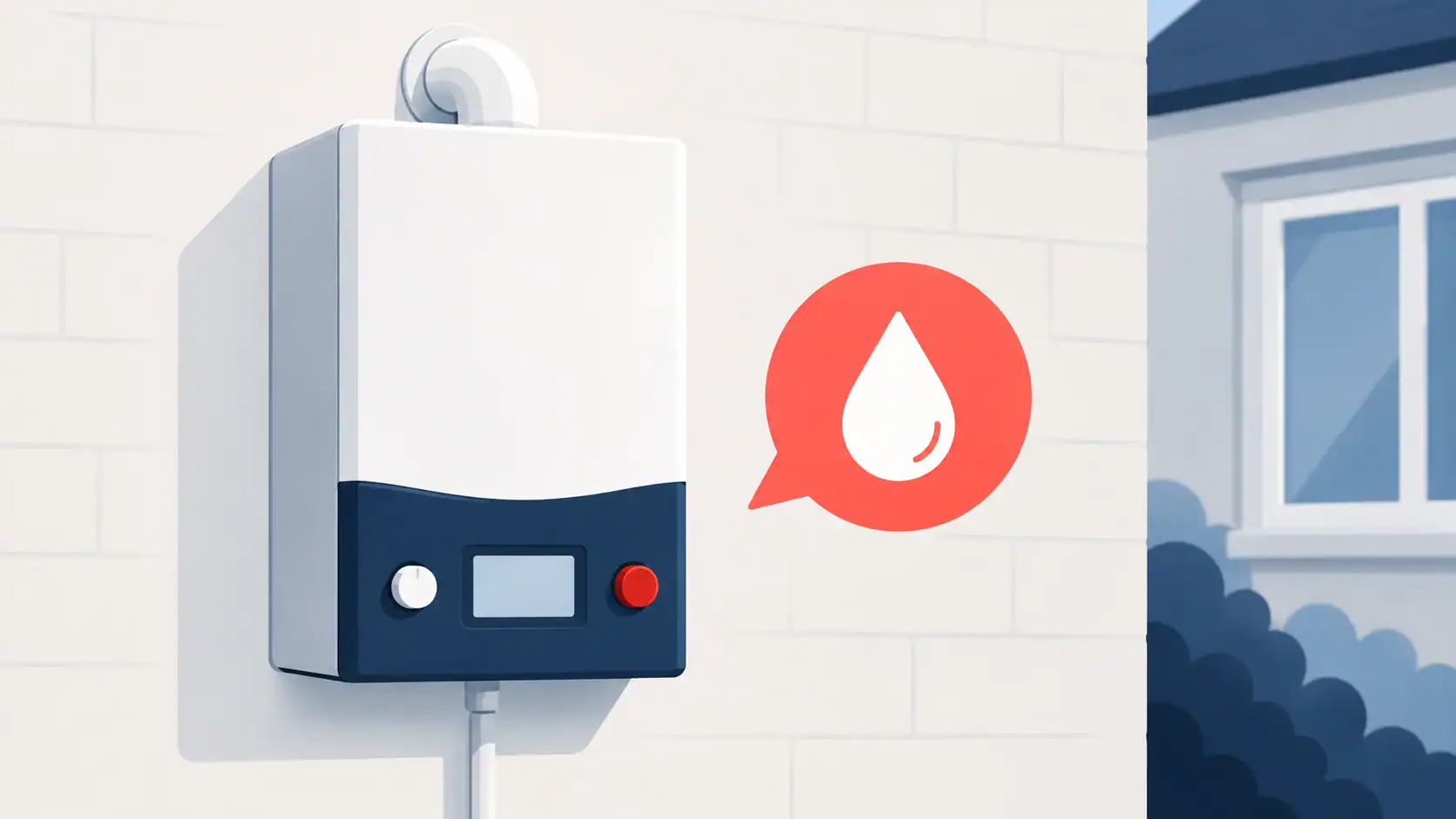
Vaillant F28 fault code? F28 means the boiler has not detected a flame during the ignition phase, so the appliance cannot start normally.
The cause is not always the same. Vaillant lists possible problems including insufficient gas supply, a blocked condensate pipe, ignition-electrode faults, PCB problems and issues with the flue system.
There are a few safe checks you can make yourself, but do not remove the boiler casing or attempt to repair ignition or gas components.
The official Vaillant description for F28 is:
The flame signal was not detected during the ignition phase.
In simple terms, the boiler has tried to start but has not successfully established or detected the flame it needs to operate.
When this happens, the appliance enters a fault condition rather than continuing to attempt normal operation.
This can leave you with:
If your main symptom is that the boiler will not start, also see:
Boiler Not Firing Up? Causes & What to Check
Before arranging a repair, there are a few basic checks that do not require opening the boiler.
If none of these checks explains the problem, the boiler may require professional fault diagnosis.
One possible cause of F28 is insufficient gas reaching the appliance.
This does not automatically mean there is a problem inside the boiler.
For example, Vaillant recommends checking whether other gas appliances in your home are working and, if you use a prepayment meter, whether sufficient credit is available.
If other gas appliances are also not working, there may be a wider gas-supply issue rather than a Vaillant boiler fault.
Do not attempt to adjust the boiler’s internal gas valve or gas settings yourself.
A blocked condensate pipe is another recognised cause of the Vaillant F28 fault.
Condensing boilers produce condensate water that needs to drain away correctly.
During freezing weather, externally routed condensate pipework can freeze. This may prevent condensate from leaving the appliance correctly and can stop the boiler operating.
Possible clues include:
Follow Vaillant’s specific homeowner instructions if you are dealing with an accessible frozen external condensate pipe.
Do not dismantle internal condensate components.
For more information, see:
What Is a Boiler Condensate Pipe?
The boiler needs an ignition system to establish the flame and then confirm that combustion has started correctly.
Vaillant lists the ignition electrode as one possible cause of an F28 fault.
Depending on the exact model and fault, an engineer may need to investigate ignition components, electrical connections and flame detection.
Diagnostic point: F28 tells us that ignition was unsuccessful. It does not automatically tell us which ignition component has failed.
Do not remove the boiler casing to inspect electrodes or ignition components yourself.
The printed circuit board, or PCB, helps control the boiler’s ignition sequence and communicates with many of the appliance’s components.
Vaillant includes a PCB fault among the possible causes of F28.
However, this does not mean every F28 fault needs a new PCB.
An engineer should first check the related components, wiring and fault information before condemning an expensive circuit board.
For more detail, see:
Boiler PCB Faults: Signs, Causes & Diagnosis
Vaillant also lists the flue system as a possible area associated with an F28 fault.
The exact diagnosis depends on the boiler model and the circumstances in which the fault occurred.
Anything involving the boiler flue, combustion system, gas valve or internal components should be investigated by a suitably qualified engineer.
Do not attempt to dismantle the flue or boiler casing yourself.
Vaillant user manuals provide a normal reset procedure for appropriate faults.
Before resetting the boiler, write down the exact fault code.
If your model’s user instructions allow a reset, follow those instructions rather than using a generic procedure from another boiler model.
If the boiler starts normally and the fault does not return, continue to monitor it.
If F28 returns, repeatedly resetting the appliance is not fixing the underlying ignition problem.
Arrange professional diagnosis instead.
A recurring F28 code means the boiler continues to experience an ignition problem.
For example, the underlying issue may involve:
If resetting the boiler temporarily restores operation but F28 returns later, tell the engineer how long the appliance operates before failing again.
Also see:
Boiler Keeps Turning Off? Causes & What to Do
The two codes are related to flame operation but they do not mean exactly the same thing.
F28 means the flame signal was not detected during the ignition phase.
F29 relates to unsuccessful ignition following flame loss during operation.
In simple terms:
This distinction can be useful during fault diagnosis.
Vaillant identifies F54 as a gas-supply fault that can occur in combination with F28 or F29.
Possible causes include insufficient gas supply, low gas flow pressure, a closed gas isolator or a gas-valve fault.
As a homeowner, the appropriate basic checks are limited to things such as confirming whether other gas appliances work and checking credit on a prepayment meter.
Internal gas-supply testing and gas-valve work require a Gas Safe registered engineer.
F28 is specifically an ignition fault rather than Vaillant’s normal low-system-pressure code.
If your boiler pressure is low as well as displaying F28, tell the engineer about both symptoms rather than assuming one automatically caused the other.
If pressure repeatedly falls, see:
Why Does My Boiler Pressure Keep Dropping?
Your safe homeowner checks are limited.
You can:
You should not:
The engineer should use the fault code as the starting point rather than immediately replacing a component.
Depending on the boiler and circumstances, diagnosis may involve checking:
Engineer point: an F28 code tells us where the boiler’s operating sequence failed. It does not automatically identify the part that needs replacing.
There is no single sensible F28 repair price because the code can have several different causes.
The cost depends on whether the fault turns out to be:
That is why we do not recommend publishing one fixed repair price for every F28 fault.
The correct approach is to diagnose the cause first and then price the required repair.
No. An F28 fault by itself does not mean the boiler needs replacing.
Many ignition-related faults can be repaired once the actual cause is identified.
Replacement becomes worth comparing when an older boiler has a major confirmed fault alongside other reliability problems or expensive repairs.
If you are comparing repair against replacement, see:
An F28 fault does not automatically mean there is a gas leak.
However, if you smell gas or suspect a gas escape, stop treating it as a normal boiler fault.
In Great Britain, call the National Gas Emergency Service on 0800 111 999.
Do not continue attempting to reset or operate an appliance you suspect is unsafe.
If you’re in Cardiff and your Vaillant boiler is displaying F28, repeatedly locking out or failing to ignite, visit:
When booking, tell us:
F28 means the boiler did not detect a flame during the ignition phase. The appliance therefore cannot complete its normal start-up sequence.
There is not one cause that should be assumed without diagnosis. Vaillant lists possibilities including insufficient gas supply, condensate blockage, ignition-electrode problems, PCB faults and flue-system issues.
Yes. Vaillant identifies a blocked or frozen condensate pipe as one possible cause of an F28 ignition fault, particularly during freezing weather.
Yes, but it is only one possible cause. The associated wiring, ignition system, gas supply and other components should be checked before the PCB is replaced.
A manufacturer-approved reset may restore operation after some faults, but if F28 repeatedly returns, resetting is not repairing the underlying cause.
The boiler will normally be unable to operate correctly while the F28 ignition fault remains. Follow the Vaillant user instructions and arrange diagnosis if normal homeowner checks do not resolve it.
Let’s Heat can diagnose Vaillant ignition faults, recurring boiler lockouts and other heating and hot-water problems.
You do not need to know which component has failed before booking.
This guide has been checked against current Vaillant fault-code guidance and HSE gas-safety information.
Vaillant – Understanding an F28 Fault Code
Mo Alwadi is Renewable Manager at Let’s Heat and a Gas Safe registered engineer (registration no. 977042), with experience in domestic heating and air conditioning. He contributes technical guidance on boiler installation, boiler replacement, heating systems, air conditioning and home energy solutions, helping UK homeowners understand their options and make informed decisions.
View all posts by Mo Alwadi →