


Heating Repairs Near Me | From £120 | Let’s Heat
Boilers

Mo Alwadi
, Gas Safe Registered Engineer
Updated:
Updated:
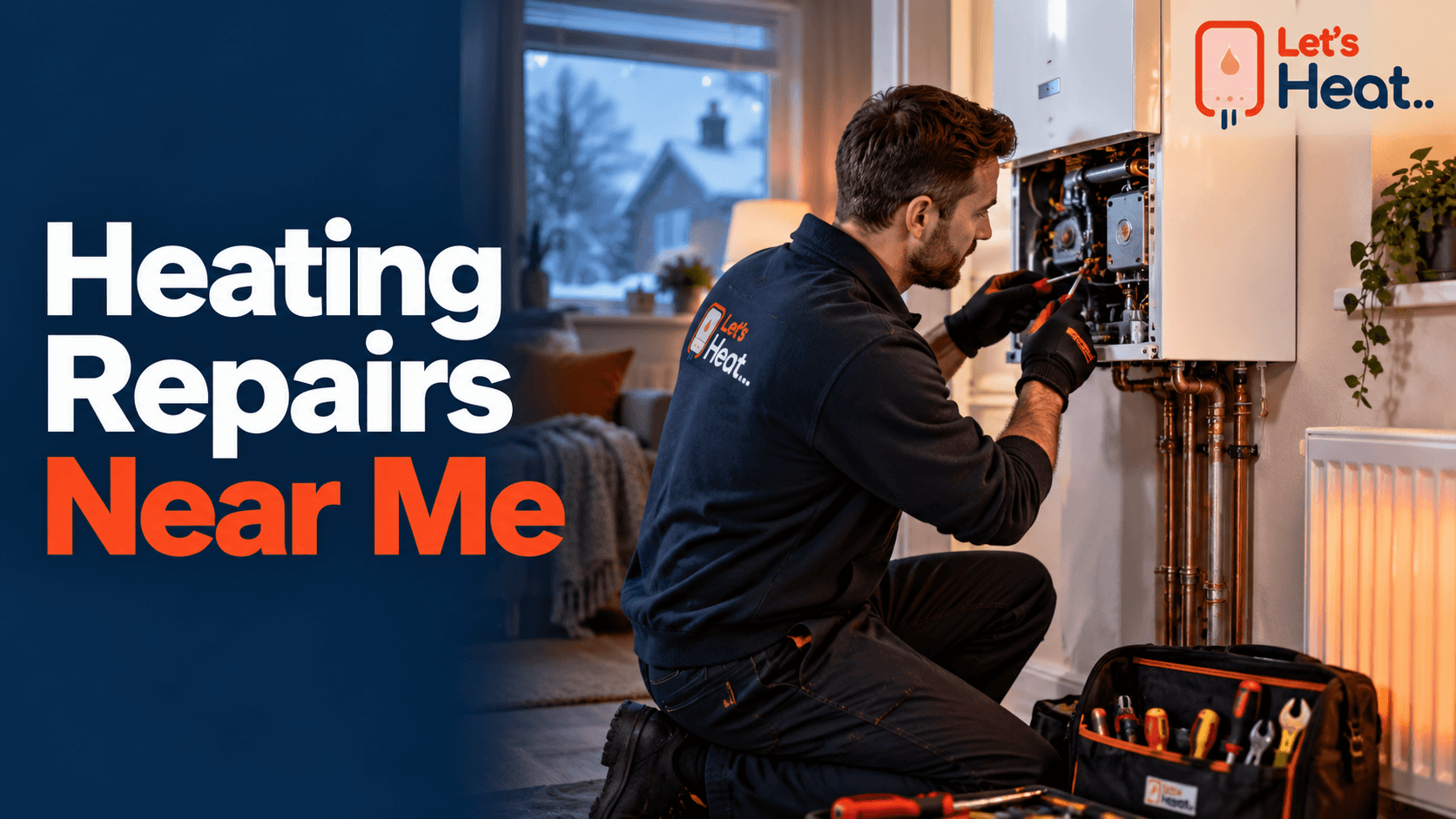
If your central heating has stopped working, gone cold, or started making strange noises, searching for heating repairs near me is usually the fastest way to find a qualified engineer who can get your home warm again. Whether the fault is with your boiler, a radiator, your pipework, or your heating controls, most problems can be diagnosed and fixed by a local Gas Safe registered engineer, often on the same day.
In short: a heating repair typically involves an engineer visiting your property to diagnose the fault, explain what’s wrong, and either fix it during the same visit or return with the correct parts. Costs usually range from around £100 for a straightforward fix to £750 or more for complex or emergency work, and any job involving a gas appliance must legally be carried out by a Gas Safe registered engineer.
This guide explains what to expect from a heating repair, how much it’s likely to cost, when a plumber can help and when you need a gas engineer, and what to do if you’re facing a heating emergency.
Central heating problems fall into a few broad categories, and the right tradesperson depends on which one you’re dealing with:
Because these issues can have overlapping symptoms, a proper diagnosis from a qualified engineer is the only reliable way to confirm the cause before any repair work begins.
Can a Plumber Fix Central Heating?
A general plumber can carry out some central heating work, such as bleeding radiators, replacing a radiator valve, or fixing a non-gas leak in the pipework. However, any work on a gas boiler or gas-fired heating appliance must be carried out by an engineer who is Gas Safe registered. This is a legal requirement in Great Britain, not just good practice, because unsafe gas work can lead to fires, explosions, or carbon monoxide poisoning.
In practice, most heating engineers who advertise boiler and central heating repairs are also Gas Safe registered plumbers, so they can handle both the gas and non-gas elements of a repair in a single visit. When booking, it’s reasonable to ask:
You can check an engineer’s Gas Safe registration and the types of work they’re qualified for using the official Gas Safe Register before any gas work begins.
How Much Do Boiler and Heating Repairs Cost?
Exact prices depend on the fault, the parts required, your boiler’s make and model, and whether the work is urgent. As a general guide for the UK in 2026:
| Type of repair | Typical price range |
| Standard boiler repair (parts and labour) | £120–£500 |
| Average boiler repair | Around £300 |
| Emergency or out-of-hours call-out | £225–£675 |
| Simple radiator or valve repair | Often at the lower end of the standard range |
| Major component replacement (e.g. heat exchanger, PCB) | Toward the upper end, sometimes £500+ |
These figures are typical UK price guides, not fixed quotes. The only way to get an accurate price for your specific fault is a property-specific assessment or quotation, since the final cost depends on your boiler type, the parts needed, and how accessible your system is.
What Affects the Price of a Heating Repair
If you’re facing a growing pattern of repairs, or your boiler is more than 10–15 years old, it’s worth asking your engineer whether continued repair still makes financial sense compared with replacement, since repeated call-outs can eventually add up to more than a new boiler installation.
How to Find Emergency Heat Pump Repair Near You
Air source heat pumps are becoming increasingly common in UK homes, and while they’re generally reliable, they can develop faults just like a boiler: no heat output, error codes on the control unit, unusual noise from the outdoor unit, or a system that isn’t reaching the set temperature.
Because heat pumps use different refrigerants, controls, and electrical components to a gas boiler, not every heating engineer is trained to work on them. When looking for emergency heat pump repair:
If your heat pump has stopped completely in cold weather, most manufacturers recommend checking that the outdoor unit isn’t blocked by snow, ice, or debris, and that the system hasn’t simply lost power, before assuming a major fault. Anything beyond that should be left to a qualified engineer.
Who Repairs Both Heating and Cooling Systems Near You?
If your property has both a heating system and air conditioning, or you’re considering adding air conditioning alongside your existing heating, it’s often more convenient to use a company that covers both rather than booking separate specialists.
Heating and cooling systems that combine into one call-out typically include:
When choosing a combined heating and cooling provider, check that engineers hold the relevant qualifications for each system type: Gas Safe registration for gas work, and F-Gas certification for any air conditioning or heat pump work involving refrigerant. A company that genuinely covers both should be able to explain which of their engineers are qualified for each type of job, rather than treating heating and cooling as interchangeable.
Signs You Need a Heating Repair
Book an engineer promptly if you notice:
Safety note: if you smell gas, suspect a gas leak, or your carbon monoxide alarm activates, leave the property, avoid using electrical switches or naked flames, and contact the National Gas Emergency Service on 0800 111 999 immediately. Do not attempt to investigate the boiler or gas supply yourself, and do not simply keep resetting the boiler as a way of ignoring a genuine fault, since this can mask a more serious safety issue.
What Happens During a Heating Repair Visit
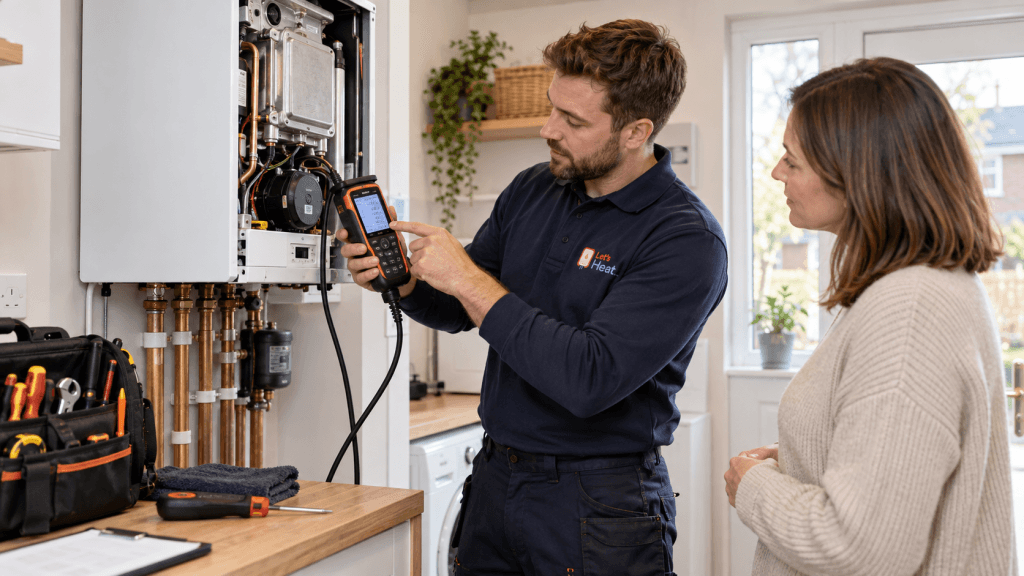
A typical repair appointment follows a similar pattern regardless of the fault:
Most straightforward repairs are completed within one to two hours, though jobs requiring ordered parts may need a return visit.
Repair or Replace? Making the Right Decision
Not every fault means you need a new boiler, and in many cases repair is the simpler and cheaper option. However, replacement is usually the better long-term choice when:
A qualified engineer should be able to talk you through the trade-offs during a repair visit, rather than automatically recommending replacement. If replacement does make sense, a proper property assessment will look at your household size, number of bathrooms, hot water demand, and existing pipework before recommending a combi, system, or regular boiler.
Annual Servicing and Why It Matters
Many heating faults can be reduced, though not entirely prevented, by having your boiler serviced annually. A service typically includes checks on the burner, heat exchanger, flue, and safety devices, along with a general inspection for leaks, corrosion, and correct operation. Regular servicing also helps keep your manufacturer’s warranty valid, since many warranties require proof of annual servicing by a qualified engineer.
If you’re a landlord, an annual gas safety check (leading to a Landlord Gas Safety Record) is a legal requirement for any rented property with gas appliances, separate from a full boiler service, though the two are often carried out together.
Heating Repairs Across South Wales and the South West
Homes across Cardiff, Newport, Bristol, Barry, Caerphilly, Penarth, Pontypridd, Bridgend, Cwmbran, Chepstow, Weston-super-Mare, Portishead, Clevedon, Swansea, Merthyr Tydfil, Llantrisant, Dinas Powys, Taff’s Well, Rhoose, and Caldicot cover a wide mix of property types, from Victorian terraces with older, harder-to-access pipework to newer estate housing with combi boilers fitted in kitchen cupboards. This affects both the type of faults that tend to occur and how quickly they can be resolved: older properties in areas like central Cardiff or Newport are more likely to need bespoke pipework solutions, while newer developments around places like Llantrisant or Cwmbran tend to have more standardised systems that are quicker to diagnose.
If you’re searching for heating repairs near you across South Wales, Bristol, or the surrounding areas, Let’s Heat provides boiler and central heating repairs carried out by Gas Safe registered engineers. Get in touch to describe the fault you’re experiencing and arrange a visit.
Frequently Asked Questions
How much do heating repairs near me typically cost?
Most standard boiler and heating repairs in the UK cost between £120 and £500, with an average of around £300 including parts and labour. Emergency or out-of-hours callouts tend to cost more, often in the £225–£675 range. The exact price depends on the fault and your specific boiler, so a property-specific quote is the only way to get an accurate figure.
Can a plumber fix central heating, or do I need a gas engineer?
A plumber can carry out some central heating work, such as bleeding radiators or fixing a non-gas leak. However, any work on a gas boiler or gas heating appliance must legally be carried out by a Gas Safe registered engineer, so it’s worth checking registration before booking.
How quickly can someone come out for an emergency heating repair?
Response times vary by company and location, and can also depend on demand during colder months. If you have no heating or hot water, mention this when booking so the company can prioritise the visit appropriately.
What’s the difference between a boiler service and a boiler repair?
A service is a routine annual check to confirm your boiler is operating safely and efficiently, while a repair addresses a specific fault, such as no heat, a leak, or an error code. Many warranties require annual servicing regardless of whether repairs have been needed.
My boiler keeps losing pressure – is this a DIY fix?
Topping up boiler pressure using the filling loop is something many homeowners can do safely by following their boiler manual. However, if pressure keeps dropping repeatedly, this usually indicates an underlying leak or fault that needs an engineer to diagnose properly.
Is it worth getting emergency heat pump repair, or should I wait for a standard appointment?
If your heat pump has stopped working entirely in cold weather, it’s worth requesting an emergency visit, particularly for vulnerable households. Not all heating engineers are trained on heat pumps specifically, so check for relevant experience and F-Gas qualifications when booking.
Do I need to replace my boiler if it needs repairing?
Not usually. Many common boiler faults are repairable without replacement. Replacement tends to make more sense when a boiler is old, repairs are becoming frequent, or parts are difficult to source, and a good engineer should explain the reasoning rather than automatically recommending a new boiler.
What should I check before calling an engineer for a “no heating” fault?
Safe homeowner checks include confirming the thermostat is set correctly, checking the boiler isn’t showing a low-pressure warning, and checking that any timer or programmer settings haven’t been changed. Anything beyond these basic checks, particularly involving the boiler’s internal components, should be left to a qualified engineer.
Who repairs both heating and cooling systems, such as boilers and air conditioning?
Some heating companies cover both, employing Gas Safe registered engineers for boiler and central heating work alongside F-Gas certified engineers for air conditioning and heat pumps. When booking, ask which qualifications apply to your specific job, since gas and refrigerant work each require different certifications.
What happens if my boiler is under warranty and it breaks down?
If your boiler is still under manufacturer warranty, repairs may be covered, but many warranties are conditional on annual servicing by a qualified engineer and correct installation. Check your warranty documentation, or contact the manufacturer, before arranging independent repairs to avoid invalidating the cover.
Do landlords have specific responsibilities for heating repairs?
Landlords are legally required to arrange an annual gas safety check on rented properties with gas appliances, carried out by a Gas Safe registered engineer, and to keep the property’s heating system in good working order. Repairs should be arranged promptly once a tenant reports a fault.
If your heating has broken down or you’re noticing early warning signs of a fault, Let’s Heat can arrange a visit from a Gas Safe registered engineer to diagnose the problem and give you a clear, fixed quote before any work begins. Get in touch to book a boiler repair or request an emergency callout.
Mo Alwadi is Renewable Manager at Let’s Heat and a Gas Safe registered engineer (registration no. 977042), with experience in domestic heating and air conditioning. He contributes technical guidance on boiler installation, boiler replacement, heating systems, air conditioning and home energy solutions, helping UK homeowners understand their options and make informed decisions.
View all posts by Mo Alwadi →