


Back Boiler Replacement 2026: Costs, Options & Process
Boilers

Mo Alwadi
, Gas Safe Registered Engineer
Updated:
Updated:
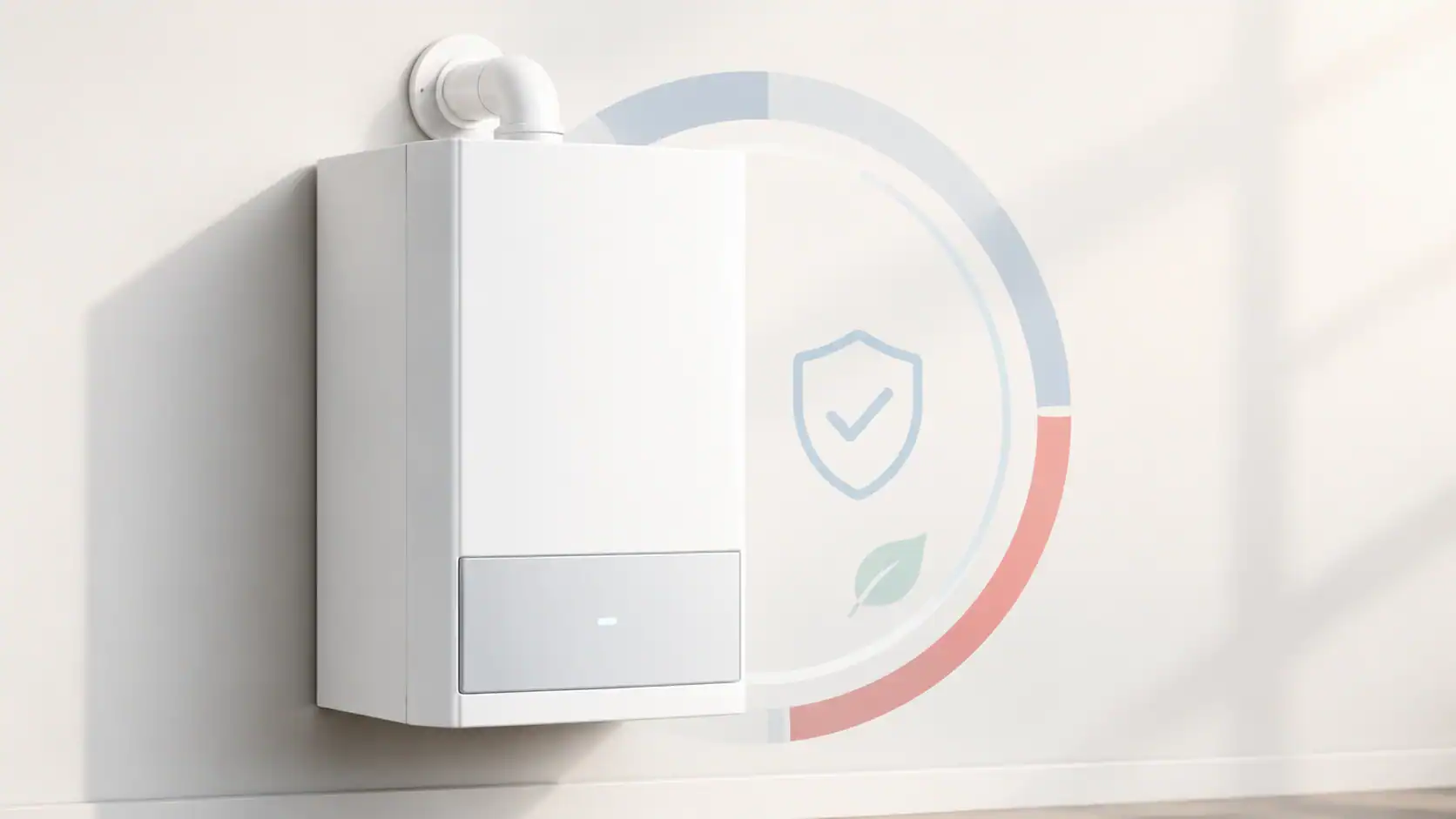
Back boiler replacement usually means removing or safely decommissioning an older boiler fitted behind a fireplace and installing a modern boiler in a new position. The replacement could be a combi, system or heat-only boiler depending on the property, hot-water demand, existing cylinder, mains water performance and the condition of the heating system.
Back boilers are old technology, but an existing gas back boiler is not automatically “illegal” simply because of its age. If it is still in use, any servicing, repair or alteration must be assessed by a suitably qualified Gas Safe registered engineer. In many homes, replacement becomes the practical choice because the appliance is old, efficiency is poor compared with modern condensing boilers, parts can be difficult to source, or the heating system is being upgraded.
A back boiler replacement is more involved than a straightforward wall-hung boiler swap because the old appliance sits behind a fireplace and the new boiler normally needs a different location, flue route and condensate drain. The engineer also needs to assess the existing hot-water cylinder, loft tanks, heating pipework, controls and gas supply before deciding on the best replacement arrangement.
For many homes, a combi boiler is worth comparing because it can remove the cylinder and loft tanks where the mains water supply and hot-water demand are suitable. In homes with higher simultaneous hot-water demand, a system boiler with a cylinder or a modern heat-only boiler may be the better replacement.
A traditional gas back boiler unit sits behind a fireplace, usually with a gas fire at the front. It provides heat to the central-heating system and can also work with a separate hot-water cylinder. Baxi says the original Bermuda back boiler became popular from the 1960s and that many older units remain in UK homes.
Back boilers should not be confused with every appliance associated with a fireplace. There are also older solid-fuel back boilers connected to coal or wood fires, and those have different safety considerations. Our guide to what a back boiler is explains the basic layouts in more detail.
No blanket rule makes every existing back boiler illegal simply because it is a back boiler. However, modern boiler replacements have to meet current installation and Building Regulations requirements, and old back boilers may be difficult or uneconomic to repair because of age, condition and parts availability.
Baxi explains that standard-efficiency back boilers fell out of favour after the 2005 Building Regulations changes that required high-efficiency condensing boilers for most new gas-boiler installations. That means a homeowner replacing an old back boiler today will normally move to a modern condensing boiler rather than installing another old-style standard-efficiency back boiler.
If an existing gas back boiler is still operating, do not assume that age alone makes it unsafe. It should be serviced and assessed by an appropriately qualified Gas Safe registered engineer, and any engineer working on it must be competent for that appliance category.
Do not replace a working boiler only because it has reached a particular age. Condition, service history, safety, parts availability and suitability matter more than a fixed number of years.
Compare combi, system and heat-only replacement options based on your home and hot-water demand.
Boiler installation available across London and surrounding areas.
Compare new boiler options →| Replacement option | Best considered when | Main point to check |
|---|---|---|
| Combi boiler | Space matters and hot-water demand is moderate | Incoming mains flow and simultaneous hot-water use |
| System boiler | Stored hot water suits the home and several outlets may be used together | Cylinder condition, capacity and mains supply |
| Heat-only boiler | The existing traditional cylinder and open-vent layout still works well | Condition of tanks, cylinder and older pipework |
The correct replacement is not determined by the old boiler type alone. Compare the household’s hot-water demand, existing plumbing and available boiler locations. See our guides to combi boilers, system boilers and regular boilers.
A combi is one of the most common options to compare during back boiler replacement because it can simplify the heating and domestic-hot-water arrangement. Where suitable, the hot-water cylinder and redundant loft tanks can be removed, freeing cupboard and loft space.
The conversion depends heavily on the incoming mains water supply. A combi heats domestic hot water as it is used, so the boiler cannot deliver more water than the property’s incoming main can provide. Homes with high simultaneous hot-water demand may be better served by stored hot water.
Our detailed regular boiler to combi conversion guide explains mains water flow, cylinder removal, tank removal and pipework changes.
A system boiler can be a strong replacement where the home benefits from a separate hot-water cylinder. This can suit larger households or properties where several bathrooms and outlets may need hot water close together.
If the existing cylinder is old, poorly insulated or incompatible with the planned system, it may make sense to replace it during the boiler work. A good existing cylinder may sometimes be retained if it is suitable. Read our system boiler replacement guide for the main checks.
A modern heat-only boiler can preserve more of the traditional layout where the cylinder, loft tanks and older heating system remain suitable. This can reduce the amount of conversion work compared with changing to a combi.
Baxi’s current guidance notes that a heat-only boiler can be a sensible replacement in some older heating systems because the existing system may not be well suited to the higher operating pressure associated with a combi or system boiler.
The new boiler will normally be moved away from the fireplace because modern condensing boilers use a different flue arrangement and need a condensate drain. Common positions include a kitchen, utility room, airing cupboard, garage or another suitable internal location.
The best location depends on the flue, condensate route, gas pipe, water and heating connections, electrical supply, access for servicing and the effect on hot-water pipe runs. Moving the new boiler further away from the existing system can increase installation work.
See our boiler relocation guide for the factors that affect a new position.
This depends on the appliance and what you want to do with the room. Once a gas back boiler is correctly disconnected, the fireplace area may be retained, altered or removed as part of separate building and finishing work. The old chimney or flue route must be dealt with appropriately for the final fireplace arrangement.
Do not assume the boiler engineer’s quotation automatically includes all plastering, fireplace reconstruction, decorating, flooring or chimney work. These items should be listed clearly in the scope of work.
A solid-fuel back boiler left behind a coal or wood fire is a different situation from an old gas back boiler unit. The Health and Safety Executive has issued a safety alert about redundant solid-fuel back boilers that have been left sealed and later heated by a fire. Pressure can build inside the redundant boiler and, in serious cases, cause it to rupture or explode.
If you have an old solid-fuel back boiler or you are unsure what is behind the fireplace, do not light the fire until the arrangement has been properly assessed. This is a specialist safety issue and should not be treated as a cosmetic fireplace alteration.
Back boiler replacement cost varies more than a simple boiler swap because the new appliance normally needs a new location and the old fireplace-based system often involves additional pipework or building work.
For broader planning information, read our boiler replacement cost guide and new boiler cost guide. We do not use one fixed back-boiler conversion price because the work can differ substantially from one property to another.
A back boiler replacement normally takes longer than a straightforward same-position wall-hung boiler swap. The exact timescale depends on the replacement type, boiler location, cylinder and tank changes, pipe routes, access and how much fireplace or building work is included.
A relatively straightforward conversion may take a few working days, while complex installations and extensive making good can take longer. The survey should separate boiler-installation time from any fireplace, plastering or decorating work. Our boiler installation timescale guide explains the main variables.
Do not choose the new boiler simply by copying the output of the old back boiler. The space-heating side should be based on the property’s current heat loss, while a combi also needs to satisfy domestic-hot-water requirements.
Insulation, glazing, radiator output, design temperatures, hot-water use and the chosen system type all matter. Our boiler sizing guide explains why bedroom count alone is not enough.
The replacement does not need to be the same brand as the old back boiler. Once the system is redesigned, you can compare modern boilers from manufacturers such as Worcester Bosch, Vaillant, Viessmann, Baxi and Ideal based on the required boiler type, dimensions, controls and warranty route.
Our best combi boilers 2026, Worcester Bosch boiler reviews, Vaillant boiler reviews and Viessmann boiler reviews provide model-level comparisons.
The Baxi Bermuda name is closely associated with older gas back boilers. If you have a Bermuda unit, the correct approach is to identify the exact model and assess whether repair is still practical or whether the heating system should be converted to a modern boiler arrangement.
Our separate Baxi Bermuda back boiler guide covers the model-specific background and replacement options.
New and replacement boilers are covered by Building Regulations requirements in England. GOV.UK lists new or replacement boilers as notifiable work. A suitably registered installer working through an appropriate competent-person scheme can self-certify qualifying work and provide evidence of compliance.
Gas work must be carried out by a competent Gas Safe registered engineer. HSE confirms that a Gas Safe registered engineer must fit and check a gas appliance, and the engineer’s competence must cover the relevant category of work.
| Your priority | Option to compare first | Reason |
|---|---|---|
| Free cupboard and loft space | Combi boiler | Can remove stored hot-water components where suitable |
| High simultaneous hot-water demand | System boiler | Works with a separate cylinder |
| Keep an older low-pressure layout | Heat-only boiler | Can retain more of a traditional open-vent system |
| One bathroom and good mains flow | Combi boiler | Simple on-demand hot-water arrangement |
| Several bathrooms | System / stored hot water | Often better suited to multiple outlets operating together |
An existing gas back boiler is not automatically illegal because of age, but it must be safe and maintained by an appropriately qualified Gas Safe registered engineer. If the appliance is unsafe, beyond economical repair or no longer supportable, replacement may be the sensible option.
Yes, where the incoming mains flow, hot-water demand and property layout suit a combi. The cylinder and redundant loft tanks can normally be removed as part of a full conversion where they serve only the old system.
Yes. If stored hot water suits the home, compare a system or heat-only boiler. The existing cylinder should be checked for condition, capacity and compatibility before deciding to retain it.
No. A modern boiler is normally installed in another suitable location because it needs a compliant flue, condensate drainage, service access and appropriate pipe connections.
Not always. The old gas appliance must be safely disconnected and the final fireplace and chimney arrangement made suitable, but whether you retain or remove the visible fireplace depends on the property and the planned finish.
It is usually more involved because the new boiler often needs a new location and additional pipework, flue and condensate work. Cylinder, tank and fireplace changes can add further work. The final quotation should itemise what is included.
A back boiler replacement survey should identify the existing appliance, heating-system layout, cylinder and tanks, mains water performance, new boiler location, flue route and the building work required around the fireplace. Let’s Heat installs replacement boilers across London and surrounding areas, subject to postcode and availability.
Mo Alwadi is Renewable Manager at Let’s Heat and a Gas Safe registered engineer (registration no. 977042), with experience in domestic heating and air conditioning. He contributes technical guidance on boiler installation, boiler replacement, heating systems, air conditioning and home energy solutions, helping UK homeowners understand their options and make informed decisions.
View all posts by Mo Alwadi →