


System Boilers: How They Work, Costs and Suitability
Boilers

Mo Alwadi
, Gas Safe Registered Engineer
Updated:
Updated:
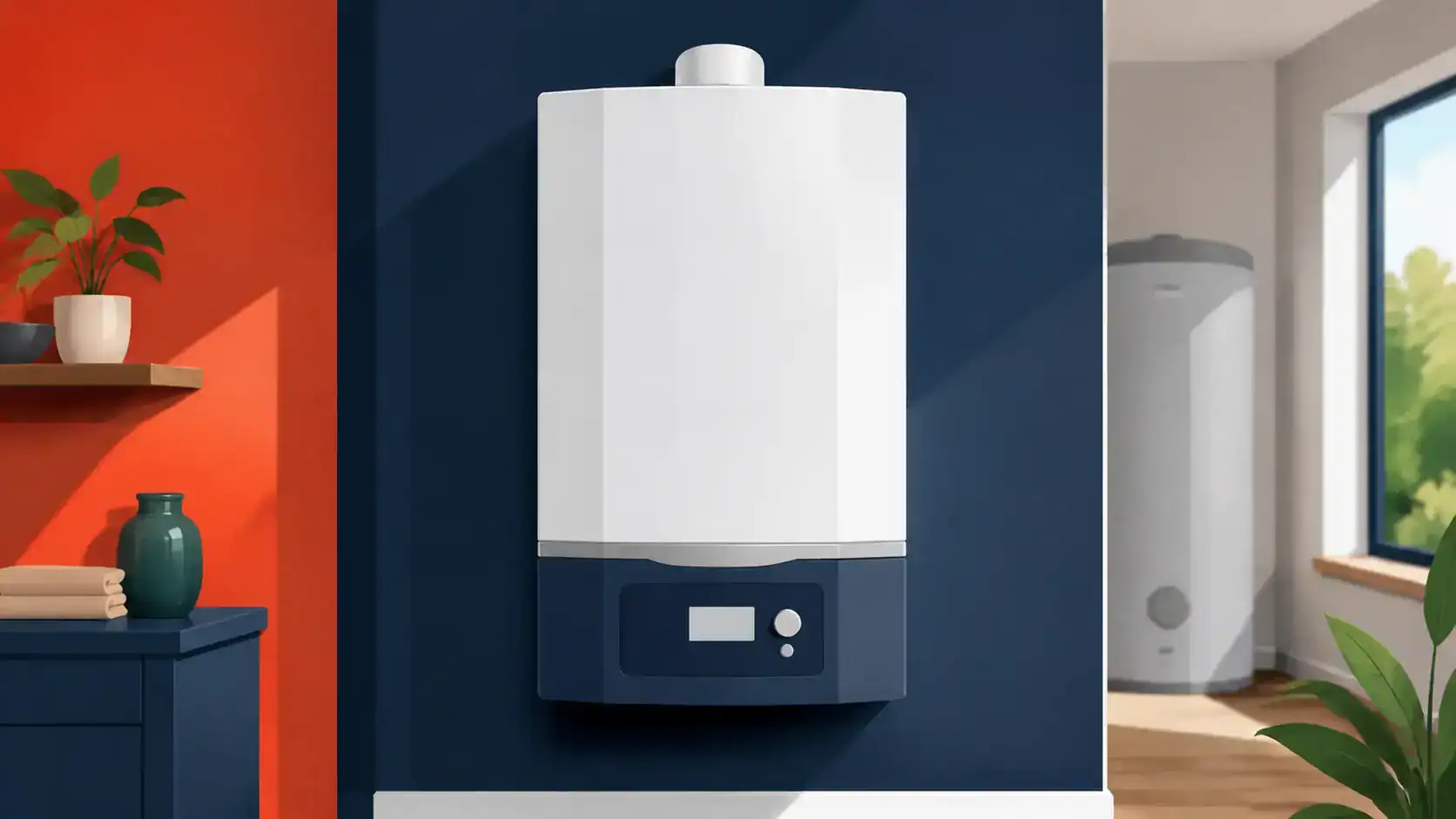
System boilers provide central heating and heat water stored in a separate hot-water cylinder. They are often considered for homes with more than one bathroom or higher hot-water demand, especially where several taps or showers may be used close together.
A system boiler is not automatically the best option for every larger home. Its suitability depends on the property’s calculated heat loss, the cylinder size and recovery rate, the incoming mains water supply, available space, existing pipework and how the household actually uses hot water.
A system boiler heats the water circulating through radiators and also heats domestic hot water inside a separate cylinder. Unlike a combi boiler, it stores hot water ready for use. Unlike a traditional regular boiler, it normally does not need a small feed-and-expansion cistern in the loft because key heating components are built into the boiler.
System boilers are commonly paired with an unvented hot-water cylinder supplied from the mains, although the exact arrangement must be designed around the property. The stored supply can serve more than one outlet, but performance is still limited by the cylinder, pipework and available water flow.
| Feature | System boiler arrangement | Why it matters |
|---|---|---|
| Central heating | Boiler heats water circulated through radiators or compatible emitters | Boiler output should be based on a proper heat-loss calculation |
| Domestic hot water | Stored in a separate cylinder | Several outlets can draw from the stored supply, subject to system limits |
| Loft tanks | Normally no heating feed-and-expansion cistern | Can free loft space compared with a traditional open-vented arrangement |
| Water pressure | Often mains-fed when paired with an unvented cylinder | Incoming flow and pressure must be checked before installation |
| Space required | Room needed for the boiler and cylinder | Usually needs more space than a combi boiler |
The Energy Saving Trust identifies combi, system and heat-only boilers as the main domestic boiler arrangements. Its guidance notes that stored hot water can make a system boiler suitable for households with greater hot-water needs.
When the heating controls call for warmth, the boiler heats water and circulates it through the home’s heating circuit. When the cylinder thermostat calls for hot water, the boiler sends heated primary water through a coil inside the cylinder. Heat passes through the coil into the stored domestic water without the two water supplies mixing.
Once the cylinder reaches its set temperature, the controls stop the hot-water demand. The boiler can then continue serving the central-heating circuit when required. A correctly designed control arrangement decides whether heating, hot water or both receive heat at a particular time.
Manufacturers often describe system boilers as having the principal heating components inside the appliance. The precise components and installation requirements vary between models, so the manufacturer’s instructions and the complete system design remain important.
The right boiler type depends on the complete heating and hot-water arrangement, not simply the number of bedrooms. Our guide to the different types of boiler systems explains all three layouts in detail.
| Question | System boiler | Combi boiler | Regular boiler |
|---|---|---|---|
| Separate hot-water cylinder? | Yes | No | Yes |
| Traditional loft cisterns? | Normally no | No | Usually yes in an open-vented system |
| Hot water stored? | Yes | No, normally heated on demand | Yes |
| Several outlets together? | Potentially strong when properly designed | Can be restricted by boiler output and incoming flow | Potentially strong, depending on cylinder and stored-water arrangement |
| Space required | Boiler plus cylinder | Usually the least | Boiler, cylinder and typically loft cisterns |
| Often considered for | Homes with greater or simultaneous hot-water demand | Smaller households and homes with one main bathroom | Existing traditional systems, some older homes and properties with particular pressure or pipework considerations |
A combi can be attractive where space is limited and hot-water demand is moderate. A system boiler may be more suitable where the household regularly wants stored hot water available to more than one outlet. The decision should include a test of the incoming mains supply rather than assuming either boiler will deliver a particular shower performance.
Read our dedicated combi vs system boiler comparison for a more focused explanation.
Both arrangements use a hot-water cylinder. A system boiler normally operates with a sealed heating circuit and has several components built in. A regular boiler is commonly used with an open-vented heating system supplied by a small cistern in the loft.
Replacing an existing regular boiler with a system boiler can remove some loft components, but it may also expose older radiators, valves and pipework to a different operating pressure. The condition of the existing system must therefore be assessed before conversion.
System boilers are often considered for medium and larger homes, but property size alone is not enough to make the decision. They may be suitable where:
A system boiler may be less suitable for a small flat with limited storage space, a household with very low hot-water use, or a property with an incoming mains supply that cannot support the proposed cylinder arrangement.
The cylinder is just as important as the boiler. Choosing it only by physical size can lead to disappointing performance. The design should consider usable hot-water capacity, recovery time, heat-exchanger coil performance, insulation, available space, water quality and the household’s peak demand.
A cylinder must store enough usable hot water for normal peak periods without being unnecessarily large. An oversized cylinder can take up more space and increase stored-water heat loss. An undersized cylinder can run out during baths, consecutive showers or simultaneous use.
Occupancy is only one factor. A household using quick showers may need a different arrangement from the same number of people regularly filling large baths. The installer should assess actual fixtures and usage rather than selecting a cylinder from bedroom count alone.
Recovery describes how quickly the boiler and cylinder coil can reheat the stored water. A cylinder with suitable coil performance and a correctly matched boiler can recover more quickly than a poorly matched system. Increasing boiler output alone does not guarantee a proportionate improvement because the cylinder coil and controls can limit heat transfer.
An unvented hot-water cylinder is normally supplied directly from the mains. It can provide strong performance when the incoming supply and pipework are suitable, but the cylinder cannot create water that is not available. Static pressure alone is not enough; dynamic pressure and flow should be assessed while water is being drawn.
A vented cylinder is supplied from a cold-water storage cistern. This arrangement behaves differently and may be retained in some properties, depending on the wider system design.
System-boiler output should not be chosen from a simple bedroom or radiator-count chart. A proper selection starts with the building’s design heat loss, taking account of floor area, insulation, glazing, air leakage, construction and intended indoor temperatures.
The designer must then consider the cylinder’s reheat requirement and how the controls prioritise heating and hot water. A home can have high hot-water demand without needing an excessively large space-heating output. Oversizing may cause frequent cycling during milder weather, while undersizing can lead to slow warm-up or poor recovery.
A high-output model is not automatically better. Our article on 35kW system boilers explains why larger outputs need careful matching rather than being selected as a default.
There is no single installed price for a system boiler. A like-for-like replacement using a suitable existing cylinder is different from converting a combi or traditional system and installing a new unvented cylinder.
The quotation may be affected by:
Our new boiler cost guide explains the main pricing factors without treating every home as the same. A detailed survey should make clear what is included, what will remain in place and whether any provisional work could become necessary.
A straightforward replacement in the same position, using a suitable existing cylinder and controls, is generally less involved than a full conversion. Moving the boiler, installing a new cylinder, altering the flue, upgrading controls or converting an old open-vented system can extend the work.
The programme should allow for safe removal, system preparation, pipework alterations, installation, electrical and control work, filling, testing, commissioning and handover. See our guide to boiler installation time for the factors that affect the schedule.
Modern gas system boilers are condensing appliances designed to recover heat from flue gases when operating conditions allow. The boiler’s published efficiency is only part of the picture. Real system performance also depends on correct sizing, control, flow temperature, hydraulic balance, maintenance and cylinder heat loss.
Stored water creates some standing heat loss, but a correctly sized, well-insulated modern cylinder can still be part of an effective system. Efficiency should be judged across the boiler, cylinder, controls and household use rather than by comparing appliance labels alone.
A like-for-like replacement may retain the cylinder if its condition, capacity, coil, controls and compatibility are satisfactory. The survey should still check the flue, condensate route, gas supply, system cleanliness and existing components.
Our system boiler replacement guide covers the decisions involved in keeping or changing the cylinder-based arrangement.
A regular-to-system conversion may remove the heating feed-and-expansion cistern and change the central-heating circuit to sealed operation. Older pipework and radiators should be checked to determine whether they are suitable for the new operating conditions. The hot-water cylinder may also need alteration or replacement.
A combi-to-system conversion requires space for a cylinder and new primary and domestic-hot-water pipework. It may be worthwhile where household demand has outgrown the combi, but incoming mains performance, cylinder location and the cost of alterations must be considered first.
A cylinder-based arrangement can provide flexibility for future technologies, but compatibility should never be assumed.
Solar thermal systems commonly use a dedicated coil in the cylinder, with the boiler providing backup heat. This normally requires a suitable twin-coil cylinder and controls designed for the arrangement.
Most whole-home air-to-water heat-pump installations also use stored hot water, so retaining space for a cylinder can be useful. However, a cylinder designed for a gas boiler may not have the coil area or volume required by a future heat pump. A later conversion may still require a new cylinder, larger emitters or other system changes.
Our heat pumps vs gas boilers guide explains the wider differences between the technologies.
Gas work must be carried out by a suitably qualified Gas Safe registered engineer. The engineer’s registration and relevant categories can be checked through the Gas Safe Register.
New and replacement heating systems are also subject to applicable Building Regulations and manufacturer requirements. An installer registered with an appropriate competent-person scheme can self-certify relevant work and arrange notification where the scheme covers it. GOV.UK explains how competent-person schemes and compliance certificates work.
Where an unvented cylinder is installed, its safety controls, discharge arrangement and commissioning require particular attention. Homeowners should receive the relevant paperwork, controls explanation and manufacturer documents at handover.
There is no guaranteed lifespan for every appliance. Service life depends on installation quality, water condition, correct sizing, operating pattern, servicing, parts availability and how quickly faults are addressed. The cylinder and controls have their own maintenance needs and may not last exactly as long as the boiler.
Where contamination is suspected, the appropriate cleaning method depends on the system’s condition. Our comparison of MagnaCleanse, power flushing and chemical flushing explains the differences.
Yes. The defining feature of a system boiler arrangement is that domestic hot water is stored in a separate cylinder. The boiler itself provides heat to the cylinder through a coil.
It normally does not need the small feed-and-expansion cistern used by a traditional open-vented heating system. A particular installation may still include a cold-water storage cistern if it uses a vented hot-water cylinder, so the complete arrangement should be checked.
It may support simultaneous showers when the cylinder, incoming mains supply and pipework are designed for the demand. It is not unlimited: flow can drop if the available water supply or distribution pipework is insufficient.
Yes. Once the usable stored water has been drawn, the cylinder needs time to recover. Correct cylinder sizing, coil performance and controls reduce the risk of frequent shortages.
Neither type is universally better. A system boiler can suit higher or simultaneous hot-water demand, while a combi saves cylinder space and heats hot water on demand. The property and usage pattern determine which compromise is more appropriate.
A system boiler paired with an unvented cylinder normally supplies hot water from the mains. Actual performance depends on the incoming flow, dynamic pressure, controls and pipework. A system using a vented cylinder operates differently.
Where the cylinder has a working immersion heater and electricity supply, it can usually heat stored domestic water independently of the gas boiler. It will not provide central heating, and its operating cost and recovery rate differ from the boiler.
They can be, particularly where hot-water demand justifies storage and there is room for a cylinder. For many small households with one bathroom, a suitably selected combi may use space more efficiently.
Possibly. Its condition, capacity, insulation, coil rating, controls and compatibility must be checked. Keeping an unsuitable cylinder can restrict recovery, efficiency or hot-water performance.
Follow the boiler manufacturer’s servicing requirements and any warranty conditions. An annual service is commonly required by manufacturers. The cylinder may also need periodic checks, particularly when it is unvented.
A system boiler can be a strong choice when a household needs stored hot water, has room for a suitable cylinder and has a water supply capable of supporting the proposed arrangement. It should not be selected only because the home has several bedrooms or because a larger output sounds more powerful.
The best result comes from assessing heat loss, peak hot-water use, cylinder performance, water flow, controls, pipework condition and future plans together. Our guide to choosing the best system boiler covers model-selection considerations, while our new boiler guide explains the wider replacement process.
For a quotation based on the existing system and the work actually required, visit our boiler installation page.
Mo Alwadi is Renewable Manager at Let’s Heat and a Gas Safe registered engineer (registration no. 977042), with experience in domestic heating and air conditioning. He contributes technical guidance on boiler installation, boiler replacement, heating systems, air conditioning and home energy solutions, helping UK homeowners understand their options and make informed decisions.
View all posts by Mo Alwadi →