


Choosing the Right Boiler in 2026: Expert Guide
Boilers

Mo Alwadi
, Gas Safe Registered Engineer
Updated:
Updated:

Choosing the right boiler is essential for keeping your home warm, providing reliable hot water and managing your energy costs.
With different boiler types, sizes and models available, finding the best option for your property can be confusing. The right choice depends on your household’s heating requirements, hot water demand, available space and existing heating system.
In this guide, we explain how to choose a boiler that suits your home, compare the main boiler types and help you identify the most suitable option for your property.
To choose the perfect boiler for your UK home, you must assess:
Hot Water Demand: How many bathrooms and showers run simultaneously?
Boiler Type: Combi (smaller homes), System (high demand), or Regular (traditional systems).
Boiler Size (Output): Based on heat loss and radiator count, not just bedrooms.
Available Space: Combi boilers save space; others require cylinders.
Mains Water Pressure: Crucial for combi boiler performance.
Before deciding which boiler to install, think about how your household uses heating and hot water. These factors will help you narrow down the available residential boilers and avoid choosing a model that is either too small or unnecessarily powerful.
Consider how many people live in your home and how often they use hot water.
For example:
A smaller household may only need hot water for one shower or tap at a time.
A family with several bathrooms may need hot water from multiple outlets simultaneously.
Larger households may benefit from a boiler system that stores hot water in a cylinder.
Your daily hot water usage is one of the most important factors when choosing between a combi, system or regular boiler.
The number of bathrooms can help indicate your property’s hot water requirements, although it should not be the only factor in your decision.
A combi boiler can work well in a home with one bathroom. However, if two or more showers are likely to run at the same time, a system boiler with a hot water cylinder may provide a more suitable solution.
Your current heating setup can influence your boiler replacement options.
If your home already has a combi boiler, replacing it with another combi may be straightforward. If you have a traditional system with a cylinder and cold water storage tank, you may want to consider whether keeping that arrangement or upgrading to another boiler type makes more sense.
A heating engineer can assess your existing pipework, radiators and hot water system before recommending a suitable replacement.
Think about where the boiler will be installed and how much space is available.
Combi boilers are generally compact because they do not require a separate hot water cylinder or cold water storage tank. System and regular boilers need additional space for their associated components.
Check the boiler’s dimensions in centimetres, along with the clearance and access requirements specified by the manufacturer. This is particularly important if you plan to install the boiler inside a kitchen cupboard or utility room.
Understanding the differences between the three main boiler types is an essential part of choosing the right boiler.
The table below provides a simple boiler comparison to help you decide which option may suit your property.
| Boiler Type | How It Works | Best Suited To |
|---|---|---|
| Combi Boiler | Heats water directly from the mains when required, without a separate hot water cylinder. | Smaller and medium-sized homes with moderate hot water demand. |
| System Boiler | Heats water and stores it in a separate hot water cylinder. | Homes with multiple bathrooms or higher hot water demand. |
| Regular Boiler | Works with a hot water cylinder and usually a cold water storage tank. | Properties with traditional heating systems or existing tank arrangements. |
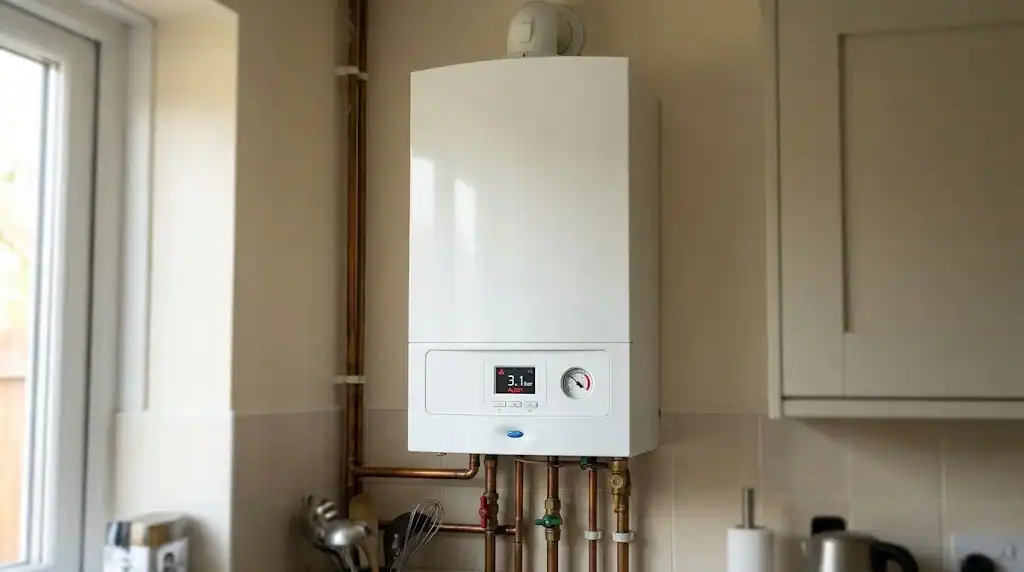
A combi boiler provides heating and hot water from a single unit. It heats water directly from the mains when you turn on a hot tap, so there is no need for a separate hot water storage cylinder.
A combi boiler may be right for your home if:
You have one bathroom.
Your household has moderate hot water demand.
You want to save space.
You do not need several hot water outlets running simultaneously.
However, a combi boiler’s performance depends partly on the incoming mains water flow rate. A high-output model will not necessarily solve poor mains water pressure or flow.
A system boiler heats water and stores it in a separate hot water cylinder. Many of the main heating components are built into the boiler itself, and a separate cold water storage tank is not usually required.
A system boiler may be a better choice if:
Your property has two or more bathrooms.
Several people regularly need hot water.
You want stored hot water available for multiple outlets.
Your household has higher hot water demand.
The main consideration is the space needed for the hot water cylinder.
A regular boiler, sometimes called a conventional or heat-only boiler, works with a hot water cylinder and usually a cold water storage tank.
A regular boiler may suit your home if:
You already have a traditional heating system.
Your property has an existing cylinder and storage tanks.
You want to retain your current heating arrangement.
Your heating system is designed around a regular boiler.
Changing from a regular boiler to a combi or system boiler may involve additional changes to your pipework and heating system. A qualified engineer should assess whether an upgrade is practical.
If you have decided that a combi boiler is the best option, the next step is choosing a model with the right heating output and hot water performance.
When comparing combi boilers, look at two important factors:
The central heating output, measured in kilowatts (kW), indicates how much heat the boiler can provide to your radiators.
The required output depends on your property’s heat loss, insulation, size, radiator requirements and overall heating demand.
Combi boilers also have a hot water output rating. This affects how quickly the boiler can heat water when you turn on a tap or shower.
Check the manufacturer’s stated hot water flow rate, usually measured in litres per minute (L/min).
A higher hot water output may be useful if your household uses more hot water, but the incoming mains water flow rate also needs to be sufficient.
Important: A combi boiler advertised with a high kW rating does not necessarily need that same output for central heating. The heating and domestic hot water outputs serve different purposes, so compare both specifications before choosing a model.
You can also explore our guide to the best combi boilers in the UK to compare suitable models.
Choosing the correct boiler size is essential for reliable heating and efficient operation.
If a boiler is too small, it may struggle to meet your home’s heating or hot water requirements. If it is unnecessarily large, you could pay more for capacity your property does not need.
There is no single boiler size that suits every property with the same number of bedrooms.
A heating engineer should consider:
The property’s overall size and heat loss.
The number and size of radiators.
The quality of insulation.
The number of bathrooms.
Your household’s hot water demand.
The type of boiler and heating system.
For example, a three-bedroom house does not automatically require a particular boiler output. Two properties with the same number of bedrooms may have very different heating requirements.
A boiler size calculator UK homeowners find online can provide an initial indication of the output your property may need. However, it should not replace a proper heating assessment.
A reliable recommendation should consider heat loss, insulation, radiator sizes and hot water demand rather than relying on bedroom numbers alone.
For this reason, it is best to have a qualified heating engineer assess your property before selecting a boiler.
Your budget is another important factor when choosing a new boiler. However, the cheapest option is not always the most cost-effective in the long term.
Rather than comparing purchase prices alone, consider the overall value of the boiler, its suitability for your home and the cost of installation.
Before making a decision, consider:
Whether the boiler meets your home’s heating and hot water requirements.
The manufacturer’s warranty and what it covers.
Potential running costs and energy efficiency.
The complexity of the installation.
Whether additional components or heating system upgrades are required.
The total cost will depend on the boiler type, model, property and installation requirements.
For a more detailed breakdown of new boiler prices and installation costs, read our New Boiler Guide.
Once you have identified the right boiler type and size, you can compare manufacturers and individual models.
Popular boiler brands in the UK include:
Worcester Bosch: Offers a range of combi, system and regular boilers for different property requirements.
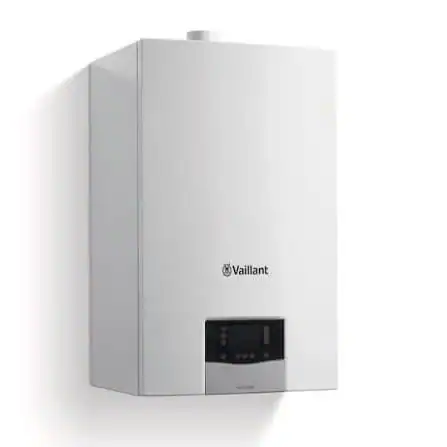
Vaillant: Provides several boiler models with different outputs and specifications.
Ideal: Offers options for homeowners looking for different boiler types and installation requirements.
Baxi: Manufactures boilers across a range of outputs and household applications.
The best brand is not necessarily the one with the highest specification or the most expensive model.
When comparing models, check the following:
Central heating output.
Domestic hot water flow rate, where applicable.
Physical dimensions.
Compatibility with your existing heating system.
Manufacturer warranty.
Available controls and accessories.
If you are considering a particular manufacturer, compare individual models rather than choosing based on the brand name alone. For example, choosing the right Vaillant boiler model or Worcester Bosch boiler depends on your property’s requirements and the specifications of each model.
You can also read our guides to the best system boilers and the best boilers in the UK.
Before making your final decision, consider a few practical details that can affect the suitability of your new boiler.
Check the boiler’s height, width and depth before choosing a model. Make sure there is enough room for installation, servicing and future maintenance.
If the boiler is going inside a cupboard, confirm the manufacturer’s clearance requirements first.
The right heating controls can help you manage your home’s heating more effectively.
Depending on the boiler and system, you may be able to use a programmable thermostat, room thermostat or smart heating controls.
Make sure any controls you choose are compatible with your boiler.
Compare the manufacturer’s warranty terms and check what conditions apply. Some warranties require installation by an appropriately qualified engineer and regular servicing.
You can find more information about warranties and other buying considerations in our new boiler guide.
Gas boiler installation and work on gas appliances must be carried out by a Gas Safe registered engineer who is qualified for the work involved.
You can check an engineer or business through the Gas Safe Register.
Before choosing a new boiler, make sure you have considered the following:
Your household’s heating and hot water demand.
The number of bathrooms and simultaneous hot water usage.
Whether a combi, system or regular boiler is most suitable.
The incoming mains water flow rate if you are considering a combi boiler.
The correct boiler output for your property.
The available installation space and boiler dimensions.
Suitable boiler brands and individual models.
Your budget, warranty and expected running costs.
Installation by a suitably qualified Gas Safe registered engineer.
Choose a boiler based on your property’s heating requirements, hot water demand, number of bathrooms, available space and existing heating system. A heating engineer can assess these factors and recommend a suitable type and output.
Typically, a 24kW to 28kW combi boiler is sufficient for a standard three-bedroom house with one bathroom. However, the exact size depends on your home’s heat loss, insulation, and hot water demand.
It depends on your needs. A combi boiler is better for smaller homes saving space, while a system boiler is better for homes with multiple bathrooms needing simultaneous hot water.
Compare the boiler’s central heating output and domestic hot water flow rate. The correct model should meet your property’s heat loss and household hot water requirements, while also taking the incoming mains water flow rate into account.
No. A larger boiler is not automatically better. The boiler should be correctly sized for your property’s heating and hot water requirements. An oversized boiler may cost more without providing a meaningful benefit.
In many properties, it is possible, but it depends on the existing heating system, pipework, mains water supply and household demand. A heating engineer should check whether the conversion is suitable before recommending it.
Choosing the right boiler is about finding the best match for your property, not simply buying the most powerful or expensive model.
Start by understanding your household’s heating and hot water needs, then compare combi, system and regular boilers. Once you know which type suits your home, focus on the correct output, hot water performance, available space and suitable models.
A professional assessment from a Gas Safe registered engineer will help ensure your new boiler is suitable for your home and its heating requirements.
Need professional advice? Book a Boiler Installation Survey with our Gas Safe engineers in Cardiff.
Mo Alwadi is Renewable Manager at Let’s Heat and a Gas Safe registered engineer (registration no. 977042), with experience in domestic heating and air conditioning. He contributes technical guidance on boiler installation, boiler replacement, heating systems, air conditioning and home energy solutions, helping UK homeowners understand their options and make informed decisions.
View all posts by Mo Alwadi →