


Faulty Diverter Valve? 5 Signs & What to Do
Boilers

Mo Alwadi
, Gas Safe Registered Engineer
Updated:
Updated:
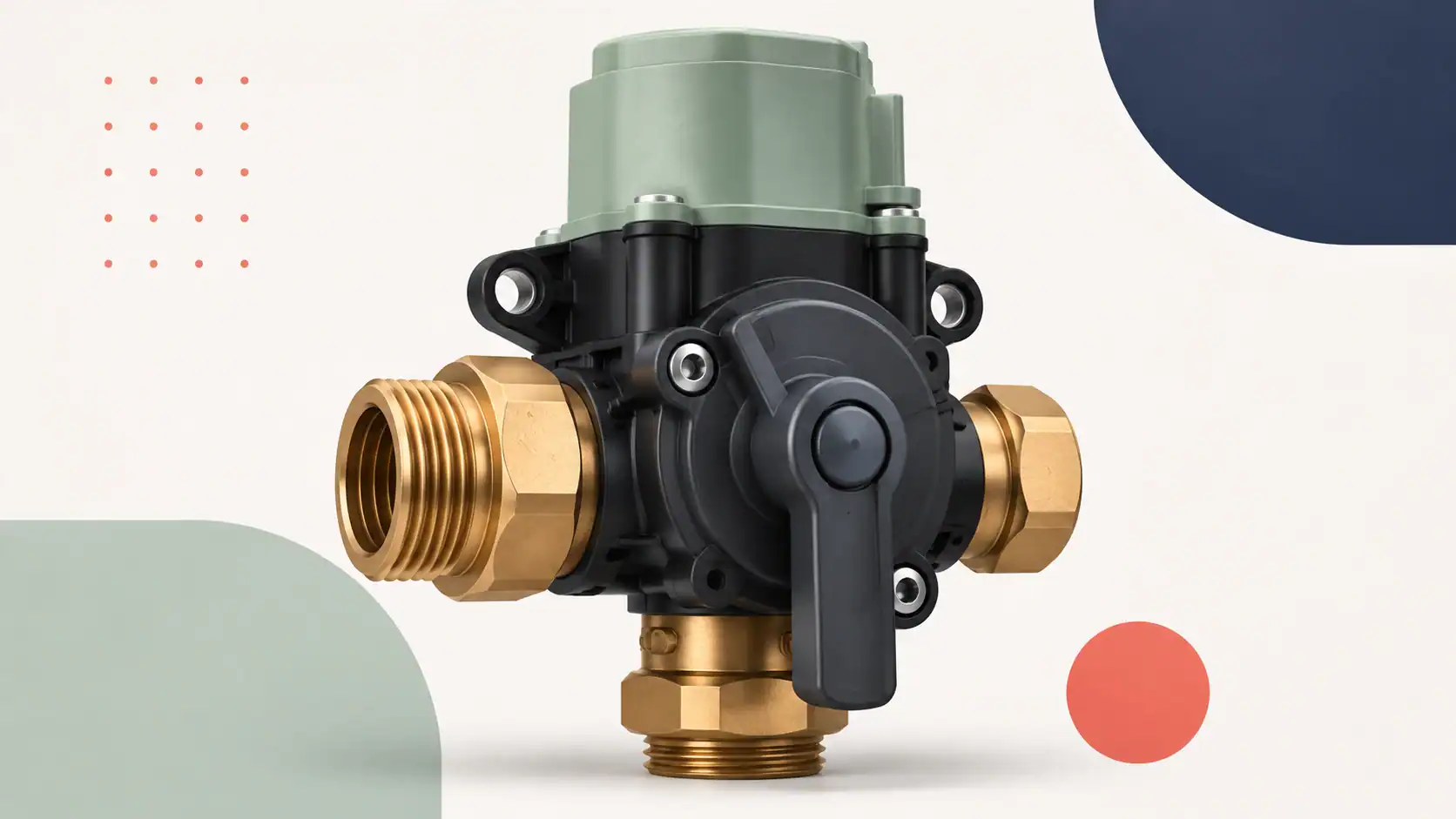
Faulty diverter valve? If you have a combi boiler and your heating works but the hot water does not — or the other way around — the diverter valve is one possible cause.
The diverter valve helps direct heat either towards your radiators or towards your hot taps. If it sticks or stops moving correctly, you can experience problems with heating, hot water or both.
However, these symptoms do not automatically prove that the diverter valve has failed. Other boiler faults can produce similar problems, so proper diagnosis is important before replacing parts.
A diverter valve is commonly found inside a combi boiler. Its job is to control where the heat produced by the boiler is sent.
When your central heating is running, heat needs to be sent towards the radiators. When you open a hot tap, the boiler needs to prioritise domestic hot water.
The diverter valve helps switch between these two demands.
If the valve becomes stuck or does not move fully into the correct position, you may notice that the heating works but the hot water does not, or that the hot water behaves differently depending on whether the heating is running.
If you’re not sure whether you have a combi, system or regular boiler, see our guide:
What Type of Boiler Do I Have?
This is one of the main symptoms associated with a faulty diverter valve.
Your radiators may heat normally, showing that the boiler can still produce heat, but when you open a hot tap the water stays cold or only becomes slightly warm.
On a combi boiler, this can happen if the diverter valve is not moving correctly towards the hot-water position.
It is not the only possible cause, however. Sensors, controls or other hot-water components can create similar symptoms.
If this is your main problem, also read:
No Hot Water From Boiler? Common Causes & What to Check
If your hot water works while the radiators are heating but becomes cold when the central heating is switched off, the diverter valve may not be directing heat correctly.
This is a particularly useful symptom to tell an engineer about when booking a repair.
The important point is not to assume that the valve definitely needs replacing. The boiler should still be tested because more than one fault can produce similar behaviour.
A diverter valve that does not move fully into the hot-water position can sometimes result in tap water becoming warm rather than properly hot.
Before assuming the boiler is responsible, check whether the problem affects every hot-water outlet.
If one tap or shower is affected while the others work normally, the problem may be with that individual outlet rather than the boiler.
If every hot tap is affected, the boiler’s hot-water operation may need investigating.
The opposite problem can also happen.
You may have perfectly usable hot water from the taps while the radiators remain cold even though the thermostat is asking for heat.
A diverter valve that is not moving towards the heating position is one possible explanation.
However, heating controls, circulation problems, thermostat faults or other boiler components can also stop radiators from heating.
Diagnosis should therefore come before replacing the diverter valve.
A diverter valve does not always fail completely in one go.
You may notice intermittent symptoms such as:
These details can be useful during fault diagnosis, so make a note of exactly what the boiler is doing before booking an engineer.
Over time, the diverter valve or the mechanism controlling it can become worn, stiff or stuck.
Depending on the boiler, the fault may involve:
This is why it is important to identify what has actually failed rather than automatically replacing the complete valve assembly.
The first stage is usually to understand exactly what the boiler is doing.
Useful information includes:
The engineer can then test the boiler and determine whether the diverter valve is actually responsible or whether another component is causing similar symptoms.
Useful diagnostic point: “heating works but no hot water” is a symptom, not a definite diagnosis. Replacing components without confirming the fault can lead to unnecessary repair costs.
You can observe how the boiler behaves, but you should not remove the boiler casing or attempt to manually move internal components.
Safe observations you can make include:
These observations can help an engineer diagnose the problem without you needing to open the appliance.
Sometimes.
The correct repair depends on what has actually failed.
In some cases, the valve mechanism may be sticking or another part of the assembly may be causing the problem. In other situations, the actuator, valve or complete assembly may need replacing.
A sensible repair process is:
There is no single reliable price that applies to every boiler.
The final cost can depend on:
For that reason, it is better to diagnose the boiler first and price the actual repair rather than assume every diverter-valve fault costs the same amount.
Often it can be, especially if the boiler is otherwise working reliably.
A diverter-valve fault by itself does not automatically mean you need a new boiler.
It becomes more useful to compare repair against replacement when the boiler:
If you are starting to compare the two options, see:
Not necessarily.
A diverter-valve fault is more commonly noticed through incorrect heating or hot-water behaviour.
If your boiler repeatedly turns itself off, locks out or displays fault codes, there may be another fault that also needs investigating.
Read:
Boiler Keeps Turning Off? Common Causes & What to Do
The heating and hot-water arrangement on system and regular boilers is different from a typical combi boiler installation.
A combi boiler produces heating and domestic hot water directly from the boiler, which is why internal diverter-valve faults are commonly discussed in relation to combis.
Systems with a separate hot-water cylinder may instead use external motorised valves and controls to direct heating-system water.
If you are unsure which boiler system you have, see:
Different Types of Boiler Systems
Arrange professional diagnosis if:
For general boiler fault diagnosis and repair, visit:
If you’re in Cardiff and your combi boiler has heating but no hot water, lukewarm water or another suspected diverter-valve problem, visit our dedicated Cardiff repair page.
When booking, it helps to tell us:
A common symptom is that one part of the system works while the other does not — for example, your radiators heat normally but the hot taps stay cold or lukewarm.
Yes. If the valve is not directing heat correctly towards domestic hot water, the tap water may become warm without reaching the expected temperature.
This can be a symptom of a diverter valve that is not moving correctly between heating and hot-water demand. The boiler should still be diagnosed before replacing the valve.
You should not remove the boiler casing or attempt to manipulate internal boiler components yourself. Have the appliance professionally diagnosed.
No. A diverter-valve fault can often be repaired by replacing the failed component or assembly. Boiler replacement should be considered based on the overall age, condition and repair history of the appliance.
Let’s Heat can diagnose heating faults, hot-water problems and suspected diverter-valve issues.
You do not need to know which component has failed before booking.
This guide has been checked against homeowner boiler guidance from Vaillant.
Mo Alwadi is Renewable Manager at Let’s Heat and a Gas Safe registered engineer (registration no. 977042), with experience in domestic heating and air conditioning. He contributes technical guidance on boiler installation, boiler replacement, heating systems, air conditioning and home energy solutions, helping UK homeowners understand their options and make informed decisions.
View all posts by Mo Alwadi →